
Slow drains and strange odors can quickly disrupt daily life in Sacramento homes, turning simple routines into unexpected headaches. Understanding the role your sewer line plays in protecting your property and the environment is the first step toward smart, cost-effective decisions. This guide explains how different sewer systems work, what materials make up your underground pipes, and what signs point to trouble—helping you stay ahead of major repairs and preserve your home’s value.
Table of Contents
- What Sewer Lines Are And Why They Matter
- Types Of Sewer Lines And Key Differences
- How Sewer Lines Work In Sacramento Homes
- Signs Of Sewer Line Trouble To Watch For
- Repair Options, Maintenance, And Homeowner Duties
Key Takeaways
| Point | Details |
|---|---|
| Importance of Sewer Lines | Sewer lines are essential for proper wastewater disposal and require regular maintenance to prevent costly repairs and environmental damage. |
| Types of Sewer Systems | Understanding the differences between sanitary and combined sewer systems can help homeowners address maintenance issues effectively. |
| Signs of Issues | Watch for signs such as slow drains, sewage odors, and unusual yard patches to catch sewer line problems early. |
| Repair Responsibility | Homeowners are responsible for maintaining their lateral lines, while the city manages the main sewer system, highlighting the need for awareness of ownership. |
What Sewer Lines Are And Why They Matter
Your sewer line is the main pipe carrying all wastewater from your home to the treatment facility. It’s the backbone of your plumbing system, handling everything from toilet waste to shower water. Without a functioning sewer line, your entire home’s drainage system fails.
Sewer lines are typically made of PVC, cast iron, clay, or concrete and buried 3 to 4 feet underground. They rely on gravity to move wastewater away from your property. The pipes slope downward at roughly a quarter-inch drop per foot, ensuring steady flow toward the municipal treatment plant.
Types of Sewer Systems
Sanitary sewers are the most common type in Sacramento residential areas. These systems carry only household wastewater, keeping it separate from stormwater drains. Sanitary sewer systems prevent rainwater from overloading treatment plants, which keeps your drainage efficient and reduces backup risks during heavy storms.
Understanding different sewer types helps you grasp why your drainage matters:
- Sanitary sewers: Handle toilets, sinks, showers, and laundry water exclusively
- Stormwater drains: Manage rainwater and prevent flooding in neighborhoods
- Combined systems: Rare in Sacramento, but handle both wastewater and stormwater in one pipe
Why Your Sewer Line Matters
Property protection is the first reason. A failing sewer line can cause raw sewage to back up into your home, creating health hazards and expensive damage. Backups can destroy flooring, damage foundations, and contaminate your yard.
Environmental responsibility comes second. Proper sewer maintenance prevents leaks and overflows that can pollute groundwater and surface waters. Your broken line doesn’t just affect your property—it impacts your Sacramento neighborhood and the larger ecosystems downstream.
Financial stakes are significant. Sewer line repairs can cost $3,000 to $25,000 depending on severity and depth. Preventive maintenance now saves thousands in emergency repairs later.
Here’s what makes sewer lines vulnerable:
- Tree roots penetrating pipes searching for moisture
- Settling ground shifting pipes out of alignment
- Corrosion from minerals and age
- Grease and debris accumulation blocking flow
- Heavy vehicle traffic compacting soil above the line
A single crack in your sewer line can allow groundwater infiltration, reducing treatment efficiency and increasing your municipal costs.
Pro tip: Schedule a professional sewer line inspection every 3 to 5 years, especially if your Sacramento home is over 40 years old or you’ve noticed recurring slow drains—early detection prevents catastrophic failures.
Types Of Sewer Lines And Key Differences
Sewer pipes come in different materials, each suited to Sacramento’s climate and soil conditions. The material your home uses affects how long your sewer line lasts, how much maintenance it needs, and how well it handles waste. Understanding these differences helps you anticipate problems before they become expensive.
Common Sewer Line Materials
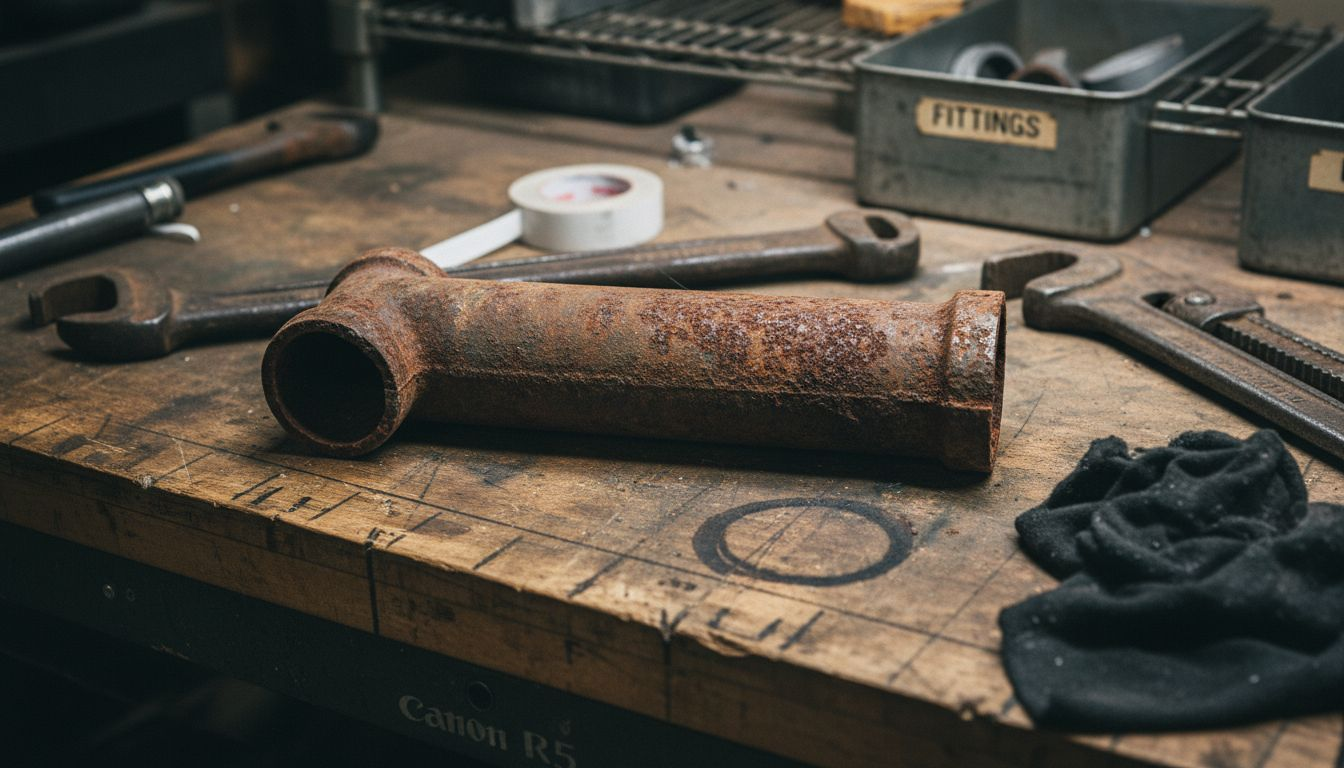
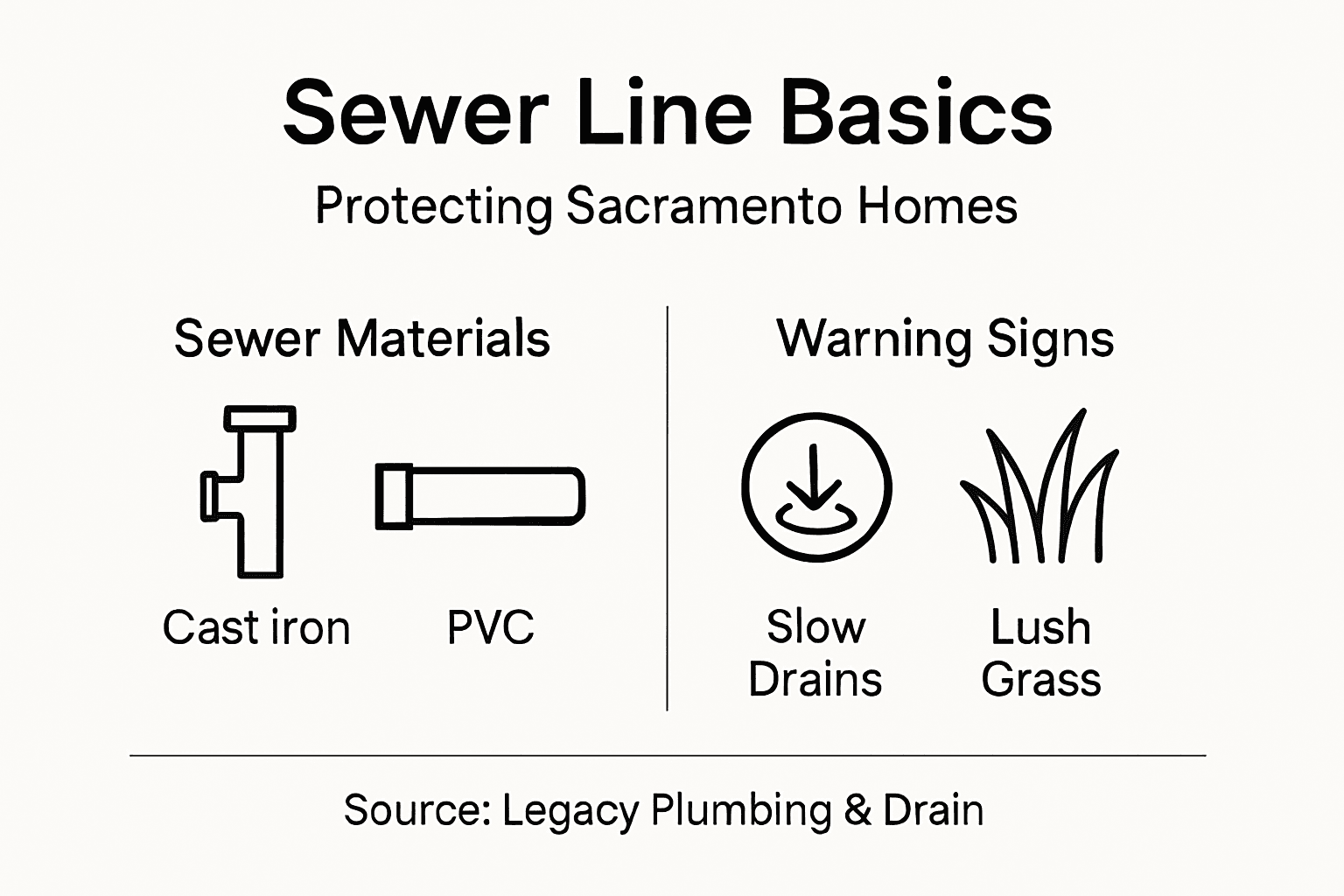
Cast iron dominated sewer construction for decades. These pipes are strong, fire-resistant, and can last 75 to 100 years when properly maintained. However, cast iron corrodes from the inside out, especially in acidic soil, and repairs get costly as the material ages.
PVC (polyvinyl chloride) is the modern standard. Smooth interior PVC pipes allow waste to flow efficiently and resist corrosion better than older materials. PVC lasts 50 to 80 years, costs less to install, and requires minimal maintenance. Most newer Sacramento homes use PVC.
Clay pipes are found in older Sacramento neighborhoods. These were durable in their era but break easily under pressure or ground movement. Tree roots penetrate clay joints, causing blockages and collapses that require full line replacement.
Concrete pipes offer strength and durability, lasting 40 to 75 years. They resist tree root intrusion better than clay but can crack from ground shifting or heavy loads above them.
Here’s how these materials compare:
Here’s a concise comparison of common sewer line materials and their key attributes:
| Material | Estimated Lifespan | Main Benefits | Common Weaknesses |
|---|---|---|---|
| Cast iron | 75-100 years | Strong, fire-resistant | Corrodes, costly to repair |
| PVC | 50-80 years | Affordable, low-maintenance | Prone to joint separation |
| Clay | 50-60 years | Long historical use | Breaks easily, root intrusion |
| Concrete | 40-75 years | Resists roots, durable | Cracks from ground movement |
| ABS plastic | 50-60 years | Lightweight, corrosion-proof | Brittle in cold temperatures |
- Cast iron: Durable but corrodes; expensive repairs
- PVC: Modern, affordable, low-maintenance; popular choice
- Clay: Historical; prone to root damage and breaks
- Concrete: Strong; resistant to roots; cracks from movement
- ABS plastic: Lightweight; corrosion-resistant; less common in Sacramento
Sanitary vs. Combined Systems
Sanitary sewer systems carry only household wastewater. They keep stormwater separate, preventing treatment plants from becoming overwhelmed during rain. Sacramento uses sanitary systems in most residential areas, which is better for environmental protection.
Combined sewer systems handle both wastewater and stormwater in one pipe. These are rare in Sacramento but exist in some older neighborhoods. During heavy rain, combined systems can overflow raw sewage into streets and waterways.
Material selection impacts sewer system durability and maintenance costs significantly—upgrading from clay to PVC can add decades to your line’s lifespan.
Knowing your system type helps you prepare for maintenance. Sanitary systems are more reliable. Combined systems need extra attention during heavy rain seasons.
Pro tip: Ask Legacy Plumbing & Drain about your specific sewer material and system type during an inspection—knowing whether you have cast iron, PVC, or clay helps you plan for future repairs and budget accordingly.
How Sewer Lines Work In Sacramento Homes
Your home’s sewer system works silently beneath your feet, moving wastewater away 24/7. Understanding how it operates helps you recognize problems early and avoid costly backups. The process relies on gravity, proper slopes, and a network of pipes that work together seamlessly.
The Journey From Your Home
Wastewater starts inside your home. Every drain from sinks, showers, toilets, and appliances connects to internal plumbing pipes. These pipes converge into a single building sewer—the main line exiting your home underground.
This building sewer slopes downward toward the street. Wastewater flows from homes through private lateral pipes to municipal sewers beneath streets. Your lateral is your responsibility to maintain. Cracks, tree roots, or settling ground can damage it, leading to backups into your home.
Municipal Sewer Network
Once wastewater reaches the street, it enters the municipal sewer system. Sacramento’s public sewers are much larger pipes designed to handle wastewater from entire neighborhoods. These main sewers gradually get bigger as more lines feed into them.
Here’s the hierarchy of Sacramento’s sewer system:
- Building sewer: Your private line from house to street
- Lateral lines: Connect multiple homes to the main sewer
- Main sewers: Collect wastewater from blocks or neighborhoods
- Trunk sewers: Carry large volumes toward treatment plants
- Treatment facilities: Process sewage before returning water to the environment
How Gravity Does The Work
Gravity is the system’s engine. Pipes slope downward at about a quarter-inch per foot, creating steady flow without pumps. This passive system has worked reliably for over a century in Sacramento. Proper slope prevents waste from sitting in pipes where it backs up or creates clogs.
Some areas use lift stations—mechanical pumps that help wastewater move uphill when terrain makes gravity flow impossible. These stations are common in low-lying Sacramento neighborhoods. They automatically activate when wastewater reaches a certain level.
A home’s sewer system includes progressively larger pipes that move sewage toward treatment plants through reliable gravity flow.
The entire process moves waste from your toilet to a treatment plant in hours. Treatment removes solids and contaminants before returning clean water to rivers and groundwater.
Your Role In The System
You’re responsible for your building sewer and lateral line. Municipal responsibility starts at the main sewer connection. Don’t flush non-biodegradable items, grease, or medications—they clog pipes and damage the system.
Pro tip: Have your building sewer inspected every 3 to 5 years using video camera technology to catch tree roots or cracks before they cause backups in your Sacramento home.
Signs Of Sewer Line Trouble To Watch For
Sewer line problems rarely announce themselves loudly. They start small and escalate quietly, sometimes for months before you notice. Catching early warning signs saves you thousands in repair costs and prevents health hazards. Most Sacramento homeowners don’t know what to look for until it’s too late.
Indoor Drainage Red Flags
Slow drains are often the first warning sign. If multiple drains throughout your home drain slowly at the same time, the problem isn’t your sink—it’s your main sewer line. Single slow drains suggest localized clogs, but widespread slowness points to deeper issues.
Sewer backups are serious. Raw sewage backing up into toilets, showers, or lowest-level drains means your line is blocked or broken. This creates immediate health risks and requires emergency service. Don’t ignore gurgling sounds from drains—they indicate air trapped in blocked pipes.
Persistent odors inside your home signal cracks or breaks in your line. Sewage smell in bathrooms, basements, or laundry rooms means gases are escaping where they shouldn’t. This isn’t just unpleasant—it’s a health concern.
Watch for these indoor warning signs:
- Multiple drains backing up simultaneously
- Gurgling sounds from toilets or drains
- Foul sewage smells in lower levels
- Raw sewage appearing in showers or tubs
- Toilets that won’t flush properly despite plunging
Outdoor and Property Signs
Lush patches in your yard during dry months can indicate a break. When your sewer line leaks, the surrounding soil gets nutrient-rich wastewater, creating abnormally green grass. This looks good until you realize sewage is contaminating your property.
Look for sinkholes or depressions in your yard. These form when soil above a broken pipe collapses into the void below. Sinkholes are dangerous and indicate serious structural failure.
Pest infestations increase near broken lines. Rodents and insects enter homes through sewer cracks searching for water. If you suddenly see rats, cockroaches, or other pests, a broken line might be the entry point.
Common signs of sewer line problems include backups, slow drainage, and damaged clean-out caps that require inspection and prompt repair.
Outdoor indicators include:
- Patches of extra-green grass in your yard
- Pooling water or soggy areas with no rain
- Sinkholes or ground collapse
- Cracks in your foundation or concrete
- Sudden pest problems inside your home
Check Your Clean-Out
Your sewer clean-out is an access point to your main line, typically located in your yard near your foundation. If the cap is cracked, missing, or damaged, your line is vulnerable. Damaged clean-outs allow stormwater and debris to enter your pipes, causing backups.
Early detection prevents catastrophic failures—many serious sewer problems start as minor drainage issues that worsen over weeks or months.
Regularly inspect your clean-out cap during yard maintenance. Replace damaged caps immediately.
Pro tip: If you notice any combination of slow drains, foul odors, or patches of extra-green grass, don’t wait—call Legacy Plumbing & Drain for a video camera inspection to identify the problem before it becomes an emergency.
Repair Options, Maintenance, And Homeowner Duties
Understanding who pays for sewer repairs prevents costly disputes and protects your wallet. Sacramento homeowners are responsible for their private lateral lines, while the city maintains public sewers under streets. Knowing this distinction saves thousands in unexpected bills.
Who’s Responsible For What
Your property line is where responsibility shifts. The city maintains the main sewer line running beneath the street. You own and maintain everything from your home to that connection point—your building sewer and lateral line.
This matters financially. A broken main sewer is the city’s problem. A broken lateral is yours. Repairs on your side cost between $3,000 and $25,000. Public main line repairs are paid through taxes.
Homeowners are responsible for private lateral sewer lines from the property to the connection with the public main line, while cities maintain public sewer infrastructure underneath streets.
Your duties include:
- Maintaining your building sewer and lateral line
- Keeping your sewer clean-out cap intact
- Preventing stormwater from entering your sewer
- Addressing leaks promptly
- Not connecting downspouts or sump pumps to sanitary sewers
Repair Methods Available
Trenchless repair is the modern solution. This method uses robotic cameras to identify problems, then repairs pipes without excavating your yard. Trenchless technology costs less, causes no damage, and takes days instead of weeks.
Traditional excavation involves digging up your yard to access broken pipes. This method is necessary for severe damage or complete line replacement. It’s more disruptive and expensive but sometimes unavoidable.
Pipe relining is a trenchless option that seals cracks and small breaks from inside the pipe. A flexible tube coated with resin is inserted and hardens, creating a new inner pipe. This works for moderate damage.
Repair options depend on damage severity:
Below is a summary of typical sewer line repair methods and what issues they best address:
| Repair Method | Best For | Typical Timeframe |
|---|---|---|
| Trenchless relining | Minor cracks, small leaks | 1-3 days |
| Robotic root cutting | Root intrusion | 2-5 days |
| Full excavation | Severe or total failure | 1-3 weeks |
| Pipe bursting | Replacing old pipes | 3-5 days |
- Minor cracks: Trenchless relining (1-3 days)
- Root intrusion: Robotic cutting or relining (2-5 days)
- Severe damage: Full excavation and replacement (1-2 weeks)
- Complete failure: Excavation with new pipe installation (1-3 weeks)
Preventive Maintenance Saves Money
Regular inspections catch problems early. Video camera inspections cost $150-$300 but reveal cracks, roots, and misalignment before they cause backups. This single investment prevents emergency repairs costing thousands.
Maintenance of sewer lines involves routine cleaning and inspection using robotic cameras to address issues promptly and reduce system overflows.
Prevention tasks you can do:
- Inspect your clean-out cap yearly
- Keep downspouts and gutters away from your sewer
- Never plant trees near your lateral line
- Avoid flushing non-biodegradable items
- Don’t pour grease down drains
Your sewer lateral is a hidden asset worth protecting—preventive maintenance costs hundreds but prevents repairs costing tens of thousands.
Schedule camera inspections every 3-5 years, especially if your home is over 40 years old. Ask the technician about your specific line material and condition.
Pro tip: Get a sewer inspection before buying a home and every 5 years after—knowing your line’s condition lets you budget for repairs and avoid catastrophic failures that tank home sales.
Protect Your Sacramento Home with Expert Sewer Line Services from Legacy Plumbing & Drain Inc
Dealing with slow drains, foul odors, or worrying signs like soggy patches in your yard means your sewer line could be at risk. These issues can lead to costly repairs or health hazards if left unchecked. At Legacy Plumbing & Drain Inc, we specialize in comprehensive sewer inspections and repairs that protect your property and family. Understanding your sewer line material and system type is crucial and our skilled technicians provide professional video camera inspections that identify problems early before they turn into emergencies.
Don’t wait for a sewage backup to disrupt your life. Take control of your home’s plumbing health today by scheduling a sewer line inspection or repair with us. Visit Legacy Plumbing & Drain Inc to learn more and request prompt, reliable service. Protect your investment and enjoy peace of mind knowing your Sacramento home is in expert hands.
Frequently Asked Questions
What are the signs of a failing sewer line?
Common signs include slow drains, multiple backups, foul odors in the house, lush patches of grass in the yard, and sinkholes appearing in your yard. These indicate that there may be a blockage or break in the sewer line.
How can I maintain my sewer line?
Regular inspections using video camera technology are recommended every 3 to 5 years. Additionally, keep your sewer clean-out cap intact, avoid flushing non-biodegradable items, and never pour grease down your drains to maintain a healthy sewer line.
What are the different materials used for sewer lines and how do they compare?
Common materials include cast iron, PVC, clay, concrete, and ABS plastic. Cast iron is strong but can corrode, while PVC is affordable and low-maintenance. Clay breaks easily and is prone to root intrusion, whereas concrete is durable but can crack. ABS is lightweight and corrosion-resistant but may be brittle in cold temperatures.
What should I do if I notice warning signs of sewer line trouble?
If you detect any signs like slow drains or foul odors, it’s essential to call a licensed plumber immediately for a video camera inspection. Early detection can prevent costly repairs and health hazards.
Recommended
- Complete Guide To Sewer Line Issues And Solutions – Legacy Plumbing & Drain – Emergency Plumbers Of Sacramento
- Understanding How Sewer Systems Work For Homeowners – Legacy Plumbing & Drain – Emergency Plumbers Of Sacramento
- Difference Between Sewer And Drain: Complete Guide – Legacy Plumbing & Drain – Emergency Plumbers Of Sacramento
- Sewer Line Issues: Warning Signs And Fast Solutions – Legacy Plumbing & Drain – Emergency Plumbers Of Sacramento
- 7 Signs You Need a Sewer Line Inspection in Alabama