Did you know that a hidden leak in your sewer line can waste over 40,000 gallons of water each year? Properly understanding the difference between drains and sewers can help you prevent costly repairs and keep your home safe. Homeowners who recognize how these systems work are better equipped to spot issues early and avoid disruptions that impact both comfort and community health.
Key Takeaways
| Point | Details |
|---|---|
| Difference Between Drains and Sewers | Drains manage localized wastewater from individual homes, while sewers transport wastewater from multiple properties to treatment facilities. |
| Importance of Drain-Waste-Vent Systems | Effective plumbing relies on DWV systems, which prevent sewer gas infiltration and ensure efficient wastewater removal using gravity. |
| Common Plumbing Issues | Homeowners should address common issues like clogs, root intrusions, and leaks promptly to avoid costly repairs and system failures. |
| Maintenance and Compliance | Regular maintenance and understanding local plumbing codes are essential for preventing legal issues and ensuring safe plumbing systems. |
Table of Contents
- Defining Sewer and Drain Systems
- How Sewer and Drain Systems Work
- Main Types and Key Differences
- Common Problems Homeowners Encounter
- Maintenance, Legalities, and Local Codes
Defining Sewer and Drain Systems
Understanding the difference between sewers and drains is crucial for homeowners who want to maintain their property’s plumbing infrastructure effectively. Drains are the immediate pathways that remove unwanted water and waste liquids directly from individual fixtures in your home. According to Wikipedia, these systems typically use gravity to channel greywater or wastewater away from your property to a larger disposal point.
In contrast, sewers represent a much broader and more complex infrastructure network. Wikipedia research defines sewers as municipal or regional systems that collect and transport sewage from multiple properties. These extensive networks are designed to move wastewater toward treatment facilities, encompassing various types such as:
- Sanitary sewers: Handling human waste and domestic wastewater
- Storm sewers: Managing rainwater and surface runoff
- Combined sewers: Integrated systems handling both sanitary and storm water
- Gravity sewers: Using natural slope and gravitational flow
- Effluent sewers: Transporting treated or partially treated wastewater
While individual drains serve your immediate household needs, sewers represent the broader community infrastructure that ensures efficient water management and environmental protection. Read more about understanding common drainage problems to gain deeper insights into how these systems work together to keep your home and community functioning smoothly.
How Sewer and Drain Systems Work
Home plumbing systems are ingenious networks that rely on fundamental principles of gravity and fluid dynamics to manage wastewater effectively. Drain-Waste-Vent (DWV) systems are the backbone of interior plumbing infrastructure. According to Wikipedia, these complex systems do more than just move waste—they capture sewage and greywater while preventing potential complications like vacuum formation and sewer gas infiltration.
The mechanics of these systems are surprisingly straightforward. Each drain uses strategically placed traps that create water seals, blocking harmful sewer gases from entering living spaces. Gravity does most of the heavy lifting, naturally guiding wastewater through pipes toward municipal sewer lines or septic systems. This gravitational flow ensures efficient waste removal without requiring complex mechanical interventions.
Outside your home, storm drains play a critical role in managing excess water. Wikipedia research reveals that these systems, often called storm sewers, handle rainwater and groundwater from impervious surfaces like streets and parking lots. Their primary function is to:
- Quickly channel excess water away from urban areas
- Prevent flooding and water accumulation
- Redirect water into rivers, streams, or detention systems
- Protect sanitary sewer systems from overloading
Understanding these systems helps homeowners appreciate the complex infrastructure that keeps our communities clean and dry.
Learn more about drain maintenance to ensure your home’s plumbing remains in top condition.
Main Types and Key Differences
Understanding the nuanced differences between drains and sewers goes beyond simple semantics—it’s about recognizing their distinct roles in water management. According to research from Design Horizons, the fundamental distinction lies in ownership and scale: drains are localized systems owned by individual property owners, while sewers are large-scale municipal infrastructures managed by local authorities.
The technical specifications reveal even more striking contrasts. Research from MD Sewer highlights significant variations in pipe characteristics and functionality. Drain pipes are typically smaller, constructed from PVC or ABS materials, and designed to handle greywater from individual properties. They feature:
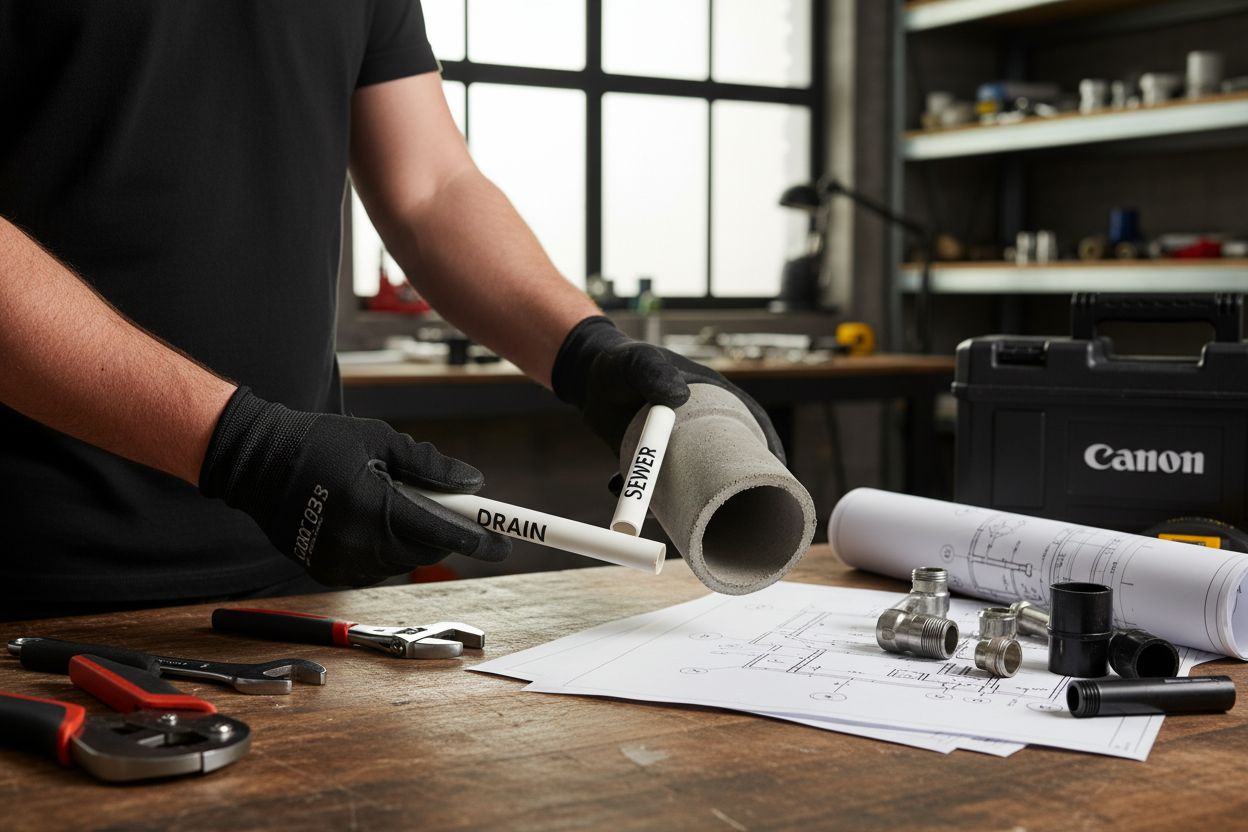
- Smaller diameter pipes
- Slip-joint connection systems
- Primarily gravity-based flow
- Serving single property needs
In contrast, sewer pipes are more complex municipal systems engineered to transport wastewater from multiple sources. These larger infrastructure components differ by:
- Larger pipe diameters
- Materials like clay, concrete, or industrial-grade PVC
- Glued or soldered connection methods
- Capable of handling both grey and black water
- Potential requirement for mechanical pumping
Understanding the benefits of regular drain maintenance can help homeowners appreciate the intricate balance between these interconnected water management systems.
Here’s a comparison of the main differences between drains and sewers:
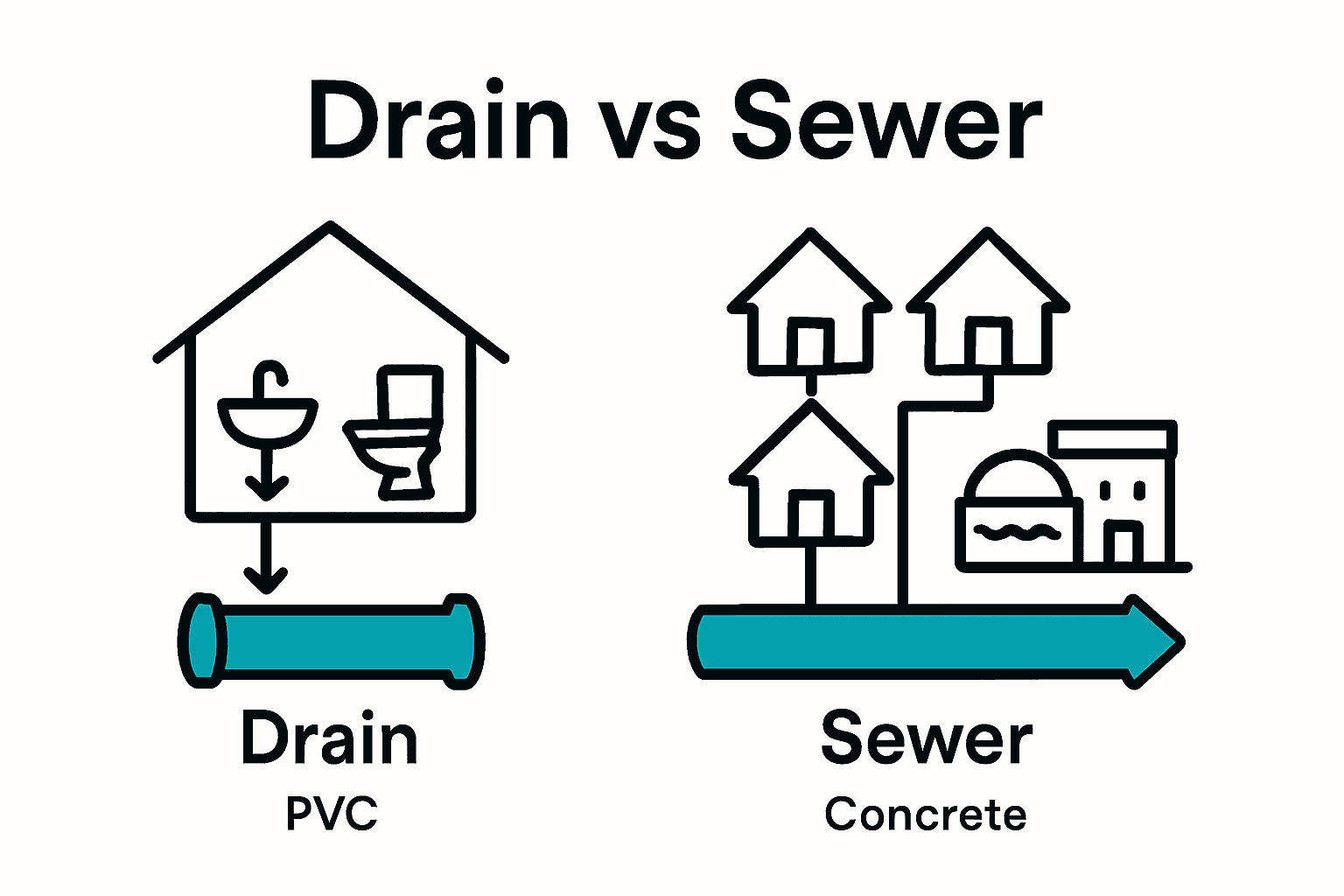
| Feature | Drains | Sewers |
|---|---|---|
| Ownership | Individual homeowners | Municipal/local authorities |
| Primary Function | Serves one property | Serves multiple properties |
| Pipe Size | Smaller diameter | Larger diameter |
| Material | PVC, ABS | Concrete, clay, industrial-grade PVC |
| Connection Type | Slip-joint fittings | Glued, soldered, industrial connections |
| Handles | Greywater only | Greywater & black water |
| Maintenance | Homeowner responsibility | Utilities or city responsibility |
Common Problems Homeowners Encounter
Homeowners often find themselves battling unexpected plumbing challenges that can quickly escalate from minor inconveniences to major financial headaches. According to research from Billy.com, sewer line problems can manifest through various complex issues, including persistent clogs, tree root intrusions, and pipe deterioration.
Blockages and obstructions represent the most frequent drainage nightmares. Plumbing and Sewer Professionals highlight several common culprits that homeowners inadvertently create, such as:
- Pouring grease and oil down drains
- Ignoring early warning signs like slow drainage
- Using harsh chemical cleaners that corrode pipes
- Planting trees too close to underground sewer lines
- Skipping regular maintenance inspections
The most critical problems homeowners encounter include:
- Pipe Leaks: Caused by corrosion, aging, or physical damage
- Sewage Backups: Potentially resulting from major line blockages
- Root Intrusions: Tree roots breaking into pipe systems
- Pipe Misalignments: Creating “bellies” that trap waste
- Disconnected Sewer Sections: Leading to complete system failures
Check out our emergency plumbing tips to help you navigate potential plumbing disasters before they become catastrophic home repairs.
Maintenance, Legalities, and Local Codes
Never underestimate the complexity of maintaining your home’s drainage and sewer systems—it’s not just about fixing pipes, but understanding the intricate legal landscape that governs them. The Uniform Plumbing Code (UPC), developed through rigorous IAPMO and ANSI consensus processes, serves as the critical framework for safe plumbing installations across the United States. According to Wikipedia, this model code exists primarily to protect public health and ensure systematic safety in plumbing infrastructure.
Code compliance is far more than bureaucratic paperwork—it’s about preventing potentially dangerous situations. Flood Brothers Plumbing research reveals several common violations that homeowners unknowingly commit:
- Improper trap venting (risking sewer gas entry)
- Incorrect drain slope configurations
- Using unauthorized plumbing materials
- Insufficient system cleanouts
- Improperly sized drain pipes
Regular maintenance becomes your first line of defense against potential legal and safety issues. Proactive homeowners should:
- Schedule annual professional inspections
- Keep detailed maintenance records
- Understand local municipal plumbing regulations
- Address minor issues before they escalate
- Maintain proper documentation of all plumbing work
Learn about Sacramento’s specific plumbing regulations to ensure your home remains compliant and your family stays protected.
Sacramento’s Trusted Solution for Every Drain and Sewer Challenge
Are you tired of dealing with confusing plumbing problems that leave you worried about sewer backups, slow drains, or unexpected pipe issues? After reading about how drain and sewer systems work—and learning how even small mistakes or neglected maintenance can lead to big headaches—it is clear that professional support is essential. Homeowners across Sacramento face real risks, from persistent clogs to potential legal code violations. You deserve peace of mind and reliable service when it matters most.
Let the experts at Legacy Plumbing & Drain Inc take the stress out of your plumbing worries. We understand the intricacies of drain-waste-vent systems, know the signs of dangerous sewer line trouble, and follow the latest local codes. Whether you need urgent help or want to schedule a full system inspection, our team is ready 24/7.
Make the safe choice before a minor problem turns into costly damage. Get started today with Sacramento’s most trusted emergency plumbing services or learn more about regular drain maintenance to protect your home. Reach out now for fast response, expert care, and total peace of mind.
Frequently Asked Questions
What is the main difference between sewer and drain systems?
Sewer systems are large-scale municipal infrastructures that collect and transport sewage from multiple properties, while drains are localized systems used to remove wastewater from individual fixtures in a home.
What types of pipes are used in drains compared to sewers?
Drain pipes are typically smaller and made from materials like PVC or ABS, while sewer pipes are larger and often constructed from concrete, clay, or industrial-grade PVC to handle wastewater from multiple sources.
What are the common problems homeowners face with sewer systems?
Homeowners often face issues like blockages, pipe leaks, sewage backups, tree root intrusions, and misaligned pipes that can lead to major plumbing issues if not addressed promptly.
How can homeowners maintain their drain systems effectively?
Homeowners can maintain their drain systems by scheduling annual professional inspections, avoiding the disposal of grease and harsh chemicals, and keeping detailed maintenance records to prevent serious drainage problems.
Recommended
- Drain Cleaning Vs. Drain Clearing: Which Do You Need?
- Drain Cleaning Vs. Drain Clearing: Which Do You Need?
- Understanding Signs You Need Drain Cleaning For Your Home – Legacy Plumbing & Drain – Emergency Plumbers Of Sacramento
- How To Clear Main Sewer Line: A Step-by-Step Guide – Legacy Plumbing & Drain – Emergency Plumbers Of Sacramento