Most homeowners never think twice about the pipes running through their walls until water starts pouring somewhere it should not. You might think regular pipe inspections are overkill for a newer home or just another bill you can push off your list. But statistics reveal something surprising—water damage claims are one of the most common and costly problems homeowners face, with average repair costs between $2,000 and $10,000 every time something goes wrong. Smart homeowners treat inspections not as an extra expense but as a way to dodge massive headaches before they even start.
Table of Contents
- What Are Regular Pipe Inspections?
- Why Regular Pipe Inspections Matter For Homeowners
- How Pipe Inspections Identify Potential Problems
- Key Benefits Of Routine Pipe Inspections
- Understanding The Long-Term Impact Of Neglected Pipes
Quick Summary
| Takeaway | Explanation |
|---|---|
| Proactive Maintenance Prevents Major Issues | Regular pipe inspections help identify potential problems before they escalate into costly repairs. |
| Utilize Advanced Inspection Technologies | Techniques like video camera inspections offer detailed assessments without disrupting your property. |
| Protect Your Investment with Early Detection | Early identification of issues preserves home value and avoids extensive repair costs down the line. |
| Prevent Water Damage and Structural Weakness | Routine inspections reduce the risk of severe water damage and structural deterioration caused by neglected pipes. |
| Transform Repairs into Predictive Strategies | Regular evaluations shift your approach from reactive repairs to strategic maintenance, ensuring a safe home environment. |
What Are Regular Pipe Inspections?
Regular pipe inspections are systematic professional evaluations of your home’s plumbing infrastructure designed to detect potential issues before they escalate into costly emergencies. These comprehensive assessments help homeowners understand the current condition of their pipes, identifying hidden problems that might not be immediately visible.
The Fundamental Purpose of Pipe Inspections
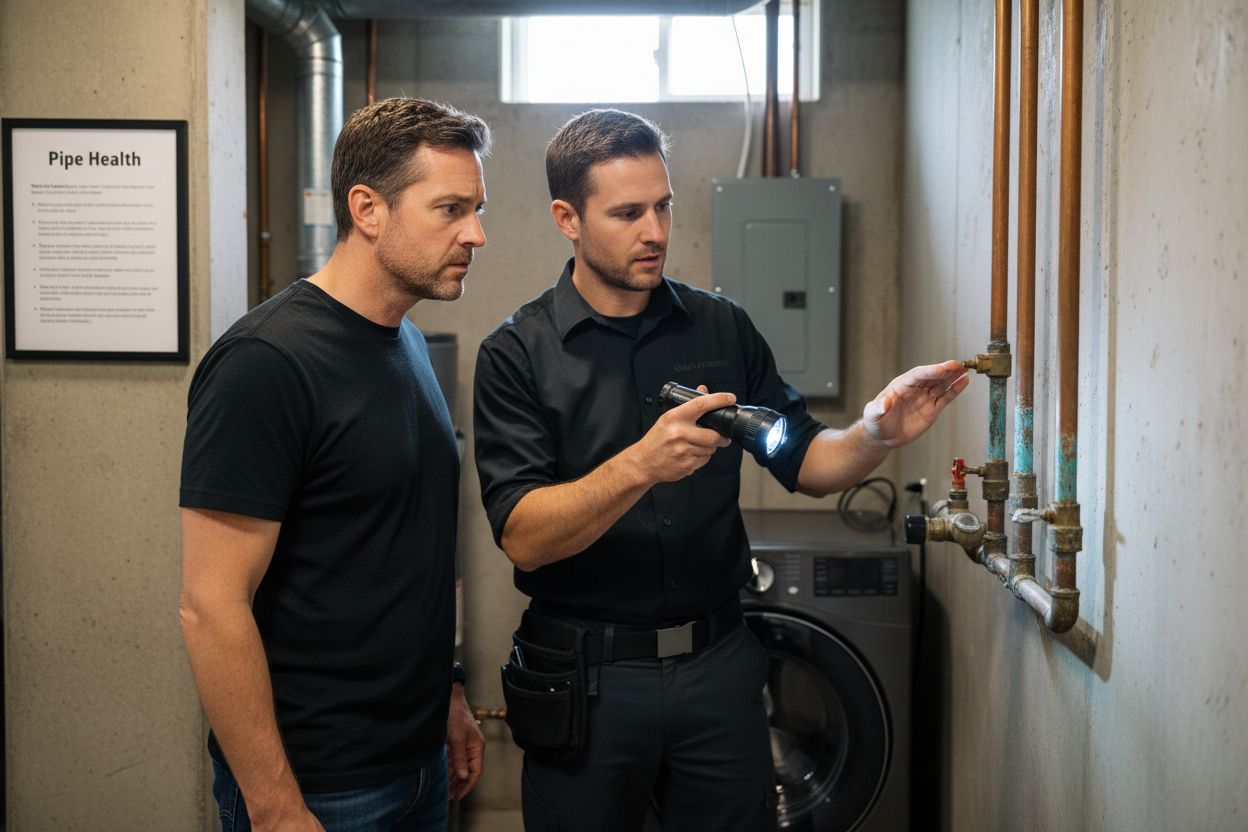
The core objective of regular pipe inspections is proactive maintenance. Plumbing professionals use specialized diagnostic tools to examine the interior and exterior conditions of your home’s pipes, looking for signs of potential damage such as:
- Developing corrosion
- Microscopic cracks
- Potential weak points in pipe connections
- Early signs of mineral buildup
- Potential structural stress points
By detecting these issues early, homeowners can prevent significant water damage, reduce repair costs, and extend the overall lifespan of their plumbing system. Our guide on signs your pipes need replacing provides additional insights into understanding pipe health.
Professional Inspection Techniques
Modern pipe inspections utilize advanced technologies like video camera inspection systems and acoustic listening devices.
According to the National Association of Home Builders, professional plumbers can now conduct non-invasive examinations that provide detailed visual representations of pipe interiors without causing disruption to your property.
These sophisticated techniques allow technicians to:
- Locate hidden leaks
- Identify potential blockage points
- Assess pipe material degradation
- Predict potential future maintenance requirements
By investing in regular professional pipe inspections, homeowners can transform reactive repair approaches into strategic, preventative maintenance strategies that protect their property’s most critical infrastructure.
Why Regular Pipe Inspections Matter for Homeowners
Homeowners often overlook the critical importance of regular pipe inspections until a major plumbing disaster strikes. Understanding the long-term benefits and potential cost savings can transform how property owners approach their home maintenance strategies. Proactive pipe inspections represent a strategic investment in your property’s infrastructure and overall value.
Financial Protection and Risk Mitigation
Regular pipe inspections serve as a financial safeguard against unexpected and potentially catastrophic plumbing failures. Research from the Insurance Information Institute indicates that water damage claims are among the most frequent and expensive homeowner insurance claims, with average repair costs ranging from $2,000 to $10,000.
The potential financial risks include:
- Extensive structural damage to walls and foundations
- Mold and mildew growth requiring specialized remediation
- Decreased property value due to undetected plumbing issues
- Expensive emergency repair costs
Property Value and System Longevity
Comprehensive pipe inspections do more than prevent immediate problems. They contribute to maintaining and potentially increasing your property’s market value. Our guide on regular plumbing maintenance highlights how consistent professional evaluations can extend the lifespan of your entire plumbing system.
Homeowners who invest in regular inspections benefit from:
- Early detection of potential system weaknesses
- Systematic maintenance planning
- Preservation of home infrastructure integrity
- Reduced long-term repair and replacement expenses
By prioritizing regular pipe inspections, you transform potential plumbing vulnerabilities into manageable, predictable maintenance opportunities. This approach not only protects your financial investment but also ensures a safe, functional living environment for you and your family.
How Pipe Inspections Identify Potential Problems
Pipe inspections represent a sophisticated diagnostic process that goes far beyond simple visual assessments. Professional plumbers employ advanced technologies and systematic methodologies to uncover hidden issues within your home’s plumbing infrastructure that could potentially lead to significant damage if left undetected.
Advanced Diagnostic Technologies
Modern pipe inspection techniques utilize cutting-edge technologies that provide unprecedented insight into your plumbing system’s condition. According to the American Society of Civil Engineers, professional diagnostic tools now enable near-microscopic examinations of pipe interiors without requiring invasive excavation.
These sophisticated diagnostic methods include:
- High-resolution video camera inspections
- Acoustic listening devices
- Infrared thermal imaging
- Pressure testing equipment
- Electronic pipe tracing systems
Systematic Problem Detection Approach
Professional plumbers follow a comprehensive, multi-step approach to identifying potential problems during pipe inspections. Our detailed plumbing inspection checklist outlines the intricate process of evaluating pipe health.
The systematic problem detection process typically involves:
- Comprehensive visual and technological examination
- Detailed mapping of pipe network vulnerabilities
- Assessment of material degradation
- Evaluation of potential future failure points
By meticulously analyzing multiple indicators, technicians can predict and prevent potential plumbing failures before they transform into expensive emergencies.
Below is a table comparing advanced diagnostic technologies used during professional pipe inspections to help you better understand their unique functions and benefits.
| Technology | Function | Benefits |
|---|---|---|
| Video Camera Inspection | Provides high-resolution visual access to interior pipe surfaces | Identifies blockages, cracks, and corrosion |
| Acoustic Listening Devices | Detects sound variations caused by leaks | Locates hidden leaks without excavation |
| Infrared Thermal Imaging | Measures surface temperature changes | Reveals hidden moisture and potential leaks |
| Pressure Testing Equipment | Checks pipe integrity through controlled pressure application | Assesses for weak points and potential failures |
| Electronic Pipe Tracing | Maps out pipe routes using electronic signals | Detects precise pipe locations and vulnerabilities |
Key Benefits of Routine Pipe Inspections
Routine pipe inspections represent a strategic approach to home maintenance that delivers multiple layers of protection and value. While many homeowners view these assessments as an optional expense, they are actually a critical investment in property preservation and financial security.
Long-Term Property Protection
Pipe inspections offer comprehensive protection that extends far beyond immediate problem detection. Research from the Environmental Protection Agency reveals that proactive maintenance can reduce potential water-related damages by up to 40% in residential properties.
Key long-term protection benefits include:
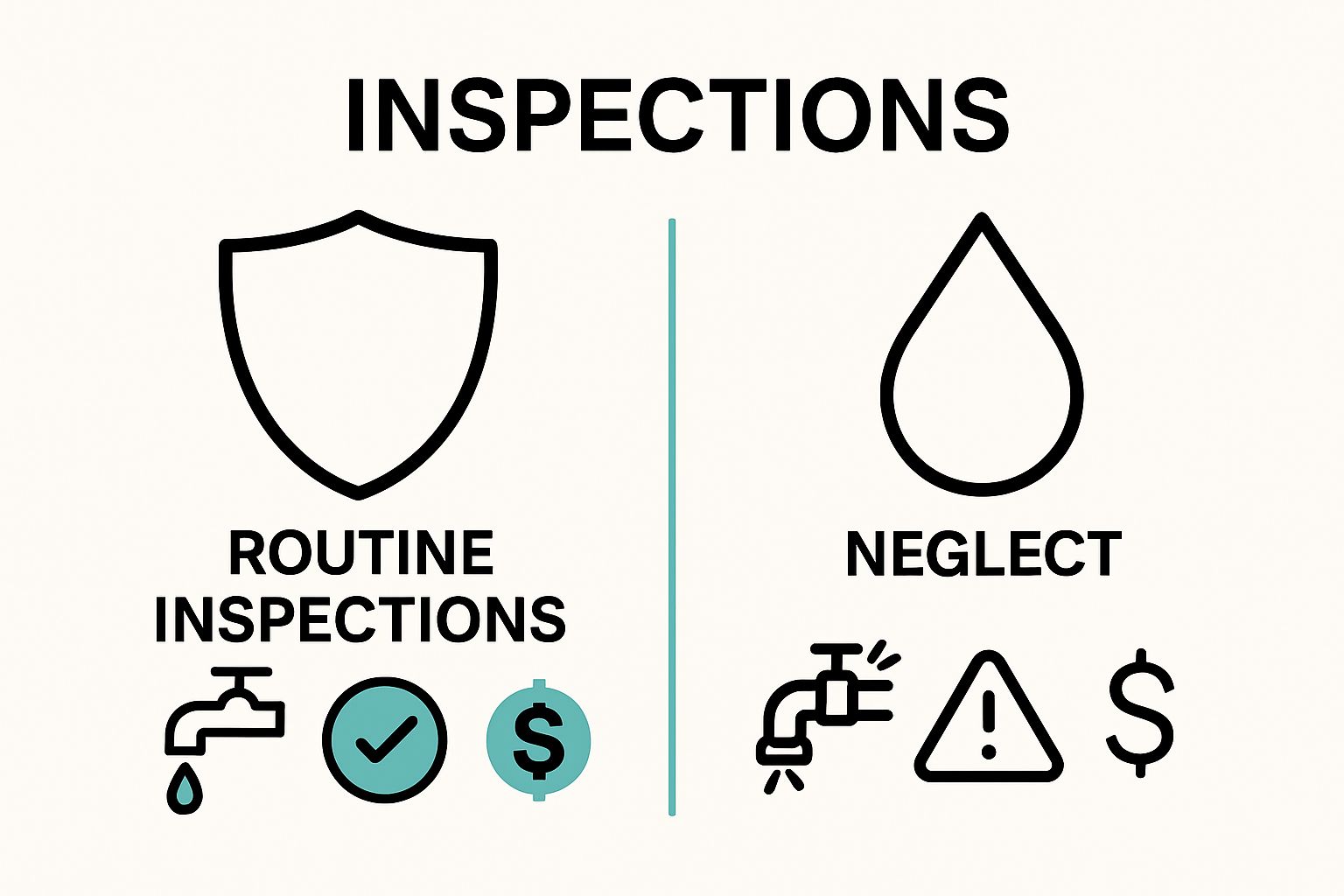
- Prevention of catastrophic water damage
- Identification of potential structural vulnerabilities
- Early detection of corrosion and material degradation
- Comprehensive mapping of potential risk zones
Financial and Efficiency Advantages
Beyond protecting physical infrastructure, routine pipe inspections deliver significant economic benefits. Our guide on pipe replacement options emphasizes how preventative assessments can substantially reduce overall maintenance expenses.
Financial advantages encompass:
- Avoiding expensive emergency repair costs
- Extending the operational lifespan of plumbing systems
- Reducing unexpected infrastructure failures
- Maintaining consistent home value and marketability
Through strategic, systematic inspections, homeowners transform potential plumbing risks into manageable, predictable maintenance opportunities. This approach not only safeguards your property but also provides peace of mind knowing that your home’s critical infrastructure remains in optimal condition.
Understanding the Long-Term Impact of Neglected Pipes
Pipe neglect represents a silent threat that can gradually erode your home’s structural integrity and financial value. What might seem like minor plumbing issues can cascade into catastrophic damage if left unaddressed, transforming small problems into substantial, expensive repairs.
Structural Deterioration Mechanisms
Neglected pipes undergo complex degradation processes that compromise their functionality and surrounding infrastructure. Research from the National Institute of Building Sciences demonstrates that undetected pipe issues can lead to progressive structural weakening that significantly impacts property foundations.
The primary mechanisms of structural deterioration include:
- Continuous moisture infiltration into building materials
- Gradual corrosion of pipe materials
- Persistent microbial growth within pipe systems
- Progressive weakening of structural connections
- Incremental soil erosion around pipe networks
Cascading Financial Consequences
The financial implications of neglected pipes extend far beyond immediate repair costs. Our comprehensive guide on understanding pipe bursts highlights the potential economic devastation that can result from prolonged pipe maintenance ignorance.
Significant financial risks encompass:
- Exponential increase in repair complexity and cost
- Potential complete system replacement requirements
- Reduction in overall property market value
- Increased insurance premium risks
- Potential legal and liability complications
By recognizing these long-term impacts, homeowners can transform reactive responses into proactive maintenance strategies. Understanding the intricate relationship between pipe health and overall property preservation becomes crucial in preventing potentially devastating infrastructure failures.
The following table summarizes the typical financial and structural risks homeowners face when pipe maintenance is neglected, helping clarify the importance of regular inspections.
| Risk Category | Description | Potential Impact |
|---|---|---|
| Structural Damage | Continuous moisture and progressive weakening of foundations | Extensive and costly home repairs |
| Corrosion | Gradual breakdown of pipe materials | Reduced system lifespan and functionality |
| Mold/Mildew Growth | Persistent dampness supports microbial proliferation | Health hazards and expensive remediation |
| Repair Costs | Small neglected issues escalate over time | Significantly higher expenses and possible replacements |
| Decreased Value | Hidden plumbing issues lower marketability | Potential loss of home equity and increased premiums |
Safeguard Your Home With Professional Pipe Inspections
Have you ever worried about hidden leaks or unexpected plumbing emergencies? As the article explains, unchecked corrosion, undetected cracks, and neglected routine pipe inspections can lead to expensive water damage and ongoing stress for homeowners. Acting early and relying on expert evaluations is the smartest way to protect your property’s health and long-term value.
Choose the trusted professionals at Legacy Plumbing & Drain Inc for your next pipe inspection. Our technicians use the latest technology to detect early signs of trouble before they turn into disasters. Don’t wait for a costly emergency. Schedule your regular inspection today and discover why so many Sacramento families trust us for quality, reliability, and peace of mind. Ready to get started? Contact us now and take the first step toward a worry-free home.
Frequently Asked Questions
What is the purpose of regular pipe inspections?
Regular pipe inspections are designed to proactively identify potential issues within your plumbing system before they escalate into costly emergencies. They help homeowners understand the condition of their pipes, preventing significant water damage and reducing repair costs.
What techniques are used in professional pipe inspections?
Modern professional pipe inspections utilize advanced technologies such as video camera inspection systems, acoustic listening devices, infrared thermal imaging, and pressure testing equipment to assess the condition of pipes without invasive excavation.
How do routine pipe inspections save homeowners money?
Routine pipe inspections can significantly reduce unexpected repair costs by identifying minor issues before they turn into major problems. This proactive maintenance approach extends the lifespan of plumbing systems and preserves property value, ultimately resulting in substantial long-term savings.
What are the risks of neglecting pipe maintenance?
Neglecting pipe maintenance can lead to serious structural deterioration, increased repair costs, and potential legal complications. Minor plumbing issues can escalate into catastrophic damage, compromising the integrity of your home and decreasing its market value.
Recommended
- Signs Your Pipes Need Replacing: Understanding The Indicators – Legacy Plumbing & Drain – Emergency Plumbers Of Sacramento
- Regular Plumbing Maintenance In Sacramento: Prevent Leaks & Emergencies | Legacy Plumbing & Drain
- Understanding Pipe Replacement Options For Homeowners – Legacy Plumbing & Drain – Emergency Plumbers Of Sacramento
- Repiping Your Home Explained: Understanding The Basics – Legacy Plumbing & Drain – Emergency Plumbers Of Sacramento