
Frequent plumbing failures disrupt your home and drain your wallet. Every leak or rusty pipe brings stress and water damage risks. California homeowners face unique challenges with outdated plumbing materials that no longer meet modern safety standards. This guide clarifies exactly when pipe replacement becomes necessary, how to navigate California plumbing codes, and how the 50% repair cost rule saves you money while protecting your home’s safety and efficiency.
Table of Contents
- Identifying Signs Your Plumbing Pipes Need Replacement
- California Plumbing Code and Legal Requirements for Pipe Replacement
- Repair Vs Replacement: Making The Cost-Effective Decision
- Selecting The Right Materials For Pipe Replacement In California
- Stepwise Process For Replacing Plumbing Pipes In California Homes
- Common Mistakes To Avoid During Pipe Replacement
- Expected Outcomes And Benefits After Replacing Pipes
- Reliable Pipe Replacement Services For California Homeowners
- When To Replace Plumbing Pipes: FAQs
Key Takeaways
| Point | Details |
|——-|———||
| Replace pipes when repair costs exceed 50% of replacement costs | This threshold optimizes long-term spending and reliability for homeowners. |
| California Plumbing Code mandates compliant materials like PVC or PEX | All materials must carry ASTM and NSF certification to meet state safety standards. |
| Recognize warning signs early to prevent costly damage | Persistent leaks, corrosion, discoloration, and outdated materials signal immediate replacement needs. |
| Building permits are legally required for pipe replacement | Skipping permits risks fines, failed inspections, and voided insurance coverage. |
| Licensed professionals ensure code compliance and safety | Expert installation prevents legal problems and guarantees long-term performance. |
Identifying Signs Your Plumbing Pipes Need Replacement
Your plumbing system speaks volumes when it’s failing. Persistent leaks and visible corrosion indicate pipe deterioration that won’t resolve with simple repairs. If you’re calling plumbers repeatedly for the same issues, your pipes are telling you they’ve reached their limit.
Discoloration and sediment in your water often signal pipe material breakdown from the inside. Brown or rusty water points to corroded metal pipes. Cloudy or gritty water suggests deteriorating pipe interiors releasing particles into your water supply. These symptoms compromise both safety and water quality.
Outdated materials pose serious risks. Polybutylene pipes commonly fail in California homes causing water damage, often requiring replacement rather than repair due to reliability issues. Lead pipes present severe health hazards, while galvanized steel corrodes from within, restricting water flow over time.
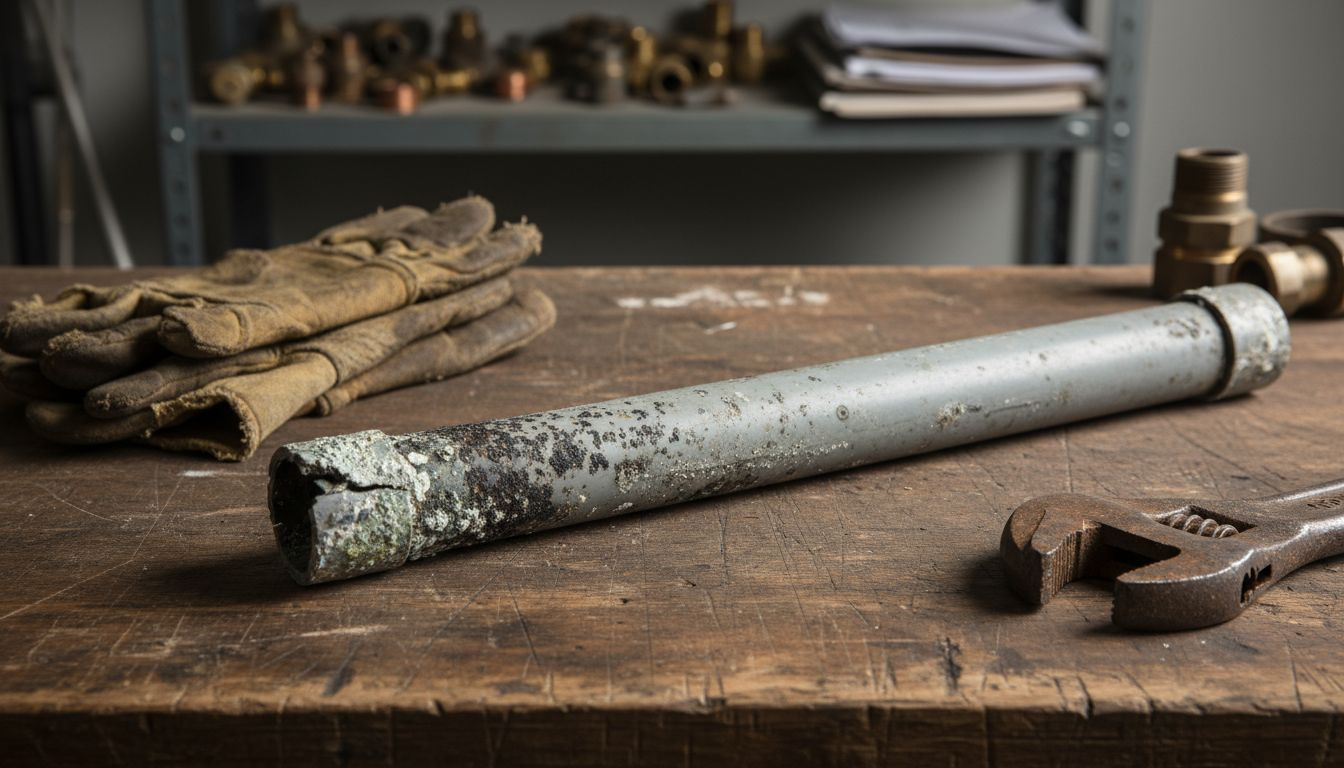
Pipe age matters significantly. Most plumbing materials last 20 to 30 years before requiring replacement consideration. If your home was built before 1996, there’s a good chance your pipes contain materials now considered unsafe or unreliable. Understanding how often to replace pipes helps you plan proactively.
Homeowners should inspect pipes for persistent leaks, corrosion, discoloration, water quality changes, and age to decide on replacement. Regular leaks or water damage despite repairs strongly suggest replacement rather than continued patching.
Watch for these specific warning signs:
- Recurring leaks in the same location after multiple repairs
- Visible rust, green oxidation, or corrosion on exposed pipes
- Reduced water pressure throughout your home
- Strange odors or tastes in your tap water
- Damp spots on walls, ceilings, or floors
- Unusually high water bills indicating hidden leaks
- Noisy pipes with banging or whistling sounds
California Plumbing Code and Legal Requirements for Pipe Replacement
California enforces strict plumbing standards to protect public health and safety. The 2022 California Plumbing Code sets mandatory standards for plumbing materials and installation, effective from January 1, 2023. These regulations aren’t suggestions; they’re legal requirements that impact your home’s safety, insurance coverage, and resale value.
California Plumbing Code restricts cast iron use due to corrosion and lead concerns. Modern materials must meet ASTM and NSF certifications for safety and compliance. Lead pipes are completely banned for potable water due to severe health risks. Using non-compliant materials results in failed inspections and mandated rework at your expense.
Replacement pipes require specific certifications. All materials must display ASTM (American Society for Testing and Materials) and NSF (National Sanitation Foundation) markings proving they meet California’s safety standards. These certifications ensure pipes won’t leach harmful chemicals into drinking water and can withstand California’s seismic activity.
Permits are required for plumbing pipe replacement in California, and failure to obtain them leads to fines and legal issues. Building departments require permits before work begins to verify compliance with state codes. Skipping permits creates serious problems when you sell your home or file insurance claims.
Documentation after installation ensures legal compliance. Final inspections verify proper installation and code adherence. Your contractor must provide you with permit closure documentation and certificates of compliance. Keep these records permanently with your home documents.
Follow these steps to ensure permit and code adherence:
- Contact your local building department before starting any pipe replacement work
- Request a plumbing permit application and submit required documentation
- Schedule initial inspection before covering any new pipes
- Verify your contractor holds a valid California C-36 plumbing license
- Request copies of all permits, inspection reports, and completion certificates
- Store all documentation with your home maintenance records
Understanding California plumbing code requirements prevents costly mistakes and ensures your replacement project meets all legal standards.
Repair vs Replacement: Making the Cost-Effective Decision
Smart homeowners evaluate long-term costs, not just immediate expenses. Replacing plumbing pipes is recommended when repair costs exceed 50% of replacement costs to optimize long-term expenditure and reliability. This 50% rule provides a clear threshold for financial decisions.
Frequent repairs drain your budget faster than you realize. Each emergency call, parts replacement, and water damage cleanup adds up. When you’re repairing the same pipes multiple times yearly, you’re spending money without solving the underlying problem. Replacement eliminates this cycle.
Replacement improves reliability dramatically. New pipes reduce emergency plumbing calls and the stress of unexpected failures. You gain peace of mind knowing your plumbing system won’t fail during holidays, weekends, or when you’re away from home.
Consider insurance implications carefully. Repeated water damage claims from failing pipes increase premiums or result in coverage denial. Some insurers refuse to renew policies for homes with known plumbing issues. Replacement protects your insurability.
Home value benefits substantially from updated plumbing. Buyers pay premium prices for homes with modern, code-compliant plumbing systems. During home inspections, old or failing pipes become major negotiation points that reduce your sale price.
Reviewing plumbing repair costs in Sacramento helps you understand local pricing. Understanding typical pipe replacement frequency guides your planning timeline.
Use this decision-making checklist:
- Calculate total repair costs over the past 12 to 24 months
- Obtain replacement cost estimates from licensed contractors
- Apply the 50% rule: if repairs exceed half the replacement cost, choose replacement
- Assess pipe age and remaining useful life expectancy
- Evaluate frequency and severity of recent plumbing problems
- Consider impact on home value and insurance coverage
- Factor in safety risks from outdated materials like lead or polybutylene
- Make your decision based on data, not emotion
Selecting the Right Materials for Pipe Replacement in California
Material selection determines your plumbing system’s longevity and safety. Plastic pipes such as PVC or PEX have significantly lower failure rates and longer lifespans compared to traditional materials like cast iron and ductile iron. Modern plastic pipes offer superior corrosion resistance and durability.
Avoid outdated materials completely. Polybutylene pipes fail unpredictably, often causing sudden flooding. Cast iron corrodes from inside, creating blockages and leaks. Lead pipes poison your water supply. Galvanized steel rusts and restricts water flow. These materials belong in the past, not your home.
California Plumbing Code mandates materials must meet ASTM and NSF certifications for safety and compliance. Never purchase pipes without visible certification markings. Non-certified materials fail inspections and require complete removal and replacement.
Environmental and health impacts favor modern plastic pipes for indoor water supply. PEX and PVC don’t leach harmful chemicals, resist bacterial growth, and maintain water quality. They also handle thermal expansion better than metal pipes, reducing leak risks.
| Material | Typical Lifespan | Failure Rate | Health Impact | Code Compliance |
|---|---|---|---|---|
| PEX | 40-50 years | Very Low | Safe | Fully Compliant |
| PVC | 50-70 years | Very Low | Safe | Fully Compliant |
| Copper | 50+ years | Low | Safe | Compliant |
| Cast Iron | 25-35 years | High | Corrosion risk | Restricted |
| Polybutylene | 10-15 years | Very High | Moderate | Banned |
| Lead | 80-100 years | Medium | Severe toxicity | Banned |
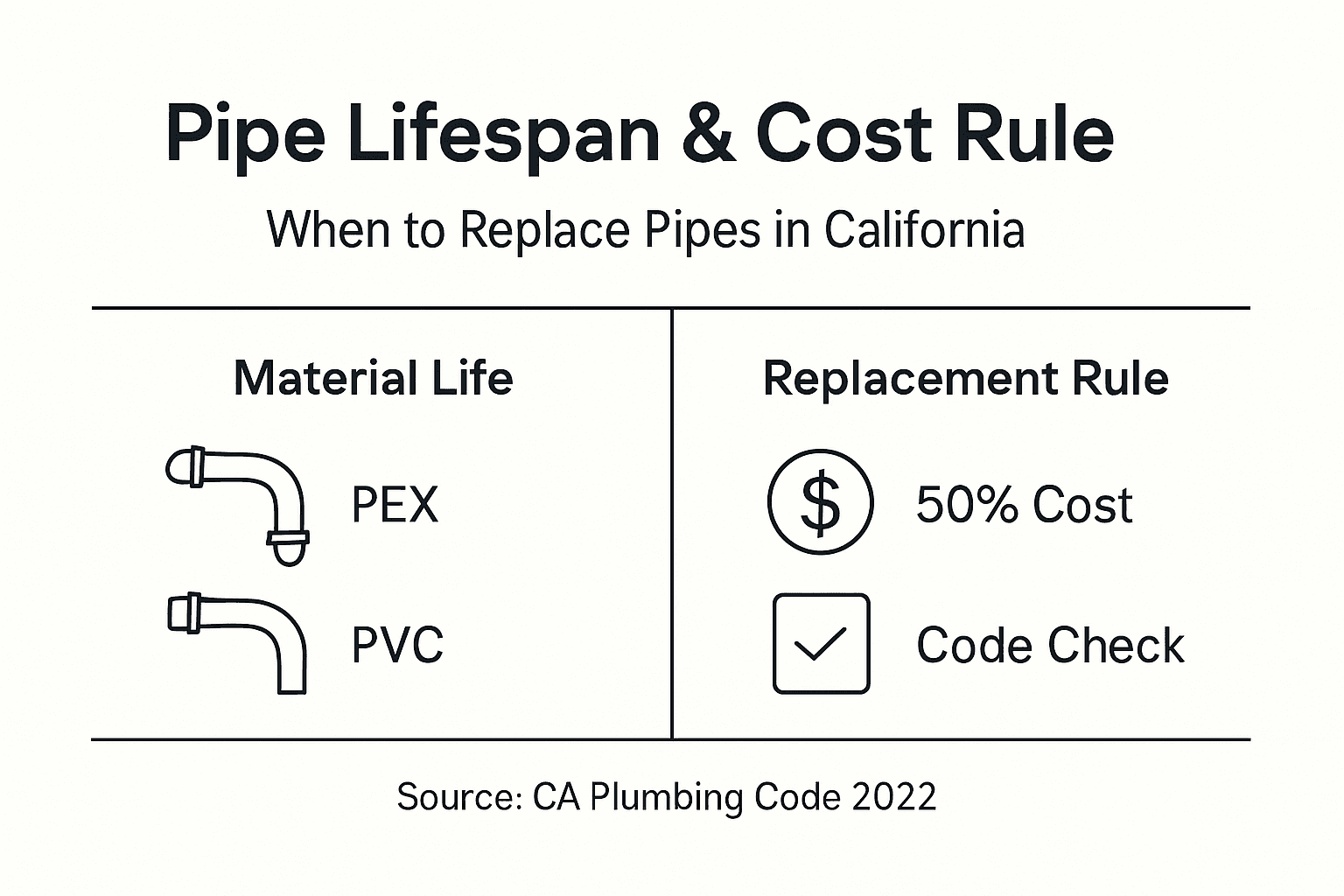
Understanding best pipe materials in California helps you choose wisely. PEX offers flexibility for tight spaces and resists freezing. PVC provides excellent durability for drain and waste lines. Copper remains reliable for water supply but costs more.
Key material considerations include:
- Water supply vs drain/waste applications require different materials
- Local water chemistry affects material compatibility and longevity
- Installation complexity varies significantly between pipe types
- Budget constraints balanced against expected lifespan
- Seismic requirements favor flexible materials in California
Pro Tip: Always verify certification marks on material packaging before purchase. Look for NSF-61 certification for drinking water safety and NSF-14 for plastic piping components. These certifications guarantee California code compliance.
Stepwise Process for Replacing Plumbing Pipes in California Homes
Successful pipe replacement follows a structured approach. Skipping steps creates problems that cost far more than doing it right initially. This process ensures legal compliance, safety, and long-term reliability.
-
Conduct thorough inspection for leaks, corrosion, hazardous materials, and age. Document all problem areas with photos and notes. Identify pipe material types throughout your home. Check for asbestos insulation on older pipes requiring special handling.
-
Review California Plumbing Code for compliance requirements specific to your project. Research local building department requirements and fees. Understand which code sections apply to your specific pipe replacement scope.
-
Evaluate repair costs versus replacement benefits using the 50% rule. Obtain multiple estimates from licensed contractors. Calculate total costs including permits, inspections, and potential wall repairs.
-
Select compliant materials like PVC or PEX based on application needs. Choose materials appropriate for water supply versus drain/waste lines. Verify all materials display required ASTM and NSF certification marks.
-
Obtain all necessary building permits before work begins, as failure to do so can lead to fines and legal issues. Submit permit applications with detailed scope of work. Pay required fees and wait for approval before starting.
-
Hire licensed plumbing contractor with California code expertise and valid C-36 license. Verify license status through CSLB website. Check references and insurance coverage. Confirm they pull permits in their name.
-
Complete pipe removal and install new pipes according to code requirements. Follow approved plans exactly. Use proper joining methods for selected materials. Install pipes with correct slope for drainage.
-
Perform pressure testing and obtain inspections and certification from building department. Schedule final inspection after installation completion. Address any correction notices immediately. Obtain permit closure documentation.
Reviewing pipe replacement steps provides additional guidance. Each step builds on the previous one, creating a compliant and reliable plumbing system.
Pro Tip: Maintain documented permits and inspections to protect home insurance and resale value. Store all paperwork in a permanent home maintenance file. These documents prove code compliance during home sales and insurance claims.
Common Mistakes to Avoid During Pipe Replacement
Learning from others’ mistakes saves you money and headaches. Many homeowners make preventable errors that compromise their pipe replacement projects. Understanding these pitfalls helps you avoid them.
Skipping permits and DIY approaches often lead to failed inspections and voided warranties. Improper DIY plumbing pipe replacement without adherence to code increases failure risk and can void insurance or warranties. Building departments discover unpermitted work during home sales, forcing costly corrections.
Ignoring California plumbing code creates safety risks and expensive rework. Non-compliant installations fail inspections, requiring complete removal and reinstallation. Code violations discovered years later force immediate corrections regardless of cost.
Poor planning extends water outages and inconveniences homeowners unnecessarily. Inadequate preparation leaves you without water for days. Failing to coordinate with contractors creates scheduling conflicts and delays.
Failure to perform adequate pressure testing risks future leaks. Improper testing misses weak joints and connections. Leaks discovered after walls are closed require destructive access and repairs.
Always hire licensed professionals and secure permits before starting any pipe replacement work. Understanding pipe replacement pitfalls prevents common errors.
Top mistakes and solutions:
- Starting work without permits: Always obtain permits before beginning any replacement work
- Hiring unlicensed contractors: Verify C-36 license status through CSLB before hiring
- Mixing incompatible pipe materials: Use approved transition fittings between different materials
- Inadequate pipe support: Follow code requirements for hanger spacing and support
- Skipping pressure testing: Always perform and document pressure tests before covering pipes
- Ignoring water chemistry: Consider local water conditions when selecting materials
- Poor documentation: Keep detailed records of all permits, inspections, and materials used
Expected Outcomes and Benefits After Replacing Pipes
Proper pipe replacement transforms your home’s plumbing system. The benefits extend far beyond stopping leaks. You gain reliability, safety, and peace of mind that justify the investment.
Improved water quality and elimination of discoloration or odors occur immediately. Clean pipes deliver clear, fresh-tasting water. Brown or rusty water disappears. Strange metallic tastes vanish. Your water becomes safe and pleasant again.
Reduced frequency of leaks and costly emergency repairs saves money over time. You’ll stop calling plumbers for recurring problems. Emergency service calls become rare. Water damage risks drop dramatically. Your plumbing system becomes predictable and reliable.
Compliance with updated California Plumbing Code ensures safety for your family. Modern materials eliminate lead exposure risks. Code-compliant installation prevents dangerous cross-connections. Proper venting protects against sewer gas intrusion. Your home meets current safety standards.
Extended plumbing system lifespan often exceeds 20 to 30 years with proper materials. PEX and PVC pipes last 40 to 70 years. You won’t face another major plumbing overhaul during your homeownership. This longevity provides excellent return on investment.
Plastic pipes fail up to 10 times less than old cast iron, offering superior reliability and eliminating the constant worry of sudden plumbing failures.
Replacing plumbing pipes can prevent health hazards like lead and asbestos exposure, and water contamination, improving home safety and water quality. Modern materials protect your family’s health for decades.
Long-term homeowner benefits include:
- Consistent water pressure throughout your home
- Lower utility bills from eliminated leaks
- Increased home value and marketability
- Reduced insurance premiums and claims
- Peace of mind knowing your plumbing is reliable
- Compliance documentation protecting resale value
- Environmental benefits from reduced water waste
Reliable Pipe Replacement Services for California Homeowners
Replacing plumbing pipes requires expertise, proper licensing, and deep knowledge of California codes. Legacy Plumbing & Drain Inc brings decades of experience helping Sacramento homeowners navigate pipe replacement projects from start to finish. Our licensed contractors ensure every installation meets current code requirements.
We handle the entire process including permit acquisition, code-compliant installation, pressure testing, and final inspections. Our team stays current with California Plumbing Code updates, so your replacement project uses approved materials and methods. We complete work efficiently while minimizing disruption to your daily routine.
Exploring pipe replacement options helps you understand your choices. Learning about best pipe materials ensures optimal selection. Understanding pipe replacement frequency helps you plan ahead.
Schedule a professional inspection today to assess your plumbing system’s condition. We’ll evaluate your pipes, explain your options clearly, and provide transparent estimates. Don’t wait for a catastrophic failure. Proactive replacement protects your home and saves money.
When to Replace Plumbing Pipes: FAQs
How do I know if my pipes need replacement?
Watch for persistent leaks, visible corrosion, discolored water, reduced pressure, and frequent repair needs. Pipes over 20 to 30 years old typically require replacement consideration. If your home contains polybutylene or lead pipes, replacement is strongly recommended regardless of age.
Are permits required for pipe replacement in California?
Yes, building permits are legally required for all pipe replacement projects in California. Permits ensure code compliance and protect your home value. Skipping permits results in fines, failed inspections, and problems during home sales or insurance claims.
What materials are recommended for replacement pipes?
PEX and PVC are recommended for most California homes due to superior durability and compliance. These materials resist corrosion, last 40 to 70 years, and meet California code requirements. Always verify materials display ASTM and NSF certification marks before purchase.
Is it cheaper to repair or replace old pipes?
Replace pipes when repair costs exceed 50% of replacement costs to optimize long-term spending. Factor in frequency of repairs, safety risks, and home value impact. Replacement eliminates recurring problems while repairs provide only temporary fixes.
What health risks come from old plumbing pipes?
Lead pipes cause severe neurological damage, especially in children. Polybutylene pipes release chemicals when degrading. Corroded pipes harbor bacteria and contaminate water. Asbestos insulation on old pipes creates airborne health hazards during disturbance. Modern pipe replacement eliminates these risks completely.
Recommended
- How Often To Replace Pipes: Complete Homeowner Guide – Legacy Plumbing & Drain – Emergency Plumbers Of Sacramento
- Cost Of Plumbing Repairs 2025: Sacramento & Nearby Cities Guide – Legacy Plumbing & Drain – Emergency Plumbers Of Sacramento
- Cost Of Plumbing Repairs 2025: Sacramento & Nearby Cities Guide – Legacy Plumbing & Drain – Emergency Plumbers Of Sacramento
- Understanding Pipe Replacement Options For Homeowners – Legacy Plumbing & Drain – Emergency Plumbers Of Sacramento