
Hot water is something most people take for granted until the day it disappears or turns rusty brown. That quick morning shower and your dishwasher cycles would not even be possible without your water heater quietly working behind the scenes. But here is what might surprise you. Heating water uses up about 18 percent of a typical home’s total energy consumption in the US. Most homeowners do not realize how much money and potential damage is on the line until their water heater starts to act up. There is a whole world of hidden warning signs and costly risks that come with owning this everyday appliance.
Table of Contents
- What Is A Water Heater And Its Role In Home
- Common Signs Indicating Water Heater Failure
- Why Recognizing Water Heater Issues Is Important
- How Water Heaters Function And Why They Fail
- When To Seek Professional Plumbing Help
Quick Summary
| Takeaway | Explanation |
|---|---|
| Monitor your water heater regularly | Regular checks can identify problems early, preventing costly repairs and water damage. |
| Watch for warning signs | Key indicators like discoloration and strange noises may signal a need for immediate attention. |
| Understand different water heater types | Knowing the strengths of each water heater type helps you choose the best option for your home. |
| Don’t ignore minor issues | Small problems, if neglected, can escalate into expensive replacements or repairs. |
| Seek professional help when necessary | Persistent leaks or inconsistent temperatures require qualified professionals to avoid safety risks. |
What is a Water Heater and Its Role in Home
A water heater is an essential home appliance responsible for heating and supplying hot water for various domestic activities. According to the U.S. Department of Energy, water heating accounts for approximately 18% of a home’s total energy consumption, making it a significant component of residential utility expenses.
Understanding Water Heater Functionality
Water heaters operate through a straightforward yet critical mechanism. They take cold water entering your home and heat it to a comfortable temperature suitable for bathing, washing dishes, doing laundry, and other household needs. Most residential water heaters are tank-based systems that store and continuously maintain hot water at a preset temperature, ensuring immediate availability when you turn on a hot water tap.
Types of Water Heaters in Modern Homes
Homeowners typically have several water heater options to choose from, each with unique characteristics:
- Tank Water Heaters: Traditional systems that store and heat water in a large tank
- Tankless Water Heaters: Compact units that heat water on demand
- Heat Pump Water Heaters: Energy-efficient models that transfer heat from the surrounding air
- Solar Water Heaters: Environmentally friendly systems using solar energy to heat water
Understanding these variations can help you read more about selecting the best water heater for your home. By comprehending how water heaters function and the range of available technologies, homeowners can make informed decisions about their home’s hot water infrastructure.
The table below compares common types of residential water heaters, summarizing their main characteristics and advantages for homeowners.
| Water Heater Type | How It Works | Key Advantages |
|---|---|---|
| Tank Water Heater | Stores and heats water in a large insulated tank | Reliable, ready hot water supply |
| Tankless Water Heater | Heats water instantly as it flows through the unit | Space-saving, energy efficient |
| Heat Pump Water Heater | Draws heat from the air to heat water | Highly energy efficient |
| Solar Water Heater | Uses solar energy to heat water via rooftop collectors | Environmentally friendly, lower bills |
Common Signs Indicating Water Heater Failure
Detecting water heater problems early can prevent costly repairs and potential water damage to your home. According to the International Association of Certified Home Inspectors, homeowners should regularly monitor their water heating systems for warning signs of potential failure.
Visual and Auditory Warning Signs
Water heater issues often manifest through specific visual and auditory indicators that homeowners should not ignore. Rust colored water emerging from hot water taps suggests internal tank corrosion.
Strange rumbling or popping noises during heating cycles might indicate sediment buildup inside the tank, which can significantly reduce the system’s efficiency and lifespan.
Performance and Efficiency Indicators
Decreasing hot water quality and inconsistent water temperatures are critical signs of potential water heater problems. Key performance indicators include:
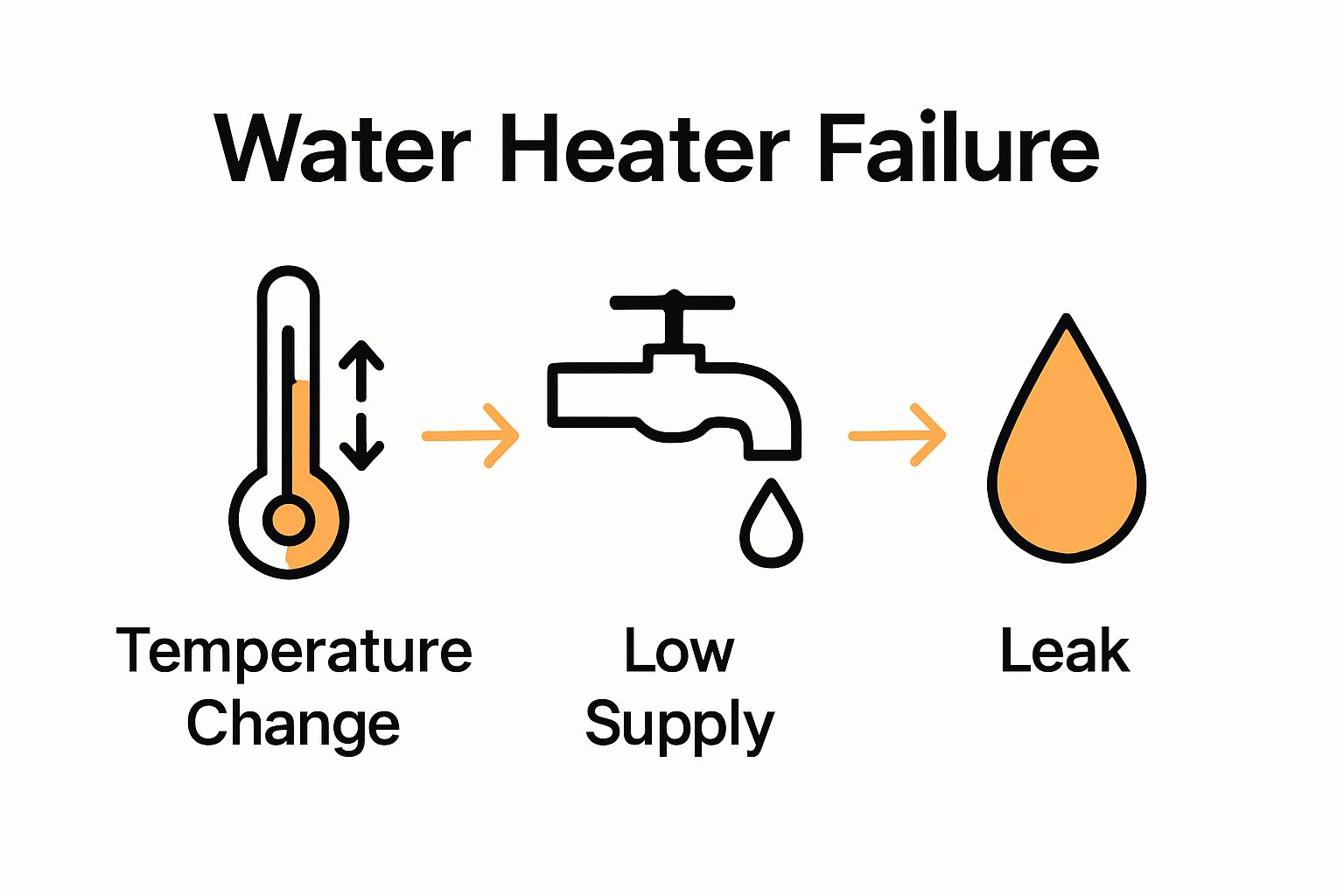
- Fluctuating Water Temperature: Sudden shifts between hot and cold water
- Reduced Hot Water Volume: Noticeably less hot water than previously experienced
- Unusual Water Color: Brownish or rust colored water
- Water Leaks: Visible moisture or pooling around the water heater base
Learn more about when to replace your water heater to prevent unexpected system failures. Proactive monitoring and timely professional inspection can help homeowners avoid emergency replacements and potential water damage to their property.
This table summarizes key warning signs of water heater failure, along with their potential implications, to help homeowners quickly recognize when action may be needed.
| Sign of Failure | Description | Possible Implication |
|---|---|---|
| Fluctuating Water Temperature | Sudden changes between hot and cold water | Thermostat or heating element issue |
| Reduced Hot Water Volume | Less hot water than usual | Sediment buildup or failing element |
| Unusual Water Color | Brownish or rust colored water | Tank corrosion or anode rod wear |
| Water Leaks | Moisture or pooling around heater base | Structural tank or plumbing failure |
| Strange Noises | Rumbling, popping, or crackling sounds | Internal sediment buildup |
Why Recognizing Water Heater Issues is Important
According to the Insurance Institute for Business & Home Safety, water heater failures can cause significant property damage, with some incidents resulting in thousands of dollars in repairs and potential structural harm. Early detection and proactive maintenance are crucial for preventing catastrophic system failures.
Financial Implications of Ignored Water Heater Problems
Neglecting water heater issues can lead to substantial financial consequences.
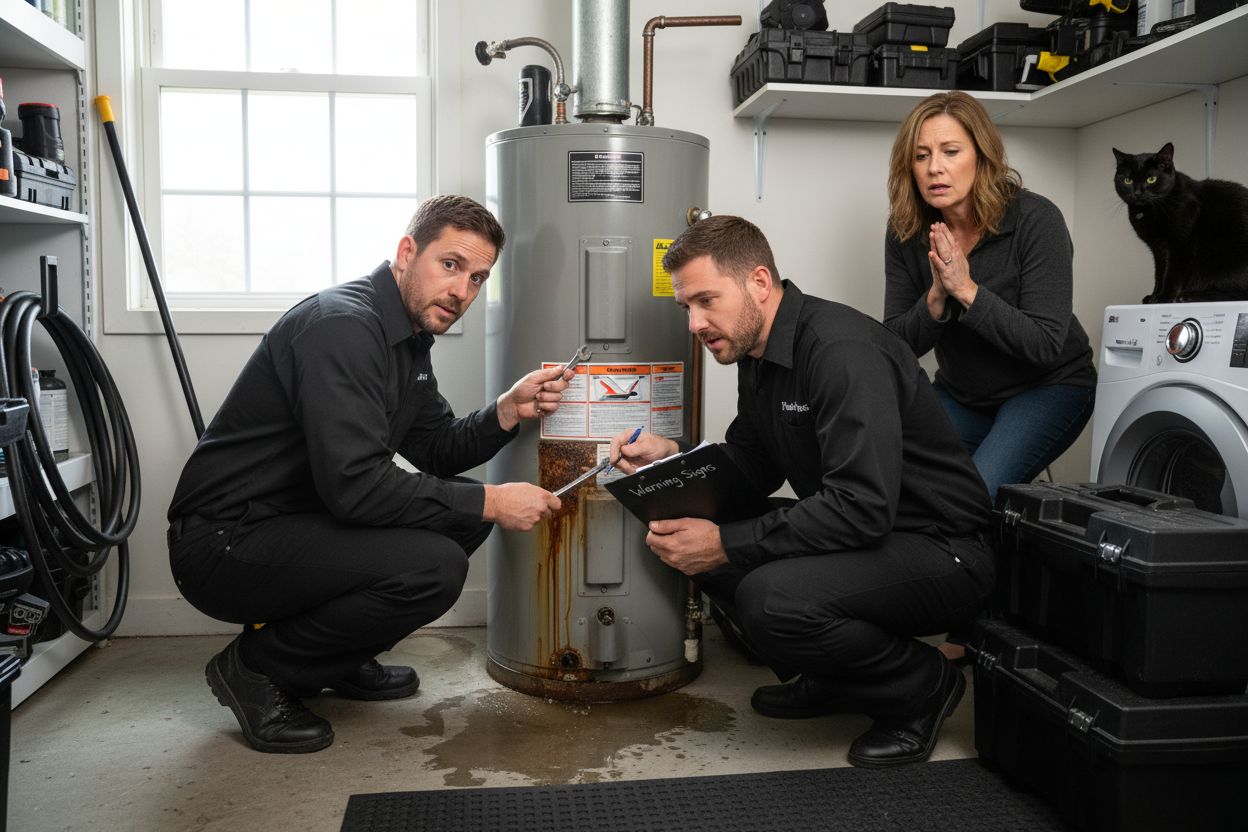 Minor problems that are initially inexpensive to repair can quickly escalate into major system replacements if left unaddressed. Unchecked water heater malfunctions can cause gradual damage to flooring, walls, and surrounding infrastructure, potentially increasing repair costs exponentially.
Safety and Home Protection Considerations
Water heater problems extend beyond financial concerns and directly impact home safety. Potential risks associated with malfunctioning water heaters include:
- Scalding Hazards: Uncontrolled temperature fluctuations can cause severe burn risks
- Potential Electrical Dangers: Faulty electrical connections might lead to short circuits
- Water Contamination: Corroded tanks can introduce harmful sediments into your water supply
- Structural Water Damage: Undetected leaks can compromise your home’s foundation and structural integrity
Check out our comprehensive water heater maintenance guide to understand how professional inspections and timely interventions can protect your home and investment. Regular monitoring and professional assessments are the most effective strategies for maintaining a safe, efficient water heating system.
How Water Heaters Function and Why They Fail
According to the National Renewable Energy Laboratory, water heaters are complex systems with multiple potential points of failure. Understanding their intricate operational mechanics helps homeowners anticipate and prevent potential breakdowns.
Basic Operational Mechanics
Water heaters fundamentally operate by transferring heat to water stored within a tank or heated instantaneously through specialized mechanisms. Traditional tank-based systems utilize heating elements or gas burners to raise water temperature, maintaining a consistent hot water supply. The heating process involves thermostats monitoring temperature, triggering heating cycles when water drops below a preset threshold.
Primary Mechanisms of Water Heater Failure
Multiple interconnected factors contribute to water heater deterioration and potential system failure:
- Sediment Accumulation: Mineral deposits gradually build up, reducing heating efficiency
- Anode Rod Corrosion: Protective metal rod deteriorates, compromising tank integrity
- Thermostat Malfunction: Temperature regulation mechanisms become unreliable
- Pressure Buildup: Excessive internal pressure can cause structural damage
Check out our guide on water heater leaks and quick fixes to understand how these mechanical issues manifest and impact your home’s water heating system. Regular professional inspections and proactive maintenance remain the most effective strategies for preventing unexpected water heater failures.
When to Seek Professional Plumbing Help
According to the American Society of Home Inspectors, certain water heater issues require immediate professional intervention to prevent extensive damage and potential safety risks. Recognizing these critical moments is crucial for homeowners.
Critical Warning Signs Demanding Professional Assessment
Some water heater problems pose significant risks that extend beyond simple repairs. Persistent leaks, unusual noises, inconsistent water temperatures, and visible tank corrosion are clear indicators that professional expertise is necessary. Homeowners should never attempt complex repairs without specialized knowledge, as this could exacerbate existing problems or create additional safety hazards.
Scenarios Requiring Immediate Professional Intervention
Certain water heater scenarios demand urgent professional attention to mitigate potential catastrophic failures:
- Significant Water Leakage: Pooling water around the base of the water heater
- Unusual Discoloration: Rust colored or muddy water from hot water taps
- Inconsistent Heating: Frequent temperature fluctuations or complete loss of hot water
- Strange Sounds: Loud rumbling, popping, or crackling noises during heating cycles
Learn about our emergency plumbing services to understand how professional intervention can quickly resolve potentially dangerous water heater issues. Professional plumbers possess the expertise to diagnose, repair, and prevent further complications, ensuring your home’s water heating system remains safe and functional.
Experience True Peace of Mind: Sacramento’s Water Heater Experts Are Here
Worried about strange noises, rust colored water, or leaks coming from your water heater? These are common warning signs of water heater failure and, as explained above, ignoring them can result in significant water damage or unexpected cold showers. Protecting your home from costly water heater breakdowns starts with quick action and the right professionals by your side.
Do not wait for minor issues to turn into major emergencies. The expert team at Legacy Plumbing & Drain Inc is ready to help you 24/7 with reliable inspection, repair, and replacement services. Visit our site today to discover how our emergency plumbing solutions keep your home safe and your water hot. Schedule your professional assessment now and let us handle your water heater problems before they escalate. Your comfort and safety are always our top priorities.
Frequently Asked Questions
What are the common signs that indicate my water heater may be failing?
Common signs of water heater failure include fluctuating water temperatures, reduced hot water volume, rust-colored water, and visible leaks around the base of the heater.
How can I prevent water heater problems from worsening?
Regular monitoring for warning signs, timely professional inspections, and routine maintenance can help prevent minor issues from escalating into major repairs or replacements.
Why is it important to address water heater issues promptly?
Promptly addressing water heater problems can prevent significant property damage, reduce repair costs, and ensure the safety of your home by minimizing risks like water leaks and scalding hazards.
What should I do if I notice unusual sounds coming from my water heater?
Unusual sounds, like rumbling or popping, may indicate sediment buildup or mechanical issues. It’s advisable to seek professional assessment to diagnose and resolve the problem safely.
Recommended
- Understanding When To Replace Water Heater For Homeowners – Legacy Plumbing & Drain – Emergency Plumbers Of Sacramento
- Sacramento Water Heater Leaks: Causes & Quick Fixes | Legacy Plumbing & Drain
- Water Heater Troubleshooting For Sacramento Homeowners (2025) – Legacy Plumbing & Drain – Emergency Plumbers Of Sacramento
- Understanding Your Water Heater Maintenance Guide – Legacy Plumbing & Drain – Emergency Plumbers Of Sacramento