Water heater problems can sneak up on Sacramento homeowners fast. A single leak can dump hundreds of gallons into your home within hours, wrecking floors and walls. Most people think water heater trouble starts with a cold shower. But the real danger is hidden damage and safety risks you never see coming. Here’s how to spot the warning signs before disaster hits.
Table of Contents
- Common Water Heater Problems And Warning Signs
- Step-By-Step Water Heater Troubleshooting Guide
- When To Call An Emergency Plumber Near You
- Prevention Tips For Reliable Hot Water All Year
Quick Summary
| Takeaway | Explanation |
|---|---|
| Monitor Temperature and Pressure | Regularly check water temperature (ideal between 120-130°F) and pressure (40-60 PSI) to prevent scalding risks and system damage. |
| Recognize Warning Signs | Be vigilant for signs like lukewarm water, unusual noises, or rust-colored water, indicating the need for immediate professional inspection. |
| Conduct Annual Maintenance | Schedule annual maintenance to flush the tank, inspect components, and replace the anode rod to extend your water heater’s lifespan. |
| Identify Emergency Indicators | Know the critical emergency signs like significant leaks or complete loss of hot water, which necessitate calling a plumber immediately. |
| Utilize Professional Help When Needed | While some minor troubleshooting can be done by homeowners, complex issues require professional expertise to ensure safety and proper functioning. |
Common Water Heater Problems and Warning Signs
Water heaters are complex systems that can develop various issues over time. Understanding the warning signs early can help Sacramento homeowners prevent costly repairs and potential water damage. Learn more about preventing water heater failures to protect your home’s critical infrastructure.
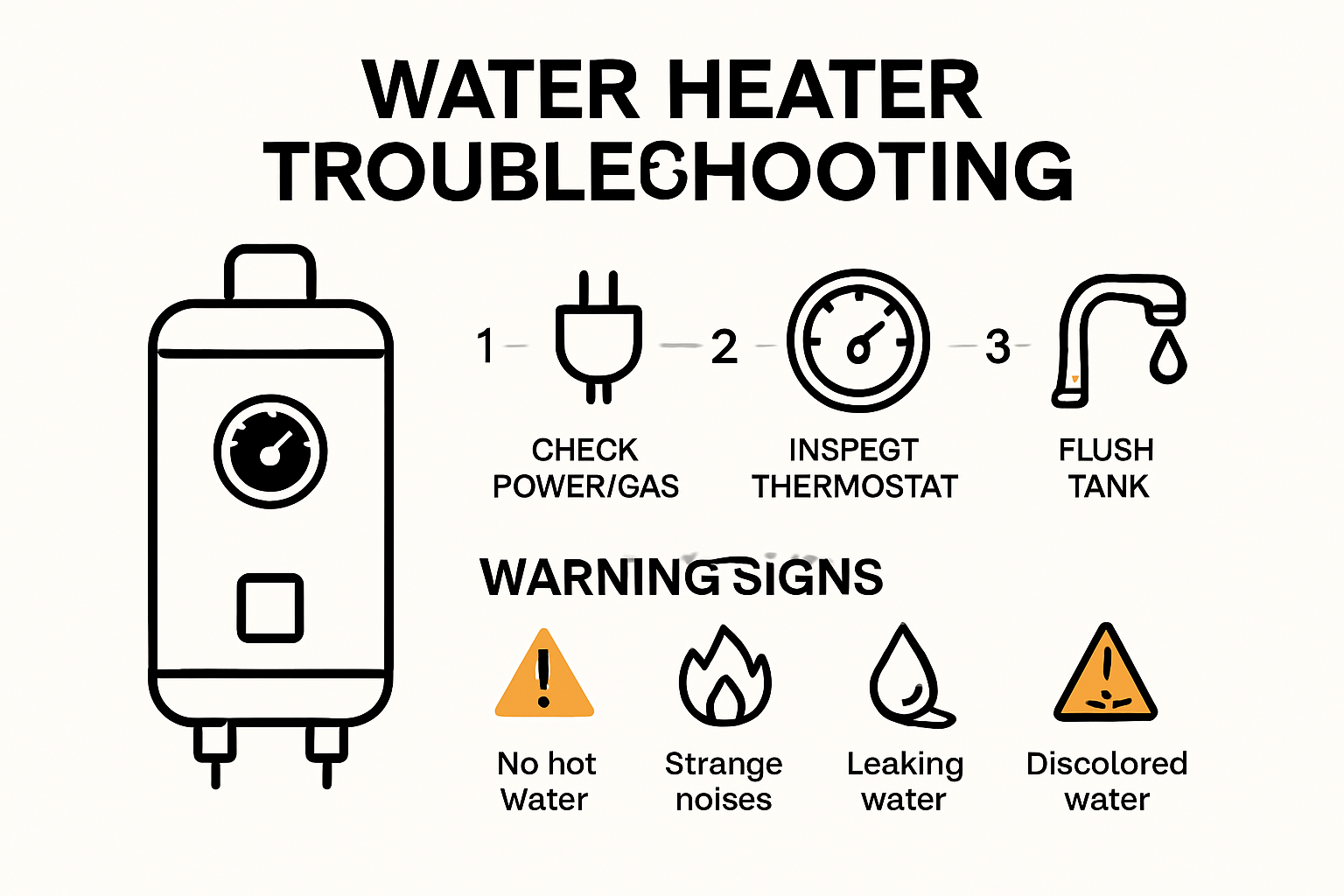
Temperature and Pressure Inconsistencies
Temperature problems represent one of the most common water heater challenges homeowners encounter. According to the U.S. Department of Energy, water heating accounts for approximately 18% of a home’s energy use, making it crucial to maintain optimal performance. Unexpected temperature fluctuations can signal underlying issues:
- Lukewarm Water: Indicates potential heating element failure or sediment buildup
- Scalding Temperatures: Suggests malfunctioning thermostat or pressure valve problems
The Journal of Burn Care & Research highlights that 41% of urban homes experience unsafe hot water temperatures exceeding 120°F, creating significant burn risks. Regular monitoring and professional inspection can prevent these dangerous temperature inconsistencies.
Unusual Noises and Physical Signs of Damage
Strange sounds and visible damage are critical warning signs that should never be ignored. Popping, crackling, or rumbling noises often indicate sediment accumulation inside the tank. This buildup can dramatically reduce your water heater’s efficiency and potentially lead to premature system failure.
Visible signs of trouble include:
- Rust-colored water
- Water pooling around the base of the tank
- Corrosion on tank connections
- Persistent leaking
These symptoms suggest internal tank deterioration or seal degradation. Homeowners should treat these warning signs as urgent indicators that professional assessment is necessary.
Reduced Water Heater Efficiency and Performance
Decreasing performance is another red flag for potential water heater problems. Signs of reduced efficiency include longer heating times, increased energy consumption, and inconsistent hot water supply. These issues can stem from various factors such as:
- Sediment buildup
- Failing heating elements
- Deteriorating tank insulation
- Outdated system technology
Proactive homeowners should schedule regular maintenance to catch these problems before they escalate into expensive repairs or complete system replacement. Annual professional inspections can help identify potential issues early and extend your water heater’s operational lifespan.
Remember that water heater troubleshooting requires expertise. While some minor issues can be addressed through basic maintenance, complex problems demand professional intervention to ensure safety and system integrity.
To help you quickly identify and interpret common water heater problem symptoms, the following table summarizes typical warning signs and their likely causes:
| Warning Sign | Likely Cause | Urgency |
|---|---|---|
| Lukewarm water | Heating element failure, sediment buildup | Moderate |
| Scalding hot water | Malfunctioning thermostat, pressure valve | High |
| Rust-colored water | Internal tank corrosion | High |
| Water pooling at base | Leak, seal degradation | Critical |
| Popping or rumbling noises | Sediment accumulation | Moderate |
| Corrosion on tank connections | Deterioration of fittings/seals | High |
| Persistent leaking | Internal tank failure | Critical |
Step-by-Step Water Heater Troubleshooting Guide
Navigating water heater issues requires a systematic approach that combines careful observation, basic diagnostic skills, and knowing when to call professional help. Explore our comprehensive guide to water heater maintenance to ensure your home’s hot water system remains in optimal condition.
Diagnostic Procedures for Electric Water Heaters
Troubleshooting electric water heaters demands a methodical process. According to the University of Hawai’i Maui College, specific diagnostic steps can help identify and potentially resolve common issues:
No Hot Water Scenarios
- Check the circuit breaker: Ensure it hasn’t tripped
- Inspect electrical connections: Look for loose or damaged wires
- Test thermostat functionality: Use a multimeter to verify electrical continuity
The diagnostic process involves precise testing techniques. When checking heating elements, homeowners should:
- Turn off power at the main electrical panel
- Remove access panels carefully
- Disconnect wires from the heating element
- Use a multimeter to test for continuity
A reading of zero indicates a failed heating element requiring replacement. This methodical approach helps Sacramento homeowners diagnose issues before calling a professional.
Gas Water Heater Troubleshooting Techniques
Gas water heaters present unique diagnostic challenges. University of Hawai’i Maui College provides insights into common gas water heater problems:
Pilot Light and Gas Supply Diagnostics
- Verify gas meter and gas cock are fully open
- Check for obstructions in the gas regulator
- Inspect pilot light for consistent flame
- Examine thermocouple for proper positioning
Common issues include:
- No gas reaching the pilot
- Inconsistent pilot flame
- Debris in gas regulation system
Homeowners should exercise caution and prioritize safety when dealing with gas systems. Any complex gas-related issues require immediate professional intervention.
For reference, here’s a table outlining the key troubleshooting steps for electric versus gas water heaters:
| Step | Electric Water Heater | Gas Water Heater |
|---|---|---|
| Power Supply Check | Inspect circuit breaker | Verify gas meter and gas cock open |
| Element/Component Inspection | Test heating elements with multimeter | Check pilot light/regulator/thermocouple |
| Thermostat Assessment | Use multimeter for continuity | Not applicable (uses gas control) |
| Visual Inspection | Look for corrosion, leaks, or damaged wires | Look for leaks, corrosion, and burner issues |
| Safety Precautions | Turn off power before inspecting | Shut off gas supply if needed |
| When to Call Professional | After component failure or safety concerns | For gas supply/flame issues or leaks |
Safety Checks and Professional Assessment
While basic troubleshooting can resolve minor issues, certain warning signs demand professional expertise. Critical safety checks include:
- Examining tank for visible corrosion or leaks
- Checking pressure relief valve functionality
- Verifying water temperature safety levels
- Listening for unusual sounds indicating internal damage
Professional plumbers can perform comprehensive diagnostics that go beyond basic homeowner checks. They use specialized equipment to:
- Conduct thorough system evaluations
- Identify hidden structural issues
- Recommend precise repair or replacement strategies
Remember that water heater troubleshooting involves balancing DIY techniques with professional expertise. While basic diagnostic skills are valuable, complex issues require specialized knowledge to ensure system safety and efficiency.
Ultimately, Sacramento homeowners should approach water heater troubleshooting with a combination of caution, systematic investigation, and willingness to seek professional help when needed.
When to Call an Emergency Plumber Near You
Water heater emergencies can escalate quickly, transforming minor issues into significant home disasters. Learn about our immediate response emergency services to protect your Sacramento home from potential water damage and system failures.
Critical Water Heater Emergency Warning Signs
Recognizing the difference between a manageable issue and a true plumbing emergency is crucial for homeowners. According to plumbing experts, certain scenarios demand immediate professional intervention. The Parker and Sons Plumbing Guide highlights several critical warning signs:
Immediate Emergency Indicators
- Significant water leaks from the tank or connections
- Complete loss of hot water with no apparent cause
- Unusual loud popping or rumbling sounds
- Water discoloration or metallic odors
- Active water pooling around the water heater
- Visible corrosion or significant external damage
These warning signs suggest potential system failure that could lead to extensive property damage. Water heater leaks, in particular, can cause rapid destruction to flooring, walls, and surrounding infrastructure. A small leak can release hundreds of gallons of water within hours, creating substantial repair costs.
Understanding the Risks of Delayed Response
Delaying professional assessment during a potential water heater emergency can lead to catastrophic consequences. The 3R Plumbing and Mechanical emphasizes that seemingly minor issues can quickly escalate:
Potential Consequences of Inaction
- Structural water damage
- Electrical system complications
- Mold and mildew growth
- Compromised home foundation
- Potential electrical hazards
- Increased repair and replacement costs
Homeowners should particularly prioritize emergency services when experiencing gas water heater issues. Gas leaks or pilot light problems pose significant safety risks, including potential carbon monoxide exposure and fire hazards.
Professional Assessment and Rapid Response Strategy
Effective emergency plumbing response requires a strategic approach. Professional plumbers recommend:
- Immediately shut off water and power supply to the water heater
- Document visible damage for insurance purposes
- Remove valuable items from the affected area
- Contact a licensed emergency plumber within the first hour of discovering a serious issue
- Avoid attempting complex repairs without professional guidance
Sacramento homeowners should maintain a list of trusted emergency plumbing contacts. Rapid response can mean the difference between a manageable repair and a total system replacement. Professional plumbers bring specialized diagnostic tools, immediate repair capabilities, and expertise to mitigate potential long-term damage.
Remember that water heater emergencies are time-sensitive. While some issues can wait for standard business hours, significant leaks, gas problems, or complete system failures require immediate professional attention. Trust your instincts and prioritize your home’s safety and integrity.
Prevention Tips for Reliable Hot Water All Year
Maintaining a consistent hot water supply requires proactive care and strategic maintenance. Discover expert strategies for water heater longevity to ensure your Sacramento home enjoys uninterrupted hot water throughout the year.
Annual Maintenance and Inspection Protocols
Prevention is the cornerstone of reliable water heater performance. According to the U.S. Department of Energy, implementing a comprehensive annual maintenance routine can significantly extend your water heater’s lifespan and efficiency.
Critical Annual Maintenance Tasks
- Flush the water heater tank completely
- Inspect and replace the anode rod every 3-5 years
- Check pressure relief valve functionality
- Examine electrical connections and components
- Test water temperature and pressure settings
- Clean exterior surfaces and check for corrosion
The anode rod plays a crucial protective role by preventing tank corrosion. Homeowners should schedule professional inspection to ensure this component remains effective. Sediment buildup can reduce heating efficiency by up to 50%, making annual flushing a critical maintenance step.
To support your annual maintenance planning, this table outlines the key preventive tasks homeowners should complete each year:
| Maintenance Task | Recommended Frequency | Benefit |
|---|---|---|
| Flush water heater tank | Annually | Removes sediment, improves efficiency |
| Inspect/replace anode rod | Every 3-5 years | Prevents tank corrosion |
| Check pressure relief valve | Annually | Ensures safety, prevents overpressure |
| Test water temperature/pressure | Annually | Maintains safe operation |
| Inspect electrical components (if electric) | Annually | Reduces risk of failure |
| Clean exterior/check for corrosion | Annually | Extends lifespan |
Temperature and Pressure Management
Proper temperature and pressure settings are fundamental to water heater longevity and safety. Experts recommend maintaining specific parameters to prevent potential damage:
Optimal Temperature and Pressure Guidelines
- Set water temperature between 120-130 degrees Fahrenheit
- Maintain consistent water pressure (typically 40-60 PSI)
- Install and regularly test pressure relief valves
- Use thermal expansion tanks in closed water systems
Improper temperature settings can lead to several issues:
- Scalding risks at temperatures above 140 degrees
- Increased energy consumption
- Accelerated mineral and sediment buildup
- Potential damage to internal components
Preventive Strategies for Long-Term Performance
Sacramento homeowners can implement additional strategies to enhance water heater reliability:
- Insulate hot water pipes to reduce heat loss
- Consider water softening systems to minimize mineral buildup
- Monitor water quality and address hard water concerns
- Upgrade to energy-efficient models when replacement becomes necessary
- Maintain clear space around the water heater
- Install drain pans to catch potential leaks
- Check manufacturer warranties and maintenance recommendations
Regular professional inspections can identify potential issues before they escalate. Trained technicians can provide comprehensive assessments, detecting early signs of wear, corrosion, or inefficiency that might not be apparent to the average homeowner.
Remember that preventive maintenance is an investment in your home’s infrastructure. By dedicating time and resources to proper water heater care, Sacramento homeowners can avoid costly emergency repairs, ensure consistent hot water supply, and maximize their system’s operational lifespan.
Frequently Asked Questions
What are the most common water heater problems for Sacramento homeowners?
Water heater problems can include temperature inconsistencies, unusual noises, reduced efficiency, and visible signs of damage like rust-colored water or leaks. Recognizing these issues early can prevent costly repairs.
How can I troubleshoot my electric water heater?
To troubleshoot an electric water heater, check the circuit breaker, inspect electrical connections for damage, and test the thermostat using a multimeter. If there’s no hot water, it’s essential to look for issues with the heating elements and replace any faulty parts.
When should I call an emergency plumber for my water heater?
Call an emergency plumber if you notice significant leaks, complete loss of hot water, unusual loud noises, or visible corrosion. Delaying response during these emergencies can lead to extensive water damage and increased repair costs.
What maintenance should I perform to prevent water heater issues?
Homeowners should conduct annual maintenance, including flushing the tank, inspecting the anode rod, testing the temperature and pressure valves, and checking for corrosion. Regular check-ups can significantly extend the life of your water heater.
Restore Hot Water Confidence with Sacramento’s Experts
Have you noticed lukewarm showers, odd noises from your tank, or water puddling around your heater? The article highlights how even small water heater problems can lead to major home damage, wasted energy, and unexpected cold showers. When troubleshooting DIY efforts fall short, peace of mind comes from guidance you can trust.
Let expert help ease your worries. Sacramento homeowners rely on Legacy Plumbing & Drain Inc for fast 24/7 water heater diagnosis, reliable repairs, and proven maintenance programs. Schedule your service now and prevent emergencies before they start. Visit our website and discover why we’re Sacramento’s top emergency plumbers for hot water relief and home protection.