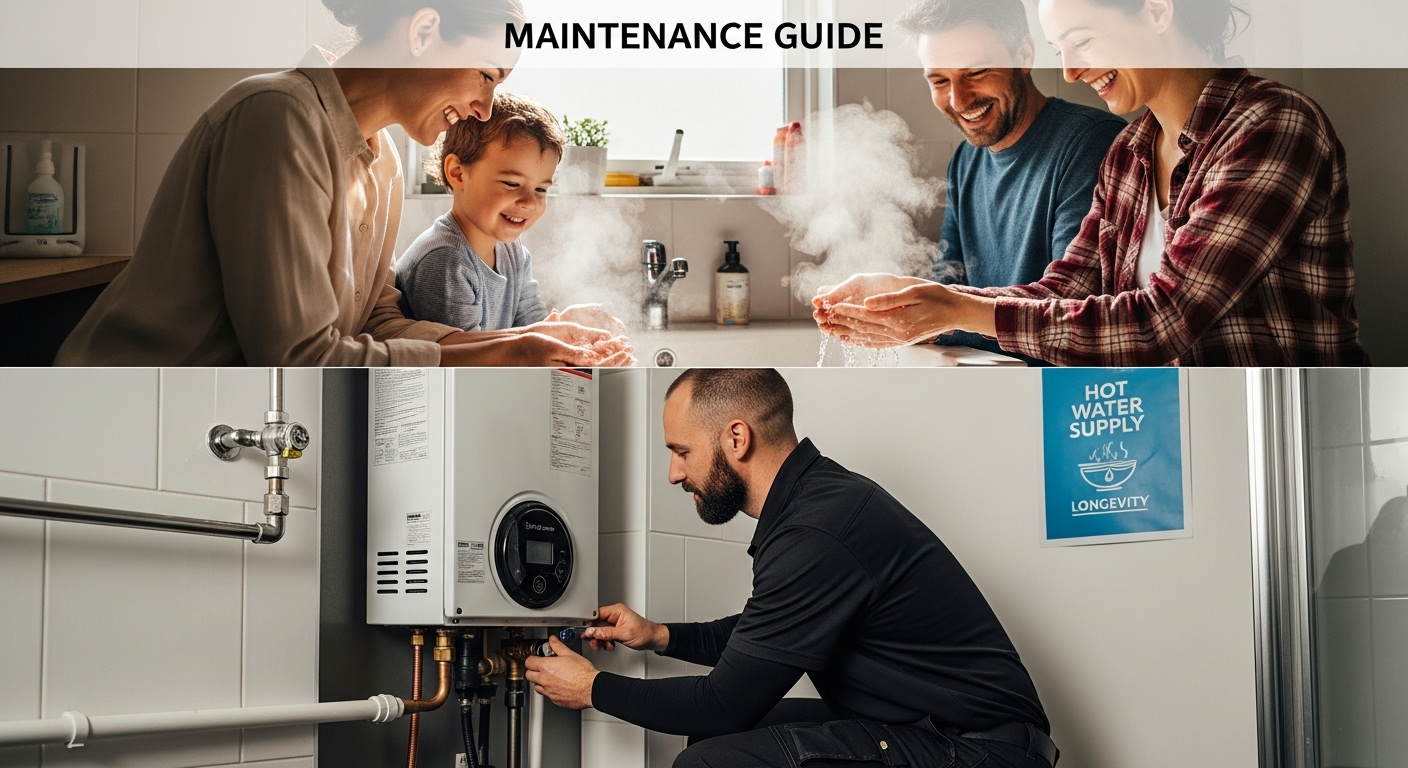
Hot showers and clean dishes depend on one often forgotten hero: the water heater. Yet even the best models can quietly lose efficiency and drain cash if neglected. It might surprise you, but annual maintenance can actually add several years to a water heater’s lifespan and prevent up to 25 percent higher energy bills. Most people pay little attention until things break, but understanding how your water heater really works can save you from cold surprises and costly repairs.
Table of Contents
- What Is A Water Heater And How Does It Function?
- Why Maintenance Matters For Your Water Heater’s Longevity
- Key Components Of A Water Heater System Explained
- Common Issues And Their Impact On Performance
- Understanding The Maintenance Timeline And Frequency
Quick Summary
| Takeaway | Explanation |
|---|---|
| Regular Maintenance Extends Lifespan | Annual inspection and care can enhance the longevity and functionality of your water heater. |
| Set Temperature to 120°F | This temperature minimizes sediment buildup and reduces the risk of scalding, improving safety and efficiency. |
| Watch for Sediment Accumulation | Regular flushing of the tank helps eliminate sediment that can impact heating efficiency and increase energy costs. |
| Identify Common Performance Issues | Be aware of problems like inconsistent temperature and strange noises, which may indicate maintenance needs or mechanical failures. |
| Different Maintenance Needs for Models | Understand that traditional tanks, tankless systems, and solar heaters have unique maintenance schedules and requirements. |
What is a Water Heater and How Does It Function?
A water heater is a fundamental home appliance designed to heat and store water for daily household needs. Explore top water heater brands for your home to understand the variety of options available.
The Basic Components of a Water Heater
Every water heater consists of several critical components that work together to provide hot water efficiently. The primary elements include:
- Tank: A large container that stores heated water
- Heating Element: Electric or gas mechanism responsible for warming water
- Thermostat: Controls water temperature and regulates heating process
- Pressure Relief Valve: Ensures safe operation by releasing excess pressure
How Water Heaters Generate Hot Water
According to the U.S. Department of Energy, water heaters function through a straightforward heat transfer process. Cold water enters the tank and is heated by either gas burners or electric heating elements. The heated water rises to the top of the tank, ready for distribution through home plumbing systems.
Typically, residential water heaters maintain water temperatures between 120 and 140 degrees Fahrenheit. This range provides comfortable hot water for showers, washing dishes, and other household activities while preventing potential scalding risks.
Water heaters come in various types, including traditional tank models and modern tankless systems. Tank water heaters store and continuously heat a specific volume of water, while tankless versions heat water on demand, offering potentially greater energy efficiency.
Understanding your water heater’s basic functionality helps homeowners make informed maintenance and replacement decisions, ensuring consistent hot water supply and optimal system performance.
Why Maintenance Matters for Your Water Heater’s Longevity
Regular water heater maintenance is crucial for preserving the appliance’s performance, efficiency, and overall lifespan. Learn about preventing plumbing emergencies in Sacramento to understand comprehensive home maintenance strategies.
The Cost of Neglecting Water Heater Maintenance
Neglecting water heater maintenance can lead to significant financial and operational consequences. According to Maryland Department of Labor, sediment build-up can cause multiple critical issues:
- Reduced Efficiency: Sediment layers decrease heat transfer effectiveness
- Higher Energy Costs: Accumulated sediment forces the system to work harder
- Premature System Failure: Untreated sediment can cause irreversible tank damage
Proactive Maintenance Strategies
Homeowners can extend their water heater’s lifespan through strategic maintenance practices. The U.S. Department of Energy recommends setting water heater temperatures to 120 degrees Fahrenheit to minimize mineral buildup and reduce potential corrosion.
Additional maintenance strategies include:
- Annual professional inspection
- Regular tank flushing to remove sediment
- Checking and replacing the anode rod every few years
- Testing the pressure relief valve
- Insulating the water heater and surrounding pipes
By implementing these maintenance techniques, homeowners can potentially extend their water heater’s operational life by several years, avoiding costly premature replacements and ensuring consistent hot water supply. Proactive care not only preserves the appliance but also maintains its energy efficiency and performance.
Key Components of a Water Heater System Explained
Understanding the intricate components of a water heater is crucial for effective maintenance and troubleshooting. Learn about common water heater leak repairs to better comprehend potential system vulnerabilities.
Primary Structural Components
A water heater comprises several essential elements that work together to provide consistent hot water. According to Purdue University Extension, these key components include:
- Tank: The primary storage vessel for heated water
- Dip Tube: Directs cold water to the bottom of the tank
- Heating Element/Burner: Responsible for heating the water
- Thermostat: Regulates and maintains water temperature
Critical Safety and Functional Components
Beyond the basic structure, water heaters include several specialized components that ensure safe and efficient operation:
- Pressure Relief Valve: Prevents tank explosions by releasing excess pressure
- Anode Rod: Protects the tank from corrosion through sacrificial metal protection
- Drain Valve: Allows for tank draining during maintenance
- Flue: Vents combustion gases in gas-powered water heaters
Each component plays a unique role in the water heating process. The dip tube ensures cold water enters at the tank’s bottom, allowing heated water to rise naturally. The anode rod sacrifices itself to prevent tank corrosion, essentially acting as a protective shield for the entire system. The pressure relief valve serves as a critical safety mechanism, preventing potential catastrophic failures by releasing built-up pressure.
Modern water heaters often incorporate advanced features like electronic monitoring systems and improved insulation, further enhancing their efficiency and longevity.
The core components of a water heater play unique and critical roles in ensuring efficient and safe performance. The table below breaks down these components with their functions for quick reference.
| Component | Function |
|---|---|
| Tank | Stores heated water for household use |
| Heating Element/Burner | Heats the incoming water (electric or gas) |
| Thermostat | Regulates water temperature and heating cycle |
| Dip Tube | Directs cold water to the tank bottom |
| Pressure Relief Valve | Releases excess pressure to prevent tank explosion |
| Anode Rod | Sacrifices itself to prevent tank corrosion |
| Drain Valve | Allows draining of tank for maintenance or replacement |
| Flue | Vents combustion gases in gas-powered models |
Common Issues and Their Impact on Performance
Water heaters, like any complex home appliance, can experience various performance challenges that compromise their efficiency and reliability. Learn how to choose the best plumber for water heater repairs to address potential problems effectively.
Sediment Buildup and Performance Degradation
One of the most prevalent issues affecting water heater performance is sediment accumulation. Over time, minerals like calcium and magnesium settle at the tank’s bottom, creating a barrier that significantly reduces heat transfer efficiency. Key consequences include:
- Reduced Heating Efficiency: Sediment layers prevent direct heat contact
- Increased Energy Consumption: System works harder to heat water
- Potential Tank Damage: Long-term sediment buildup can cause corrosion
Critical Performance Impairments
Water heaters can suffer from multiple performance issues that compromise their functionality. Common problems include:
- Inconsistent Water Temperature: Indicates potential thermostat or heating element failure
- Strange Noises: Sediment accumulation can cause popping or crackling sounds
- Discolored Water: Suggests internal tank corrosion or significant mineral buildup
- Reduced Hot Water Volume: Often signals potential component degradation
Early detection of these issues is crucial for preventing extensive damage. Homeowners should pay attention to subtle changes in water temperature, unusual sounds, or variations in hot water supply. Professional inspections can help identify and address potential problems before they escalate into costly repairs or complete system failure.
Regular maintenance, including annual flushing and professional assessments, can significantly mitigate these performance challenges. By understanding and proactively managing these common issues, homeowners can extend their water heater’s operational life and maintain consistent, efficient hot water supply.
Understanding the Maintenance Timeline and Frequency
Maintaining a consistent water heater maintenance schedule is crucial for ensuring optimal performance and extending the appliance’s lifespan. Explore our comprehensive plumbing maintenance strategies to develop a proactive home care approach.
Annual Maintenance Essentials
According to the U.S. Environmental Protection Agency, professional water heater servicing should occur at least once annually. This critical maintenance window includes several key inspection and care activities:
- Visual System Inspection: Checking for potential leaks or corrosion
- Sediment Flushing: Removing mineral buildup from tank bottom
- Safety Valve Testing: Ensuring pressure relief mechanisms function correctly
- Efficiency Assessment: Evaluating overall system performance
Maintenance Frequency by Water Heater Type
Different water heater models require varied maintenance approaches.
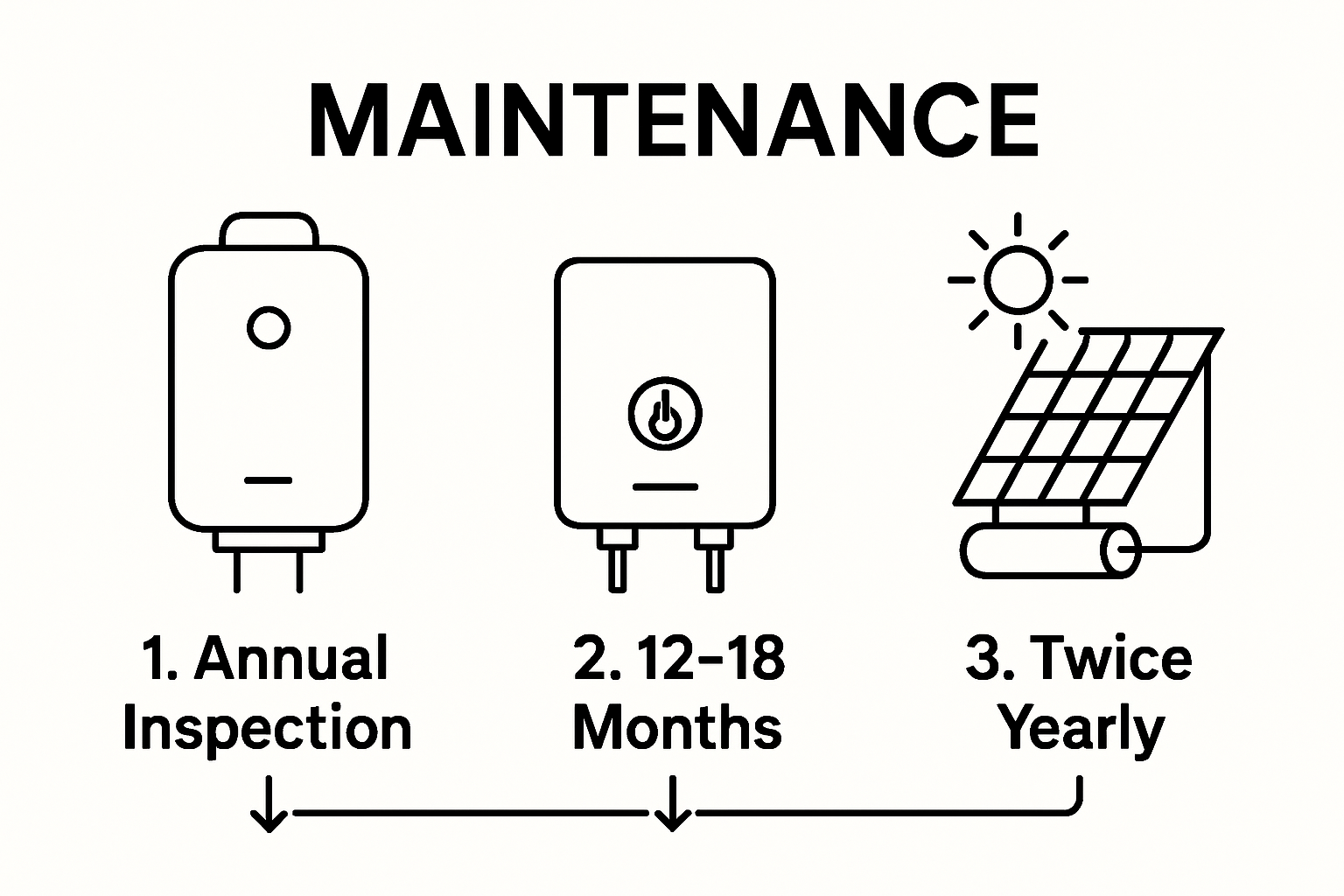 Homeowners should consider these general guidelines:
- Traditional Tank Water Heaters: Annual professional inspection
- Tankless Water Heaters: Comprehensive service every 12-18 months
- Solar Water Heaters: Detailed inspection twice yearly
- Heat Pump Water Heaters: Professional maintenance annually
Understanding that maintenance needs can vary based on water quality, usage patterns, and local environmental conditions is crucial.
To better understand which type of water heater might fit your needs and the related maintenance requirements, the table below summarizes the key distinctions among major types mentioned in the guide.
| Water Heater Type | Water Storage Method | Maintenance Frequency | Notable Features |
|---|---|---|---|
| Traditional Tank | Stores heated water in a tank | Annual professional inspection | Consistent hot water supply; larger footprint |
| Tankless | No storage; heats on demand | Every 12-18 months | Energy-efficient; continuous hot water |
| Solar | Uses solar energy; varies | Twice yearly | Environmentally friendly; depends on climate |
| Heat Pump | Draws heat from air/electric | Annual professional maintenance | Energy-efficient; higher upfront cost |
Proactive maintenance not only prevents unexpected breakdowns but also optimizes energy efficiency, potentially reducing long-term operational costs. Homeowners who invest time and resources in regular water heater care can expect extended appliance life, consistent performance, and reduced risk of costly emergency repairs.
Stop Water Heater Problems Before They Become Emergencies
Have you noticed signs of sediment buildup, strange noises, or inconsistent water temperature from your water heater? These common problems, highlighted in our guide, can quickly lead to energy waste and costly repairs if not handled early. A neglected water heater means not only discomfort but also unexpected interruptions to your family’s daily routine. Letting maintenance slide puts your home’s comfort and safety at risk.
Keep your water heater running smoothly with professional support from the experts at Legacy Plumbing & Drain Inc. Our experienced technicians are available 24/7 to tackle any water heater trouble. Take the first step to safe, efficient hot water by booking an inspection or repair today. Visit our website for fast assistance and discover how our full suite of plumbing repair and maintenance services can keep your home protected. Don’t wait for a breakdown—act now to prevent problems and enjoy peace of mind.
Frequently Asked Questions
What are the main components of a water heater?
A water heater typically consists of a tank for storage, a heating element (either electric or gas), a thermostat to regulate temperature, and a pressure relief valve for safety.
How often should I perform maintenance on my water heater?
It’s recommended to have a professional inspection and maintenance at least once a year, with additional servicing for tankless models every 12-18 months and for solar water heaters twice yearly.
What can happen if I neglect water heater maintenance?
Neglecting maintenance can lead to reduced efficiency, higher energy costs, and potential premature system failure due to sediment buildup and corrosion.
How can I extend the lifespan of my water heater?
You can extend your water heater’s lifespan by regularly inspecting the system, flushing the tank to remove sediment, checking the anode rod, testing the pressure relief valve, and insulating pipes.