Fixing a leaky faucet or unclogging a drain sounds simple enough until you realize that over 60 percent of DIY plumbing attempts leave behind even bigger problems that end up needing a pro anyway. Surprised? Most people start out thinking a quick online video and a wrench are all it takes to get the job done. The real catch is that a small mistake here can snowball fast into water damage, ruined walls, and bills you never saw coming.
Table of Contents
- Defining Diy Plumbing Mistakes: What To Watch For
- The Importance Of Knowing Plumbing Basics: Why It Matters
- Common Errors In Diy Plumbing: How They Occur
- Impact Of Diy Mistakes On Your Home: What To Expect
- Preventing Future Issues: Key Concepts To Understand
Quick Summary
| Takeaway | Explanation |
|---|---|
| Avoid underestimating plumbing complexity | Many homeowners misjudge the difficulty of plumbing tasks, leading to costly errors. Know your limits before attempting repairs. |
| Learn basic plumbing principles | Understanding fundamental plumbing concepts protects your home and prevents costly disasters. Educate yourself to maintain your property effectively. |
| Recognize when to hire a professional | Tasks involving major systems should always be handled by experts. Knowing when to call for help saves time and money. |
| Conduct regular plumbing maintenance | Regular checks can identify small issues before they escalate, minimizing the risk of significant damage and repairs. Stay proactive. |
| Understand insurance implications | Improper DIY repairs may void your insurance coverage and affect your property’s value. Ensure compliance with local codes and standards. |
Defining DIY Plumbing Mistakes: What to Watch For
Homeowners often embark on DIY plumbing projects with the best intentions, hoping to save money and tackle household repairs independently. However, understanding what constitutes a DIY plumbing mistake is crucial for preventing potentially costly and dangerous errors. Learn more about professional plumbing choices to make informed decisions about your home maintenance.
Identifying Common DIY Plumbing Misconceptions
DIY plumbing mistakes are not just about failed repairs but about misunderstanding the complexity of plumbing systems. These errors typically stem from a lack of technical knowledge, inadequate tools, and underestimating the intricate nature of residential plumbing infrastructure. According to Home Improvement Research Institute, over 60% of DIY plumbing attempts result in additional damage or temporary fixes that ultimately require professional intervention.
Key misconceptions that lead to DIY plumbing mistakes include:
- Believing all plumbing repairs are simple and straightforward
- Assuming household tools are sufficient for complex plumbing work
- Thinking online tutorials can replace professional expertise
- Underestimating the potential for water damage and structural issues
Understanding the Risks of Improper DIY Repairs
Plumbing systems are complex networks of pipes, valves, and connections that require precise knowledge and specialized skills. When homeowners attempt repairs without proper understanding, they risk significant consequences. These risks extend beyond immediate repair costs and can include:
- Potential water damage to walls, floors, and foundational structures
- Compromised home insurance coverage
- Decreased property value
- Potential health hazards from improper waste management
- Violation of local building codes and regulations
Recognizing the difference between manageable DIY tasks and complex plumbing challenges is essential.
While minor maintenance like replacing a showerhead or tightening a loose connection might be within a homeowner’s capability, tasks involving main water lines, sewage systems, or extensive pipe replacements should always be handled by professional plumbers.
The Importance of Knowing Plumbing Basics: Why It Matters
Understanding basic plumbing principles is more than a technical skill its a crucial aspect of responsible homeownership. By developing fundamental plumbing knowledge, homeowners can protect their property, save money, and prevent potential disasters. Learn about essential plumbing terms every homeowner should know to enhance your home maintenance expertise.
The Economic Impact of Plumbing Knowledge
Knowing plumbing basics can translate directly into significant financial savings. According to the EPA, approximately 10% of homes have leaks that waste 90 gallons or more per day, resulting in substantial water bill increases and potential property damage. By understanding how to detect and address minor issues early, homeowners can prevent these costly problems from escalating.
Key economic benefits of plumbing knowledge include:
- Reducing emergency repair costs
- Preventing water damage to home infrastructure
- Identifying potential issues before they become expensive problems
- Making informed decisions about when to DIY and when to call a professional
Empowering Homeowners Through Basic Understanding
Plumbing systems are complex networks that require specific technical understanding. While not every homeowner needs to become a professional plumber, basic comprehension can make a significant difference. Knowing how your home’s plumbing functions enables you to perform routine maintenance, recognize warning signs, and communicate effectively with professional plumbers.
Critical areas where basic plumbing knowledge proves invaluable include:
- Identifying different pipe materials and their potential vulnerabilities
- Understanding water pressure and its impact on home plumbing
- Recognizing signs of potential pipe corrosion or damage
- Knowing the location of main water shutoff valves
- Basic maintenance techniques for preventing common household plumbing issues
By investing time in learning fundamental plumbing concepts, homeowners can transform from reactive repair requestors to proactive maintenance professionals. This knowledge not only protects your home but also provides peace of mind and potential long-term cost savings.
Common Errors in DIY Plumbing: How They Occur
Understanding the root causes of DIY plumbing errors is crucial for preventing potential household disasters.
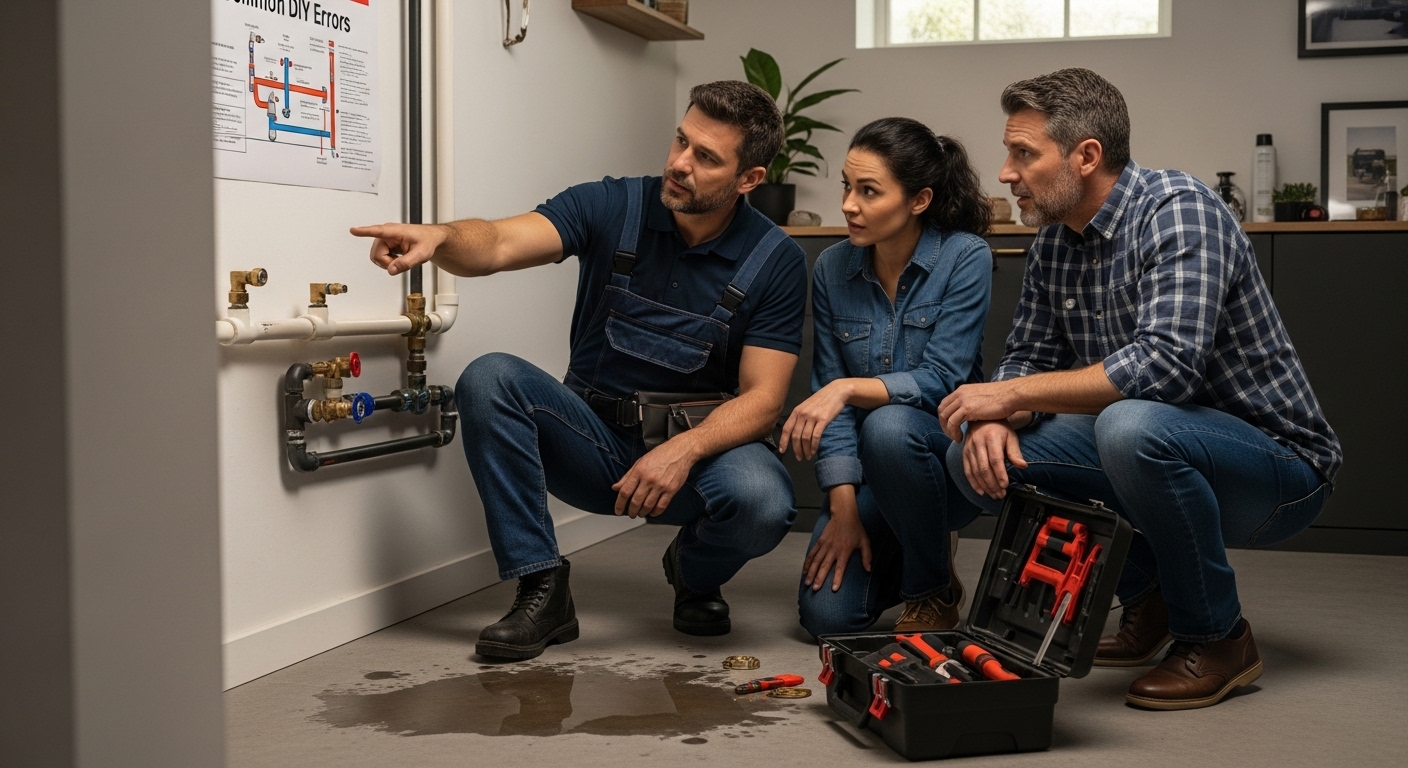 Homeowners often unknowingly create significant problems by misinterpreting complex plumbing challenges. Discover common plumbing myths that lead to costly mistakes to protect your home’s infrastructure.
The Psychology Behind DIY Plumbing Mistakes
Most DIY plumbing errors originate from a combination of overconfidence and limited technical understanding. According to Professional Plumbers Association, approximately 73% of homeowners overestimate their repair capabilities, leading to more extensive damage than the original issue.
Psychological factors contributing to DIY plumbing mistakes include:
- Underestimating the complexity of plumbing systems
- Believing online tutorials can replace professional expertise
- Wanting to save money by avoiding professional services
- Feeling pressured to solve problems immediately
Technical Limitations and Common Error Triggers
Plumbing systems require precise knowledge and specialized tools that most homeowners do not possess. The intricate nature of water and waste management systems means that seemingly minor mistakes can create catastrophic consequences.
Key technical limitations that lead to DIY plumbing errors involve:
- Incorrect tool selection for specific repair tasks
- Misunderstanding pipe material compatibility
- Lack of knowledge about local building codes
- Insufficient understanding of water pressure dynamics
- Inadequate preparation and planning before attempting repairs
By recognizing these potential pitfalls, homeowners can make more informed decisions about when to attempt repairs and when to seek professional assistance.
The following table compares common psychological and technical factors that contribute to DIY plumbing mistakes, helping homeowners recognize risk areas before taking on repairs.
| Factor | Description | Impact on DIY Plumbing |
|---|---|---|
| Overconfidence | Overestimating repair skills and underestimating plumbing systems | Leads to more extensive damage |
| Reliance on Online Tutorials | Belief that internet guides replace professional expertise | Results in improper techniques |
| Incorrect Tool Selection | Using the wrong tools for specific repair tasks | Increases risk of causing damage |
| Lack of Knowledge of Local Codes | Unaware of building and plumbing regulations | May violate codes, cause issues |
| Underestimating Water Pressure Issues | Not understanding water pressure dynamics | Can create leaks or bursts |
| Misunderstanding Material Compatibility | Not recognizing which materials work together | Causes leaks or premature failure |
Impact of DIY Mistakes on Your Home: What to Expect
DIY plumbing mistakes can transform a simple repair into a complex and expensive home renovation project. Understanding the potential consequences helps homeowners recognize when professional intervention is necessary. Explore emergency plumbing tips for quick response to minimize potential damage from unexpected plumbing issues.
Structural Damage and Long-Term Consequences
Improper plumbing repairs can compromise your home’s structural integrity in ways that are not immediately visible. According to Insurance Information Institute, water damage from plumbing failures accounts for billions of dollars in home repair costs annually, with many issues originating from amateur repair attempts.
Significant structural risks include:
- Weakening of foundational elements
- Compromising load-bearing walls
- Creating hidden mold growth environments
- Accelerating wood rot and structural decay
- Undermining home insulation effectiveness
Financial and Insurance Implications
DIY plumbing mistakes can have far-reaching financial consequences beyond immediate repair costs.
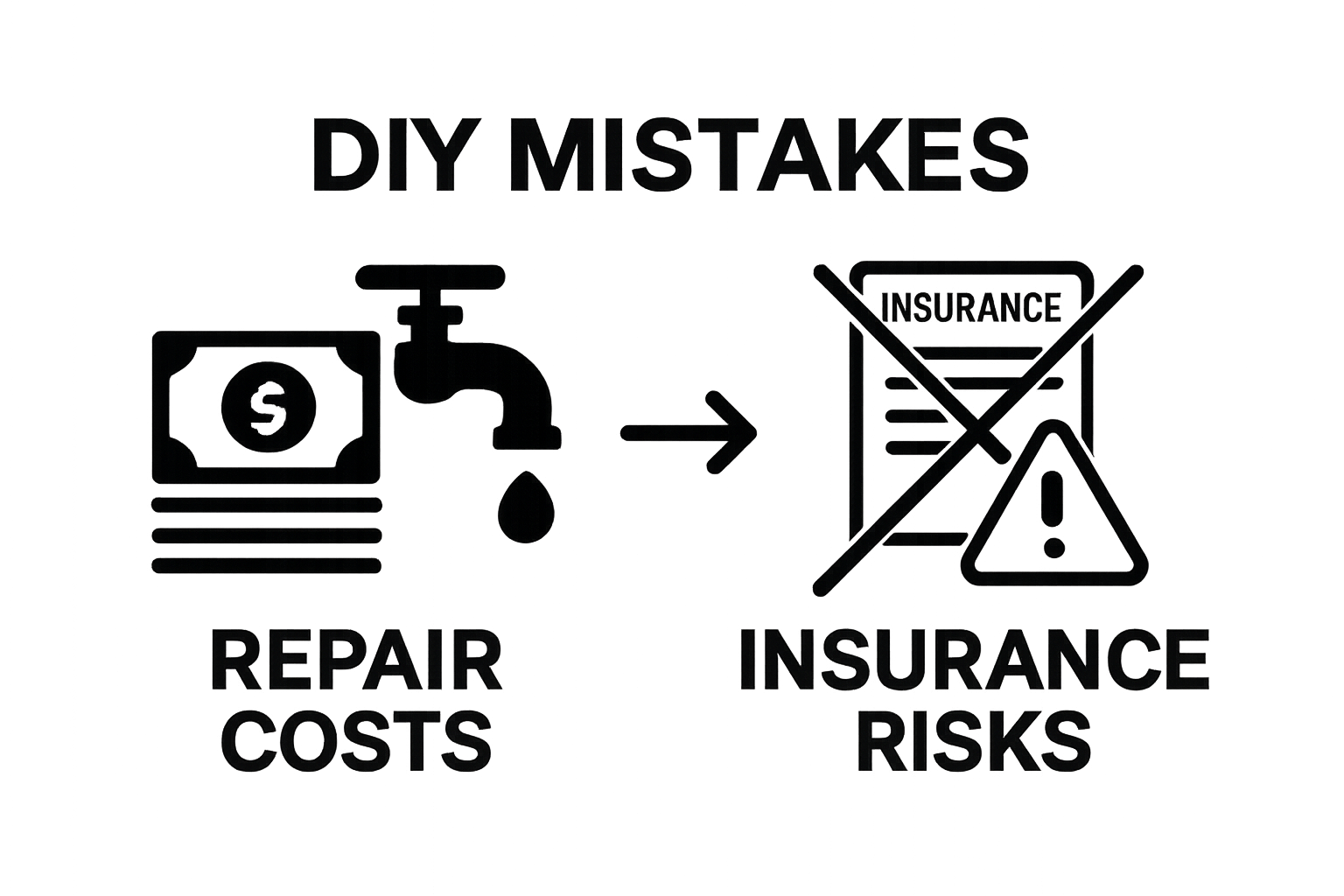 Homeowners may find themselves facing unexpected expenses and potential insurance complications when improper repairs lead to extensive damage.
Key financial risks associated with DIY plumbing errors encompass:
- Voiding home insurance coverage
- Reducing property value
- Incurring expensive professional repair costs
- Potential legal liabilities from improper installations
- Increased long-term maintenance expenses
By understanding these potential impacts, homeowners can make more informed decisions about when to attempt repairs and when to seek professional plumbing expertise.
This table highlights the major types of damage and risks that result from improper DIY plumbing, illustrating the real-world impact on both your home and finances.
| Type of Impact | Description | Examples of Consequences |
|---|---|---|
| Structural Damage | Compromises to the home[NULL]27s integrity due to water intrusion | Weakening foundations, hidden mold |
| Financial Cost | Unexpected repair expenses and loss of coverage | Expensive professional repair bills |
| Insurance Complications | Voiding of home insurance due to improper repairs | Denied claims, loss of coverage |
| Reduced Property Value | Decreased home value after visible or hidden damage | Lower appraisals, harder resale |
| Health Hazards | Issues stemming from waste mismanagement or mold growth | Health problems, costly remediation |
Preventing Future Issues: Key Concepts to Understand
Preventive maintenance is the cornerstone of effective home plumbing management. By understanding fundamental principles and proactively addressing potential problems, homeowners can significantly reduce the risk of costly repairs and extensive damage. Learn about regular plumbing maintenance strategies to keep your home’s infrastructure in optimal condition.
Understanding Preventive Maintenance Principles
According to the EPA, regular inspections and prompt repairs of small issues can prevent extensive water damage and costly long-term repairs. Preventive maintenance goes beyond simple fixes it involves developing a comprehensive understanding of your home’s plumbing system and its potential vulnerabilities.
Key preventive maintenance concepts include:
- Regular system assessments
- Early detection of potential issues
- Understanding your home’s specific plumbing infrastructure
- Maintaining appropriate water pressure
- Implementing seasonal maintenance routines
Professional Assessment and Periodic Inspections
While homeowners can perform basic maintenance, professional plumbing assessments provide a deeper, more comprehensive evaluation of your home’s plumbing system. These inspections can identify potential issues that are not visible to the untrained eye, helping prevent future complications.
Critical areas professionals typically examine include:
- Pipe material condition and potential corrosion
- Hidden leak detection
- Water pressure optimization
- Drainage system efficiency
- Potential structural impact on plumbing infrastructure
By investing in preventive strategies and professional guidance, homeowners can transform their approach from reactive repairs to proactive maintenance. This shift not only protects your home’s infrastructure but also provides long-term financial savings and peace of mind.
Protect Your Home from DIY Plumbing Mistakes with Legacy Plumbing & Drain Inc
Struggling with leaks or uncertain about the risks of a DIY plumbing fix? This article highlights the hidden dangers of tackling plumbing problems without the right expertise, including water damage, costly repairs, and potential insurance issues. If you want real peace of mind and to avoid common missteps like using the wrong tools or not understanding your home’s plumbing basics, professional support makes all the difference.
Don’t let small issues spiral into major problems. The team at Legacy Plumbing & Drain Inc is available 24/7 for emergencies, expert plumbing repairs, and preventative maintenance. Take the next step to safeguard your home and finances by requesting service from Sacramento’s trusted plumbing professionals. Get prompt and reliable help now so you can rest easy knowing your plumbing is in expert hands.
Frequently Asked Questions
What are common DIY plumbing mistakes homeowners make?
Common DIY plumbing mistakes include underestimating the complexity of plumbing systems, using incorrect tools, relying solely on online tutorials, and neglecting to recognize the potential for water damage.
How can I prevent costly DIY plumbing errors?
Preventing costly DIY plumbing errors involves understanding your plumbing system, performing routine maintenance, and knowing when to call a professional for complex issues. Basic knowledge of plumbing principles can help you identify manageable tasks.
When should I attempt a DIY plumbing repair versus calling a professional?
Homeowners should attempt DIY repairs for simple tasks like replacing a showerhead or fixing a leaky faucet. For complex issues involving main water lines or sewage systems, it is advisable to call a professional plumber to avoid extensive damage.
What are the risks of making DIY plumbing mistakes?
The risks of DIY plumbing mistakes include water damage to your home, voiding home insurance coverage, reducing property value, and incurring expensive repair costs in the future.
Recommended
- Understanding DIY Or Professional Plumbing Choices – Legacy Plumbing & Drain – Emergency Plumbers Of Sacramento
- Emergency Plumbing Tips For Sacramento Homeowners | Legacy Plumbing & Drain
- 7 Plumbing Myths Debunked: What Every Homeowner Should Know – Legacy Plumbing & Drain – Emergency Plumbers Of Sacramento
- Top DIY Plumbing Safety Tips For Sacramento Homeowners 2025 – Legacy Plumbing & Drain – Emergency Plumbers Of Sacramento