
People love tackling home repairs to save a few bucks and feel handy. But nearly $14,000 is the average cost of water damage claims in households every year. Most folks think grabbing a wrench and checking out a quick tutorial is enough. The real risk is that some DIY projects can turn a minor drip into a massive disaster—unless you know exactly where to draw the line between quick fixes and jobs that demand a professional.
Table of Contents
- What Is Diy Plumbing And How Does It Differ From Professional Plumbing?
- Why Homeowners Should Consider Both Diy And Professional Plumbing Options
- Key Concepts In Plumbing: Tools And Techniques In Diy Vs. Professional Services
- Real-World Implications: Cost, Time, And Safety In Plumbing Decisions
- When To Choose Diy Plumbing And When To Call A Professional
Quick Summary
| Takeaway | Explanation |
|---|---|
| DIY plumbing is cost-effective for minor tasks | Homeowners can save money by handling simple plumbing jobs like unclogging drains or replacing showerheads themselves. |
| Professional plumbers ensure safety and compliance | Hiring licensed plumbers prevents potential safety hazards and ensures all work adheres to building codes. |
| Choose DIY for basic tasks, call professionals for complex issues | Tasks like fixing leaks are manageable for DIY, but major repairs like sewer line issues require expert help. |
| Utilize the right tools for your skill level | DIY plumbing can be successful with basic tools, but complex jobs need specialized equipment only professionals possess. |
| Understand the risks of DIY plumbing failures | Improper repairs can lead to hidden costs such as property damage and increased insurance rates, stressing the importance of knowing your limits. |
What is DIY Plumbing and How Does it Differ from Professional Plumbing?
DIY plumbing represents homeowners taking repair, maintenance, and installation tasks into their own hands, contrasting sharply with professional plumbing services delivered by licensed and trained technicians. While both approaches aim to resolve plumbing issues, they significantly differ in scope, complexity, and potential outcomes.
Understanding DIY Plumbing Fundamentals
DIY plumbing involves homeowners performing their own plumbing work without professional assistance. This typically includes simple tasks like:
- Replacing showerheads
- Unclogging minor drain blockages
- Installing basic fixtures
- Applying pipe tape and making small repairs
Homeowners often choose DIY plumbing to save money and gain hands-on experience. However, the critical safety guide for home repairs emphasizes that not all plumbing tasks are suitable for untrained individuals.
Professional Plumbing versus DIY: Key Differences
Professional plumbers bring specialized training and expertise that DIY enthusiasts typically lack. According to the U.S. Bureau of Labor Statistics, professional plumbers undergo extensive apprenticeships and must understand complex building codes, safety regulations, and technical installation requirements.
Key distinctions include:
- Training: Professionals complete 4-5 year apprenticeships
- Equipment: Professionals use specialized diagnostic and repair tools
- Complexity: Professionals handle advanced systems like water pressure regulation, complex pipe installations, and intricate fixture connections
While DIY approaches work for minor tasks, professional intervention becomes crucial for complex plumbing challenges that require technical expertise and precise implementation.
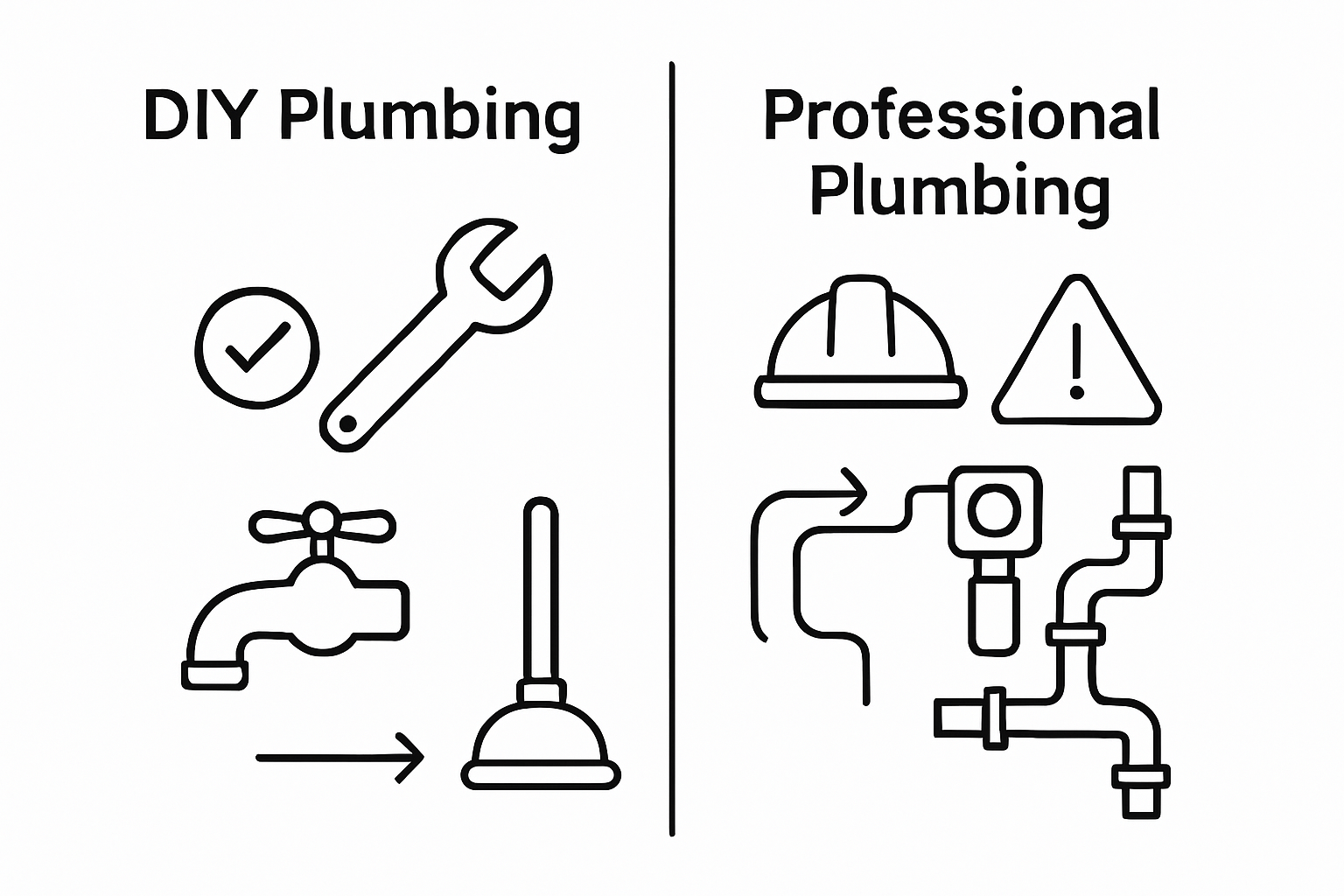
The table below compares key aspects of DIY plumbing and professional plumbing, making it easy to identify the main differences at a glance.
| Aspect | DIY Plumbing | Professional Plumbing |
|---|---|---|
| Training | No formal training | 4-5 year apprenticeship and licensing |
| Typical Tasks | Minor repairs (e.g., unclogging drains, fixture swaps) | Advanced repairs, code compliance, major installs |
| Tools Used | Basic tools (wrench, plunger) | Specialized diagnostic and repair tools |
| Code Compliance | May lack code adherence | Work always adheres to all building codes |
| Risk Level | Higher for complex jobs due to inexperience | Lower; handled by trained technicians |
| Cost | Lower upfront cost | Higher upfront, but fewer long-term risks |
Why Homeowners Should Consider Both DIY and Professional Plumbing Options
Navigating plumbing challenges requires a strategic approach that balances cost-effectiveness, skill level, and potential risks. Understanding when to tackle projects yourself and when to call professionals can save money, prevent costly mistakes, and ensure your home’s plumbing system remains functional and safe.
Balancing Cost and Complexity
Homeowners can optimize their plumbing maintenance by recognizing tasks suitable for DIY and those requiring professional expertise. Some projects are perfect for hands-on homeowners, while others demand specialized knowledge. Our comprehensive guide to local plumbing challenges provides insights into making these critical decisions.
Ideal DIY projects typically include:
- Replacing showerheads
- Fixing minor faucet leaks
- Clearing simple drain clogs
- Applying pipe tape and sealants
- Replacing toilet components
Understanding Risk and Technical Requirements
According to the U.S. Department of Energy, certain plumbing tasks require professional intervention due to complex technical requirements, safety considerations, and potential code violations. Professionals bring critical expertise in:
- Interpreting local building codes
- Handling complex pipe installations
- Managing water pressure systems
- Ensuring proper permit acquisition
- Diagnosing intricate system problems
While DIY approaches can save money for minor repairs, professional plumbers provide comprehensive solutions that prevent long-term damage, ensure system integrity, and maintain home safety. Homeowners should view professional plumbing services as an investment in their property’s infrastructure rather than an unnecessary expense.
Key Concepts in Plumbing: Tools and Techniques in DIY vs. Professional Services
Plumbing involves a complex set of skills, specialized equipment, and technical knowledge that distinguishes amateur attempts from professional-grade work. Understanding the nuanced differences in tools, techniques, and approaches helps homeowners make informed decisions about their plumbing maintenance and repair strategies.
Essential Tools and Equipment
DIY enthusiasts and professional plumbers use different tool sets that reflect their skill levels and project complexity. Explore our safety guide for home plumbing projects to understand proper equipment selection.
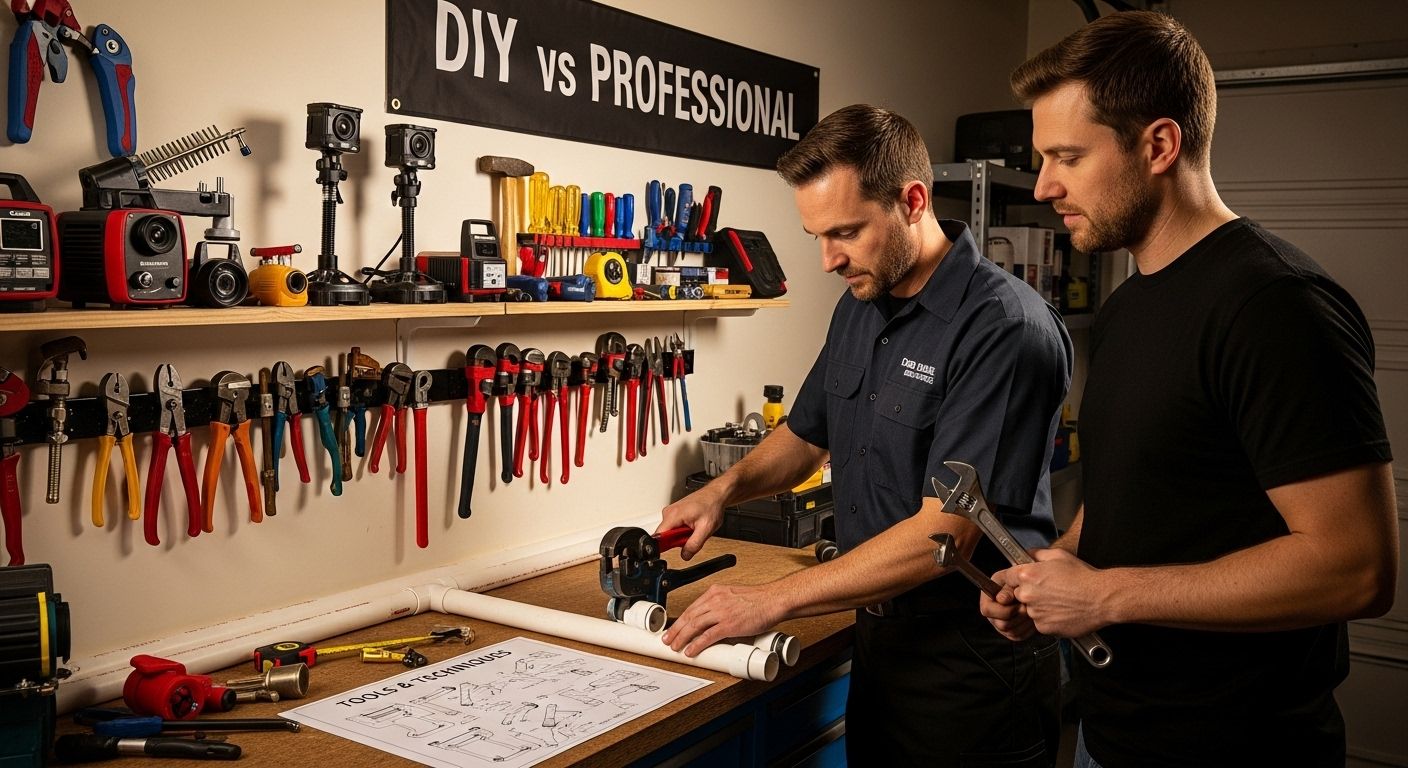
Basic DIY tool requirements include:
- Adjustable wrench
- Pipe wrench
- Plumber’s tape
- Plunger
- Drain snake
- Hacksaw
- Measuring tape
Professional plumbers, by contrast, utilize advanced diagnostic and precision tools such as:
- Electronic leak detection equipment
- High-resolution pipe cameras
- Thermal imaging devices
- Industrial-grade pipe cutters
- Pressure testing machines
- Advanced hydro-jetting systems
Technical Knowledge and Application Techniques
According to the EPA’s guidelines on water system safety, professional plumbers understand complex systemic interactions that extend beyond basic repair techniques. Their expertise encompasses:
- Comprehensive building code compliance
- Advanced pipe material compatibility
- Water pressure regulation
- Cross-connection prevention
- Sophisticated repair and installation protocols
While DIY approaches work for simple tasks, professional intervention becomes critical for complex systems requiring precise technical understanding and specialized equipment.
Real-World Implications: Cost, Time, and Safety in Plumbing Decisions
Plumbing decisions extend far beyond immediate repair considerations, involving complex calculations of potential financial risks, time investment, and personal safety. Homeowners must carefully evaluate the long-term consequences of their repair strategies, weighing immediate cost savings against potential future complications.
Financial Considerations and Hidden Costs
Understand potential plumbing risks in your home before making critical repair decisions. The financial landscape of plumbing repairs involves more than just upfront expenses. According to the Insurance Information Institute, water damage claims average $13,954, highlighting the potential economic impact of improper repairs.
Potential hidden costs of DIY plumbing include:
- Potential property damage from incorrect installations
- Increased insurance premiums
- Voided manufacturer warranties
- Extended repair time
- Additional professional intervention costs
- Potential code violation penalties
Safety and Technical Complexity
Beyond financial implications, plumbing repairs involve significant safety considerations. The National Institute for Occupational Safety and Health (NIOSH) reports substantial risks in excavation and plumbing work, with potentially fatal consequences for untrained individuals.
Critical safety concerns include:
- Risk of water contamination
- Potential structural damage
- Exposure to hazardous materials
- Electrical system interactions
- Improper pressure management
- Risk of personal injury
While DIY approaches might seem cost-effective initially, professional plumbers provide comprehensive solutions that mitigate long-term risks, ensure code compliance, and protect both property and personal safety.
When to Choose DIY Plumbing and When to Call a Professional
Homeowners face critical decisions about plumbing repairs that require careful assessment of skill level, complexity, and potential risks. Understanding the boundaries between manageable DIY tasks and situations demanding professional expertise can prevent costly mistakes and potential home damage.
Identifying Suitable DIY Plumbing Tasks
Check our comprehensive safety recommendations before attempting any home plumbing work. Simple maintenance and minor repairs represent ideal scenarios for DIY intervention. Homeowners can confidently handle tasks that require minimal technical expertise and standard household tools.
Typical DIY-friendly plumbing tasks include:
- Replacing showerheads
- Fixing minor faucet leaks
- Unclogging simple drain blockages
- Replacing toilet flapper valves
- Installing basic fixtures
- Applying pipe tape and sealants
- Replacing sink aerators
Scenarios Requiring Professional Intervention
According to the U.S. Department of Energy, certain plumbing tasks demand specialized knowledge and professional skills. Complex system modifications, potential code violations, and safety-critical installations necessitate expert intervention.
Critical situations requiring professional plumbers involve:
- Main sewer line repairs
- Water heater installations
- Complex pipe replacements
- Significant bathroom or kitchen remodels
- Gas line connections
- Extensive water pressure system modifications
- Slab leak detection and repair
Professional plumbers bring critical expertise that extends beyond immediate repair work, including comprehensive system diagnostics, code compliance verification, and long-term infrastructure protection. While DIY approaches can save money for simple tasks, professional services provide comprehensive solutions that safeguard your home’s critical systems.
This table provides a clear overview of common plumbing tasks and whether they are generally suitable for DIY or require a professional plumber, helping readers quickly assess which option to choose.
| Plumbing Task | DIY-Friendly | Professional Needed |
|---|---|---|
| Replacing showerheads | Yes | No |
| Fixing minor faucet leaks | Yes | No |
| Unclogging simple drain blockages | Yes | No |
| Replacing toilet flapper valves | Yes | No |
| Main sewer line repairs | No | Yes |
| Water heater installations | No | Yes |
| Complex pipe replacements | No | Yes |
| Gas line connections | No | Yes |
Make the Right Plumbing Choice With Legacy Plumbing & Drain Inc
Deciding between DIY and professional plumbing can feel overwhelming when you are faced with unexpected leaks, complex repairs, or safety concerns in your home. This article highlighted how challenges like code compliance, technical complexity, time, and potential safety risks often leave homeowners unsure if tackling a problem alone will pay off or lead to more headaches. We understand that you want to protect your property and budget, but need to feel confident in every plumbing decision.
Trust your plumbing projects to a team that delivers both knowledge and peace of mind. At Legacy Plumbing & Drain Inc, our expert technicians are available 24/7 to handle everything from simple fixes to complicated water emergencies. Discover how you can avoid hidden costs and get safe, reliable solutions by visiting our trusted Sacramento plumbing services now. Do not wait until an easy fix turns into an expensive problem. Secure your home’s comfort and safety today with real professionals at your side.
Frequently Asked Questions
What tasks are suitable for DIY plumbing?
Simple tasks suitable for DIY plumbing include replacing showerheads, fixing minor faucet leaks, unclogging simple drain blockages, and applying pipe tape and sealants. These projects typically require minimal technical expertise and standard household tools.
When should I call a professional plumber instead of doing it myself?
You should call a professional plumber for complex tasks such as main sewer line repairs, water heater installations, significant remodels, and gas line connections, as these require specialized knowledge and tools to ensure safety and compliance with building codes.
What are the potential risks of DIY plumbing?
The potential risks of DIY plumbing include water contamination, property damage from incorrect installations, exposure to hazardous materials, and the possibility of personal injury. Improper repairs can also lead to long-term issues and increased repair costs.
How can I ensure my DIY plumbing project is safe?
To ensure safety in your DIY plumbing project, it’s essential to understand the technical requirements of the task, follow proper safety protocols, and make sure to consult local building codes. For more complex tasks, consider seeking professional help to mitigate risks.