Few Sacramento homeowners expect a small drain problem to turn into a major household emergency, yet aging plumbing systems can quickly spiral into expensive repairs without consistent drain maintenance. Neglected drains do more than just clog sinks—they can weaken your home’s foundation and create costly health hazards over time. By understanding the real needs of your drainage system and common maintenance myths, you can protect your investment and ensure your home stays safe and valuable.
Table of Contents
- Defining Drain Maintenance And Common Myths
- Types Of Home Drains And Unique Care Needs
- How Proper Maintenance Prevents Plumbing Issues
- Potential Hazards Of Neglected Drains
- Comparing Diy And Professional Maintenance Services
Key Takeaways
| Point | Details |
|---|---|
| Regular Drain Maintenance is Essential | Homeowners should prioritize regular inspections and cleaning to prevent significant structural issues and costly repairs. |
| Understand Unique Drain Needs | Different types of drains require specific care strategies to function effectively and avoid blockages. |
| Professional Help is Critical for Complex Issues | While DIY maintenance is helpful for minor tasks, complex repairs must be handled by professionals to ensure thorough assessments and solutions. |
| Neglected Drains Pose Serious Risks | Ignoring drain maintenance can lead to health hazards, structural damage, and expensive long-term issues for homeowners. |
Defining Drain Maintenance and Common Myths
Drain maintenance represents a critical yet often misunderstood aspect of home infrastructure. Understanding the nuanced process of maintaining your drainage system goes far beyond simple plumbing considerations. Drain maintenance involves systematic approaches) to ensure proper functionality, prevent potential failures, and protect your Sacramento home’s overall structural integrity.
Homeowners frequently encounter numerous myths about drainage systems that can lead to costly mistakes. One prevalent misconception is that drains are passive systems requiring minimal attention. In reality, drainage networks demand regular inspection and proactive care. Modern drainage systems involve complex engineering principles that require specialized knowledge, including managing water flow, preventing health hazards, and maintaining structural reliability.
Key aspects of effective drain maintenance include regular cleaning, inspection of pipe conditions, managing potential blockages, and understanding the unique characteristics of your home’s specific drainage infrastructure. Sacramento residents should recognize that each drainage system has unique requirements based on age, material, local soil conditions, and environmental factors. Professional assessments can help identify potential issues before they escalate into significant problems that might compromise your home’s foundation or create expensive repair scenarios.
Pro tip: Schedule professional drain inspections annually to catch potential issues early and prevent unexpected system failures.
Types of Home Drains and Unique Care Needs
Homeowners in Sacramento encounter multiple drain types with unique maintenance requirements). Understanding these variations is crucial for effective home infrastructure management. The primary categories include interior drains like sink and shower drains, exterior drainage systems, and specialized drainage networks that serve specific functional purposes.
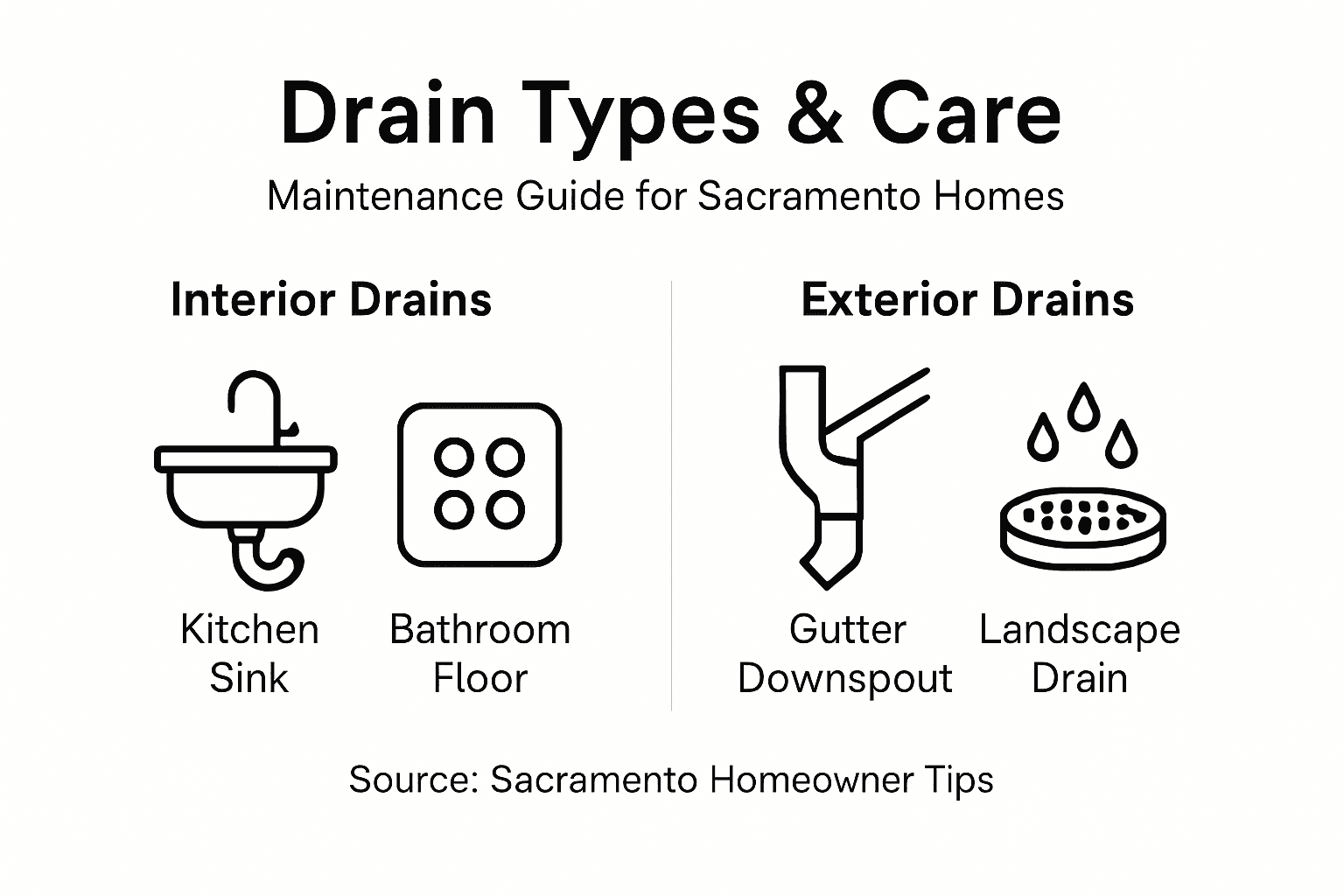
Interior home drains are particularly complex and demand targeted care strategies. Kitchen sink drains, for instance, require different maintenance approaches compared to bathroom floor drains or basement drainage systems. Factors like water volume, potential debris accumulation, and material composition significantly influence each drain’s maintenance protocol. Floor drains in utility areas or garages need different inspection techniques than those in bathrooms, highlighting the importance of understanding each drainage system’s unique characteristics.
Exterior drainage systems play a critical role in protecting your Sacramento home’s structural integrity. These systems include landscape drainage, gutter downspouts, and perimeter drainage networks designed to manage surface water runoff. Surface and subsurface drainage methods each present distinct challenges, with surface drainage focusing on preventing water pooling and subsurface drainage managing underground water movement. Homeowners must recognize that these exterior drainage systems require regular inspection to prevent potential foundation damage and landscape erosion.
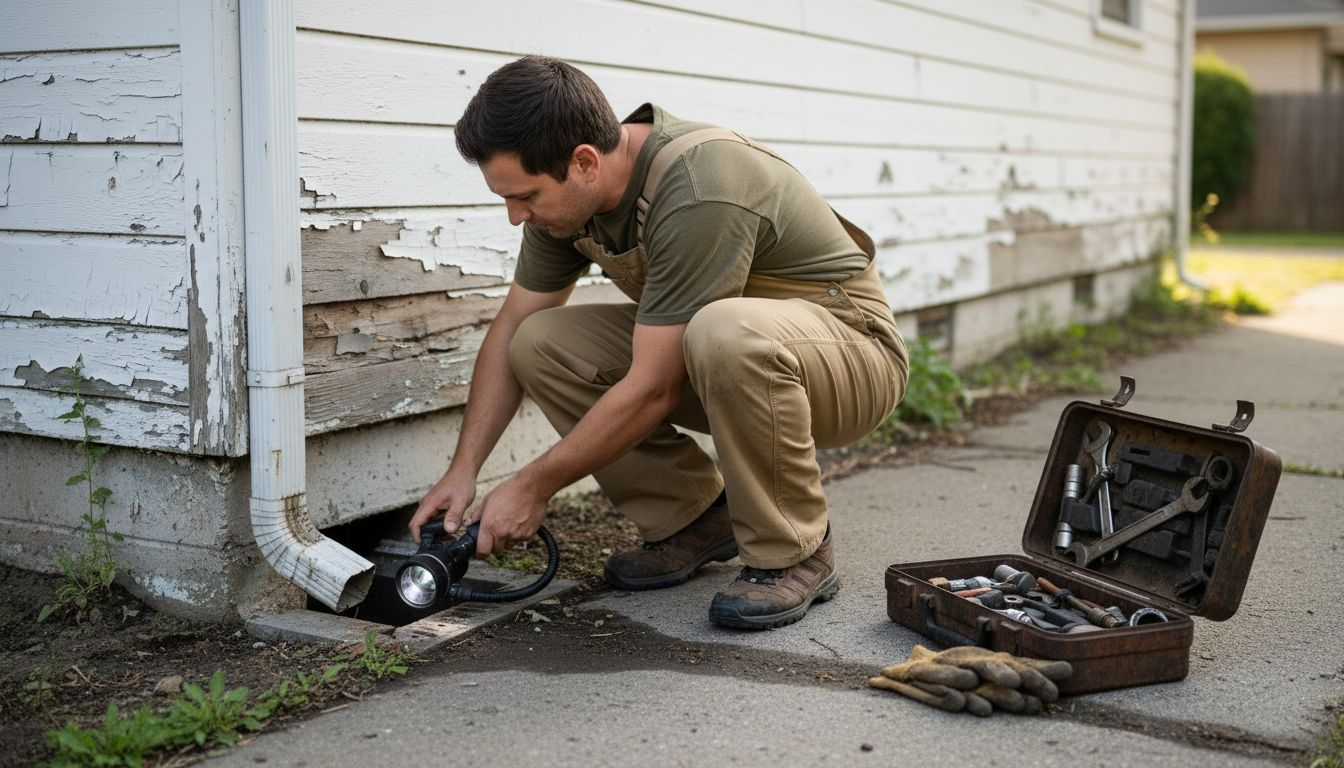
Pro tip: Create a detailed drainage map of your property to track different drain locations and their specific maintenance requirements.
To help differentiate the needs of various home drain types, review this summary below:
| Drain Type | Key Challenge | Recommended Care |
|---|---|---|
| Kitchen Sink | Food and grease buildup | Periodic deep cleaning |
| Bathroom Floor | Hair and soap accumulation | Routine drain guard use |
| Basement/Utility | Silt and debris flooding in | Sump pump inspections |
| Exterior Landscape | Soil and root intrusion | Seasonal clearing and grading |
| Gutter Downspouts | Leaf and debris clogging | Frequent seasonal checks |
| Perimeter/Subsurface | Groundwater management | Annual professional inspection |
How Proper Maintenance Prevents Plumbing Issues
Proper plumbing maintenance is a critical strategy for Sacramento homeowners to prevent costly and disruptive issues. Routine home maintenance tasks can significantly reduce the risk of water damage, structural problems, and potential health hazards associated with neglected plumbing systems. By implementing a proactive approach, homeowners can identify and address potential problems before they escalate into major repairs.
The key to effective plumbing maintenance lies in systematic inspection and timely intervention. This includes regular checks of water pressure, pipe conditions, and potential leak points throughout the home. Different areas require specific attention – kitchen sink connections, bathroom fixture seals, and underground pipe networks all demand unique maintenance strategies. Early detection of minor issues like small leaks or minor corrosion can prevent significant damage that could compromise your home’s structural integrity and lead to expensive emergency repairs.
Water distribution system operations emphasize the importance of comprehensive maintenance approaches. This involves more than just fixing visible problems. Homeowners should consider factors like water quality, potential corrosion, and the age of their plumbing infrastructure. Sacramento residents face unique challenges due to local water composition and environmental conditions, making regular professional inspections crucial for maintaining long-term plumbing health and preventing unexpected failures.
Pro tip: Create a seasonal plumbing maintenance calendar to systematically track and perform necessary inspections and preventative measures.
Potential Hazards of Neglected Drains
Neglected drains pose significant risks to Sacramento homeowners, extending far beyond simple inconvenience. Urban drainage system hazards can compromise property structural integrity, create health risks, and lead to expensive long-term damage. These potential threats range from soil erosion and foundation weakening to creating environments that promote harmful bacterial growth and pest infestations.
Stormwater drainage systems are particularly vulnerable to neglect. When drains become blocked or poorly maintained, they can transform from protective infrastructure into significant environmental and health liabilities. Clogged storm drains create public health risks by facilitating waterborne disease transmission, attracting pests, and generating unsanitary conditions. Standing water becomes a breeding ground for mosquitoes, bacteria, and other potentially harmful microorganisms that can threaten residential health and safety.
The consequences of drain neglect extend beyond immediate visible damage. Prolonged moisture accumulation can weaken building foundations, promote mold growth, attract destructive insects, and create environments conducive to structural deterioration. Sacramento homeowners must recognize that drainage systems are complex networks requiring consistent monitoring and proactive maintenance. Ignoring small issues can rapidly escalate into major structural and environmental problems that are exponentially more costly to address.
Pro tip: Schedule professional drain inspections annually and maintain a detailed log of drainage system conditions to catch potential issues early.
Comparing DIY and Professional Maintenance Services
Homeowners often face challenging decisions about whether to tackle drain maintenance independently or seek professional assistance. Maintenance plans recommend balancing DIY and professional services to ensure comprehensive drain system care. While routine tasks can be managed by homeowners, complex maintenance requires specialized expertise and tools.
DIY maintenance typically involves accessible tasks like clearing minor clogs, conducting visual inspections, and performing basic cleaning. These activities help homeowners stay proactive about their drainage systems. However, professional drain maintenance provides critical technical expertise that goes beyond surface-level interventions. Trained professionals bring advanced diagnostic tools, code compliance knowledge, and the ability to identify potential systemic issues that might escape an untrained eye.
The key difference between DIY and professional services lies in depth and comprehensiveness. Sacramento homeowners should understand that while routine maintenance can be self-managed, critical repairs and complex system assessments demand professional intervention. Professional plumbers can detect underlying problems, provide comprehensive system evaluations, and implement solutions that prevent long-term damage. This approach ultimately saves homeowners significant money by addressing potential issues before they escalate into major structural problems.
Pro tip: Create an annual maintenance schedule that combines your own routine checks with professional inspections to maximize drain system health.
Use this table to compare DIY drainage maintenance with professional services:
| Aspect | DIY Maintenance | Professional Service |
|---|---|---|
| Typical Tasks | Clearing surface clogs | In-depth system diagnostics |
| Tools Needed | Plunger, hand auger | Video inspection, hydro jetting |
| Cost Implication | Low, mostly materials | Higher, but prevents large repairs |
| Issue Detection | Limited to visible problems | Detects hidden and systemic issues |
Protect Your Sacramento Home with Expert Drain Maintenance
Proper drain maintenance is essential to avoid costly foundation damage and health hazards as explained in the article. If you are concerned about clogged storm drains, soil erosion, or hidden plumbing issues impacting your home, you need trusted professionals who understand Sacramento’s unique drainage challenges. Legacy Plumbing & Drain Inc offers skilled technicians ready to provide thorough inspections, preventive cleaning, and fast repairs to keep your drains flowing smoothly. Our expertise prevents the dangers of neglected drains including structural weakening and unsanitary conditions.
Don’t wait until small drain problems become expensive emergencies. Take control now by scheduling a professional drain maintenance check with Legacy Plumbing & Drain Inc. Experience peace of mind from top-quality service designed specifically for Sacramento homes. Learn more about our full range of plumbing and drainage solutions by visiting Legacy Plumbing & Drain Inc. Explore expert advice and book your service today to protect your home and family.
Frequently Asked Questions
What is the importance of drain maintenance for homes?
Drain maintenance is crucial for preventing costly plumbing issues, protecting your home’s structural integrity, and avoiding health hazards associated with neglected drainage systems.
How often should homeowners schedule professional drain inspections?
Homeowners should ideally schedule professional drain inspections annually to catch potential issues early and prevent unexpected system failures.
What are the common types of home drains and their maintenance needs?
Common types include kitchen sink drains, bathroom floor drains, basement drainage, gutter downspouts, and exterior landscape drains, each with unique maintenance needs such as clearing clogs and regular inspections.
What are the risks of neglecting drain maintenance?
Neglecting drain maintenance can lead to significant risks, including structural damage, health hazards from standing water, mold growth, and increased repair costs due to major plumbing issues.
Recommended
- Understanding Common Drainage Problems At Home – Legacy Plumbing & Drain – Emergency Plumbers Of Sacramento
- Understanding Drainage Problems Explained For Homeowners – Legacy Plumbing & Drain – Emergency Plumbers Of Sacramento
- Understanding The Benefits Of Regular Drain Cleaning – Legacy Plumbing & Drain – Emergency Plumbers Of Sacramento
- Role Of Drain Cleaning—Protecting Sacramento Homes – Legacy Plumbing & Drain – Emergency Plumbers Of Sacramento
- Gutter Maintenance Checklist: Preventing Florida Water Damage