
Childproofing your home’s plumbing goes far beyond covering sharp corners or hiding cleaning products. Most parents miss that even a loose pipe fitting or under-sink cabinet can turn into a risk zone for small children. The surprise is that these hazards are often only obvious if you crouch down and scan your home from a toddler’s point of view, which reveals just how many dangers escape notice from adult height.
Table of Contents
- Step 1: Assess Your Plumbing Fixtures For Risks
- Step 2: Secure Exposed Pipes With Protective Covers
- Step 3: Install Child-Resistant Faucet Locks
- Step 4: Block Access To Hazardous Areas With Gates
- Step 5: Educate Your Children On Plumbing Safety
- Step 6: Regularly Inspect And Maintain Safety Measures
Quick Summary
| Key Point | Explanation |
|---|---|
| 1. Assess plumbing risks at child’s eye level | Evaluate your home’s plumbing fixtures from a toddler’s perspective to identify hidden hazards like sharp edges and loose connections. |
| 2. Install protective covers on exposed pipes | Use foam sleeves or rigid covers to shield kids from sharp edges and burning hot pipes, enhancing safety throughout your home. |
| 3. Use child-resistant faucet locks | Secure faucets with tamper-proof locks to prevent accidental water access and exposure to hot water for curious children. |
| 4. Block access to hazardous areas with gates | Install sturdy safety gates to restrict children’s access to potentially dangerous plumbing areas like utility rooms and kitchens. |
| 5. Educate children on plumbing safety | Teach kids about the dangers of water and plumbing systems, fostering responsible behavior and awareness of risks early on. |
Step 1: Assess Your Plumbing Fixtures for Risks
Childproofing home plumbing starts with a comprehensive assessment of potential hazards lurking in your bathroom, kitchen, and utility areas. Young children are naturally curious and can quickly transform seemingly harmless plumbing fixtures into dangerous exploration zones. Your first critical task is identifying specific risks that could lead to accidents or injuries.
Begin by getting down to your child’s eye level and systematically scanning each plumbing area. This perspective reveals hidden dangers you might normally overlook. Pay close attention to exposed pipes, faucet handles, toilet connections, and under-sink spaces. Sharp edges, loose connections, and protruding elements become potential injury points when viewed from a toddler’s height.
Start your assessment with bathroom fixtures, which present some of the most significant risks. Examine toilet areas carefully. Young children can be fascinated by toilet water and may attempt to reach inside or play with flush mechanisms. Check toilet lid stability and consider installing child-resistant toilet locks that prevent accidental opening. Inspect bathtub and shower areas for slippery surfaces, sharp fixture edges, and potential water temperature scalding risks.
Kitchen plumbing requires equally meticulous evaluation. Under-sink cabinets often house cleaning chemicals, sharp tools, and pipes with potential pinch points. Look for opportunities to install childproof cabinet locks that restrict access to potentially dangerous areas. Examine garbage disposal switches, ensuring they are not easily accessible or accidentally triggerable by small hands.
Our guide on understanding preparing for plumbing disasters can provide additional insights into comprehensive home safety strategies. By methodically assessing your plumbing fixtures, you create a foundational safety framework that protects your children from potential accidents.
Step 2: Secure Exposed Pipes with Protective Covers
Childproofing home plumbing involves more than just visual assessment. Exposed pipes present significant risks for curious children who might touch, pull, or accidentally bump into them. Your next critical task is installing protective covers that prevent potential injuries and minimize potential damage.
Pipe insulation and protective covers serve multiple safety purposes. They not only shield children from sharp edges and potential burn risks from hot water pipes but also protect the pipes themselves from accidental impacts. Select specialized foam pipe sleeves or rigid protective covers designed specifically for childproofing. These protective materials come in various sizes and can be easily cut to fit different pipe lengths and configurations.
Prepare your workspace by thoroughly cleaning pipe surfaces before installation. Remove any dust or debris that might prevent proper adhesion of protective covers. Measure pipe circumferences and lengths accurately to ensure a snug, complete fit. Look for covers with soft edges and smooth surfaces that eliminate sharp contact points. Prioritize covers with strong adhesive backing or secure attachment mechanisms that prevent children from easily removing them.
Carefully inspect pipes in multiple areas of your home. Focus on locations children frequently access such as bathrooms, kitchens, laundry rooms, and basement utility areas. Pay special attention to pipes near floor levels where toddlers crawl or play. Consider our comprehensive guide on preventing pipe bursts for additional insights into maintaining your home’s plumbing infrastructure while keeping children safe.
After installation, test the security of each protective cover by gently attempting to dislodge them.
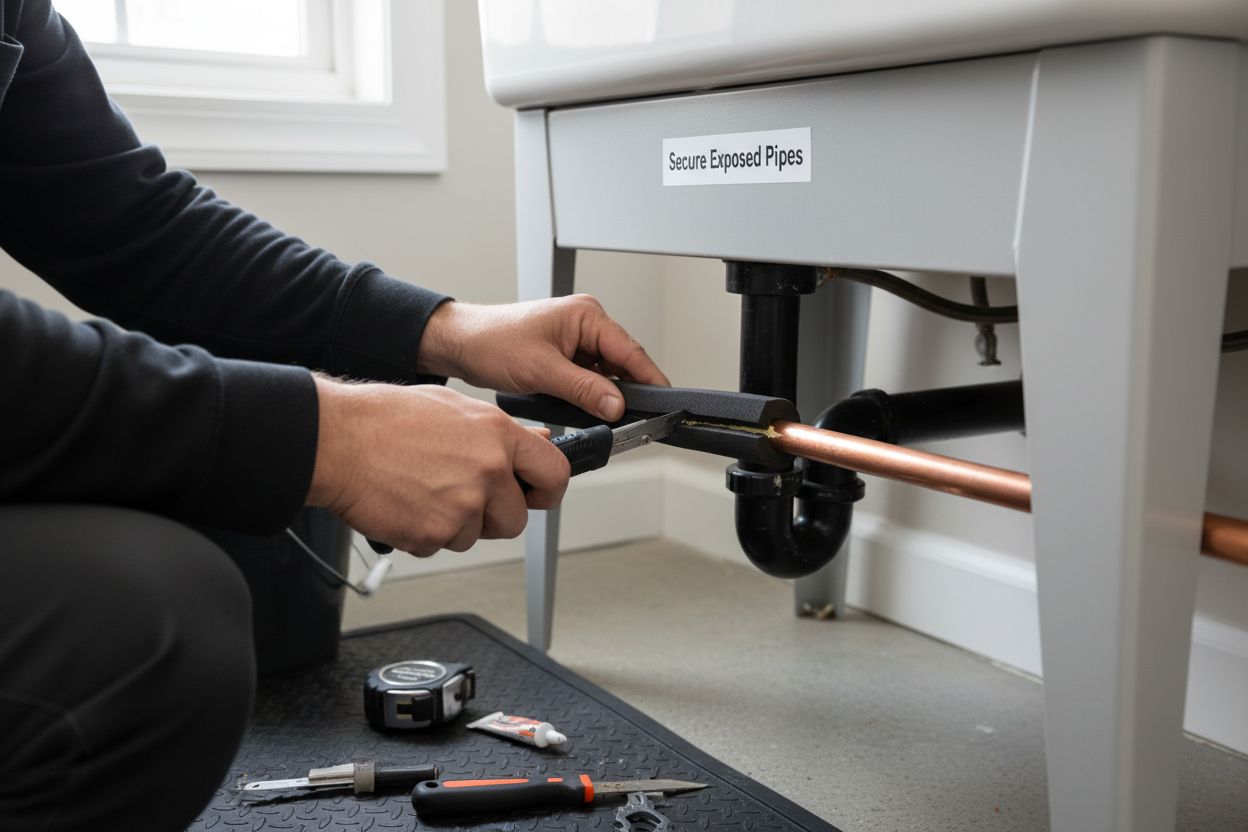 Ensure they remain firmly in place under moderate pressure. Check covers periodically for signs of wear, damage, or loosening that might compromise their protective function. Replacing protective pipe covers is a small investment that significantly reduces potential childhood accidents and provides parents peace of mind.
Step 3: Install Child-resistant Faucet Locks
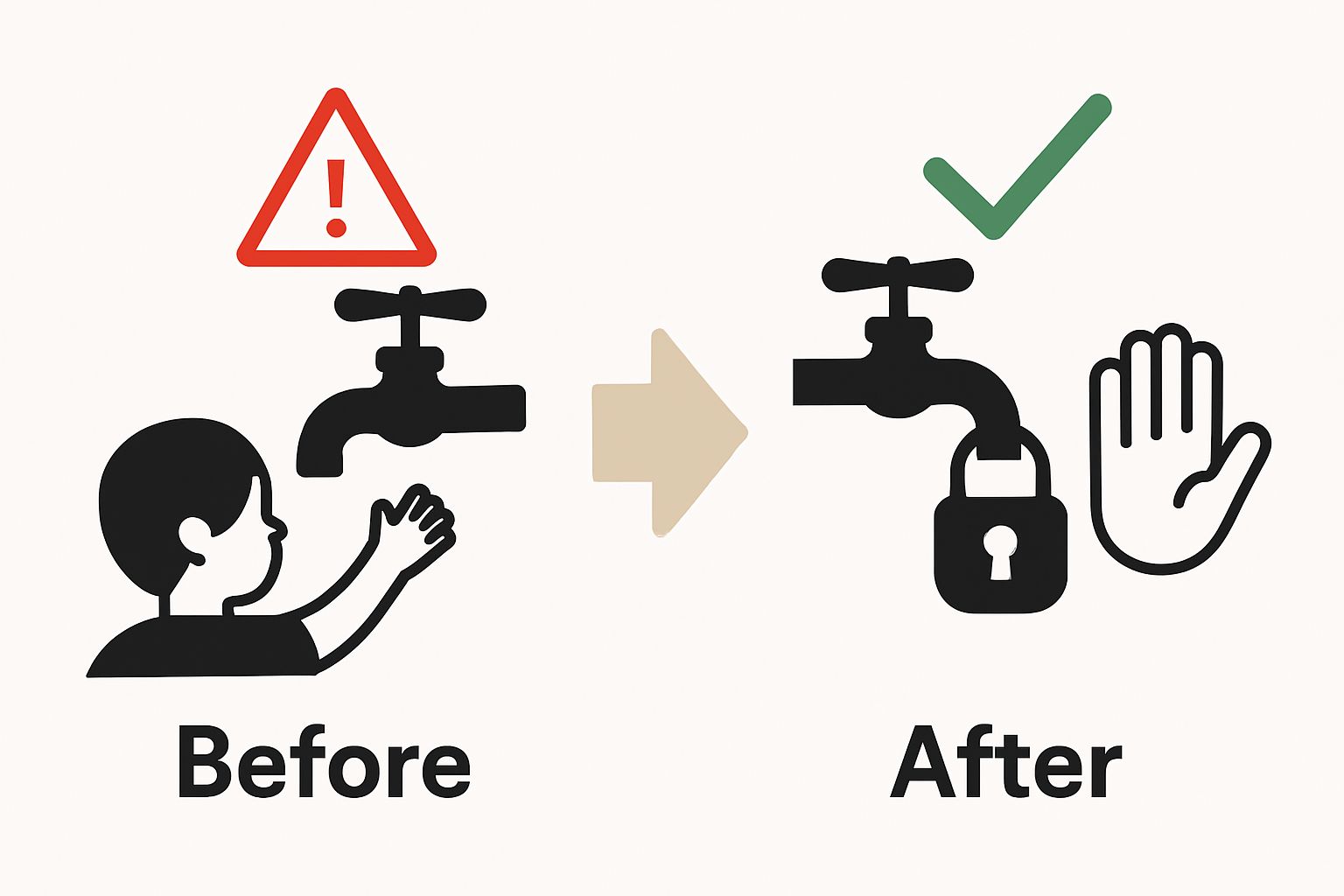
Childproofing home plumbing demands strategic intervention at potential water access points, with faucets representing critical safety zones. Young children can quickly transform seemingly harmless bathroom and kitchen fixtures into potential hazards through unmonitored water interaction. Child-resistant faucet locks provide an essential barrier against unintended water usage and potential scalding risks.
When selecting faucet locks, prioritize models that offer robust, tamper-resistant designs. Look for locks with strong, adjustable mechanisms that can accommodate different faucet styles and sizes. Universal lock designs work best, allowing flexibility across various fixture types. Some advanced locks feature combination mechanisms or specialized key systems that prevent small hands from manipulating water controls.
Installation requires careful measurement and precise fitting. Clean faucet surfaces thoroughly before applying locks to ensure maximum adhesion and stability. Verify lock compatibility by testing its range of motion and secure attachment. Pay special attention to handles that control water temperature, as these present significant burn risks for curious children exploring bathroom and kitchen environments.
Our emergency plumbing tips for Sacramento homeowners offer additional insights into comprehensive home safety strategies. When installing faucet locks, consider the specific needs of your household. Bathrooms frequented by young children require more rigorous protection compared to less accessed areas.
After installation, conduct a comprehensive verification process. Attempt to manipulate the locks from a child’s perspective, ensuring they cannot be easily defeated. Check lock integrity periodically, replacing units that show signs of wear or potential weakness. Remember that faucet locks are not permanent solutions but temporary safety measures designed to complement active parental supervision.
Step 4: Block Access to Hazardous Areas with Gates
Childproofing home plumbing extends beyond individual fixtures to creating comprehensive safety barriers that restrict children’s access to potentially dangerous areas. Strategically placed safety gates serve as critical physical barriers that prevent unauthorized entry into spaces with complex plumbing infrastructure. These gates become essential tools in managing children’s exploration and protecting them from potential hazards in utility rooms, bathrooms, and kitchen areas.
Selecting the right safety gate requires careful consideration of your home’s specific layout and potential risk zones. Pressure-mounted gates work well for doorways and standard openings, while hardware-mounted gates provide more robust protection for areas requiring maximum security. Look for gates with sturdy construction, reliable locking mechanisms, and designs that cannot be easily climbed or manipulated by curious children.
Pay special attention to installation precision. Measure doorways and openings accurately, ensuring a perfect fit that leaves no gaps for children to squeeze through. Hardware-mounted gates offer superior stability and require drilling into wall surfaces, so take time to locate secure mounting points. Consider gate height and design features that prevent children from climbing over or pushing through.
Our bathroom remodel plumbing tips provide additional insights into creating safer home environments. Focus on high-risk areas like laundry rooms with washing machine connections, utility spaces with exposed pipes, and bathrooms with potential water temperature and electrical hazards.
After installation, conduct thorough testing. Simulate a child’s potential interaction by applying pressure from multiple angles. Check that gate locks engage smoothly and remain secure under typical household movement. Regularly inspect mounting points and gate integrity, replacing components that show signs of wear or potential weakness. Remember that safety gates are dynamic solutions requiring periodic evaluation and adjustment as children grow and develop new exploration skills.
Step 5: Educate Your Children on Plumbing Safety
Childproofing home plumbing reaches beyond physical barriers and requires an essential layer of proactive communication with children. Teaching children about plumbing safety transforms protective measures from passive barriers into active learning opportunities. Age-appropriate education helps children understand potential risks and develop responsible behaviors around water systems and household infrastructure.
Approach safety education as an ongoing dialogue, not a single conversation. For younger children, use simple language and engaging demonstrations that capture their attention. Explain basic concepts like hot water dangers, the importance of not playing with faucets, and why certain areas are off-limits. Create visual representations using drawings or storytelling that make safety concepts memorable and understandable.
As children grow older, introduce more complex discussions about water management and potential household risks. Teach them to recognize warning signs of plumbing issues such as water pooling, unusual sounds, or unexpected moisture. Encourage them to immediately notify an adult if they observe anything unusual around pipes, faucets, or water-related equipment. According to the American Academy of Pediatrics, early education plays a crucial role in preventing accidents.
Our guide on plumbing myths can provide additional conversation starters about household water systems. Make learning interactive by involving children in age-appropriate maintenance tasks, such as helping to check for leaks or understanding basic water conservation principles. These moments not only reinforce safety knowledge but also build confidence and responsibility.
Verify the effectiveness of your educational efforts through periodic conversations and scenario-based discussions. Ask open-ended questions that test their understanding, such as “What would you do if you saw water on the floor?” Continuously adapt your approach as children mature, ensuring that safety education evolves with their growing comprehension and independence.
Step 6: Regularly Inspect and Maintain Safety Measures
Childproofing home plumbing is not a one-time task but an ongoing commitment that requires consistent attention and proactive maintenance. Safety measures lose effectiveness over time due to normal wear, changing household dynamics, and children’s growing capabilities. Establishing a systematic inspection routine becomes crucial in maintaining the protective infrastructure you have carefully constructed.
Schedule comprehensive safety inspections at least quarterly, treating these check-ups like critical home maintenance appointments.
Below is a checklist table to help you systematically inspect and maintain each childproofing safety measure described in the article.
| Item to Inspect | What to Check | Action if Issue Found |
|---|---|---|
| Pipe Covers | Secure fit, no slipping or damage | Replace or adjust covers |
| Faucet Locks | Tamper-resistance, secure attachment | Replace locks if loose/worn |
| Safety Gates | Sturdy mounting, functional lock | Tighten or replace components |
| Cabinet Locks | Proper closure, child can’t open | Re-secure or replace locks |
| Adhesive Connections | No detachment, strong hold | Apply new adhesive or fasteners |
| Mounting Points | No looseness, firm anchoring | Reinforce or adjust as needed |
| General Wear & Tear | Any signs of damage or fatigue | Repair or replace as required |
Pay special attention to areas experiencing high interaction or potential stress. Bathroom and kitchen plumbing fixtures endure more frequent use and require more rigorous monitoring. Inspect mounting points, adhesive connections, and mechanical locking mechanisms for any signs of weakening or potential failure. According to consumer safety guidelines, routine verification is essential in maintaining effective protective measures.
Our emergency plumbing tips for Sacramento homeowners offer additional insights into comprehensive home maintenance strategies. Consider creating a dedicated checklist that documents each inspection, noting the date, specific observations, and any replacements or adjustments made. This approach transforms safety maintenance from a reactive process to a proactive strategy.
Be prepared to replace safety devices promptly when they show signs of wear. Factor in your children’s growing physical abilities and developmental stages, understanding that what worked for a toddler may require modification for a more adventurous preschooler. Continuous evaluation and adaptation ensure that your home plumbing safety measures remain robust and effective throughout your children’s developmental journey.
Safeguard Your Home and Family with Professional Childproofing Plumbing Solutions
Worried about the hidden plumbing dangers that threaten your child’s safety, no matter how much you prepare? The article above highlights the emotional burden and constant concern of preventing household accidents caused by exposed pipes, unsecured fixtures, and easily accessible plumbing areas. When childproofing measures like pipe covers, faucet locks, and safety gates are not enough or you notice possible risks you cannot fix alone, you deserve real peace of mind.
Let the experts at Legacy Plumbing & Drain Inc help take the guesswork out of home safety. From secure bathroom remodel plumbing tips to urgent help with burst pipes or faulty fixtures, our skilled team is here 24/7. Choose us for fast, reliable, and family-focused services that ensure every pipe, faucet, and hidden hazard meets the highest safety standards. Visit our homepage now to schedule your childproofing consultation or emergency plumbing inspection. Let us help you create a safer home for your children—act today for lasting protection.
Frequently Asked Questions
What are the most common plumbing risks for young children in the home?
Young children often encounter risks from exposed pipes, bathroom fixtures, and potentially hazardous areas like under-sink cabinets. Assess your home by checking for sharp edges, unstable toilet lids, and accessible cleaning chemicals, focusing especially on places where toddlers play or explore.
How can I securely block access to plumbing areas that may pose a danger to children?
Installing safety gates is an effective way to restrict children’s access to hazardous plumbing zones such as utility rooms and bathrooms. Measure your openings carefully and ensure gates are hardware-mounted for maximum security, preventing children from pushing through or climbing over them.
What steps should I take to install child-resistant faucet locks?
To install child-resistant faucet locks, first clean the faucet surfaces, then measure the lock’s compatibility with different types of faucets. Secure the lock according to the manufacturer’s instructions, ensuring it engages firmly and cannot be easily manipulated by small hands.
How often should I inspect my plumbing safety measures for children?
Regular inspections should be conducted at least every three months to ensure all childproofing measures are intact and functioning. Check the condition of pipe covers, faucet locks, and safety gates for any signs of wear, and replace any compromised components immediately to maintain safety.
What educational strategies can I use to teach my children about plumbing safety?
Conduct ongoing conversations with your children about plumbing safety, using simple language and engaging visuals to explain risks. Encourage them to communicate whenever they notice any water-related issues, reinforcing their understanding of safe behaviors around plumbing fixtures.
How can I effectively childproof under-sink cabinets where cleaning supplies are stored?
To childproof under-sink cabinets, install childproof locks that are specifically designed for cabinet doors. Ensure these locks are tightly secured and that all cleaning chemicals and sharp tools are stored out of reach to enhance safety in those areas.
Recommended
- Emergency Plumbing Tips For Sacramento Homeowners | Legacy Plumbing & Drain
- Understanding Pet Safe Plumbing Tips For Your Home – Legacy Plumbing & Drain – Emergency Plumbers Of Sacramento
- 7 Basic Plumbing Tools Homeowners Must Have – Legacy Plumbing & Drain – Emergency Plumbers Of Sacramento
- Citrus Heights 24-Hour Plumber | Immediate Plumbing Repair Services
- 7 Common Plumbing Emergencies Every Homeowner Should Know – Thermatek Heating
- 7 Essential Plumbing Maintenance Tips For Homeowners – Thermatek Heating