Frozen pipes can turn an ordinary winter night into a costly disaster. Every year, over a quarter of all home insurance claims for water damage are caused by burst pipes. Surprising, right? Most homeowners never realize how small steps like pipe inspections or insulation can actually be the single biggest shield against sudden plumbing chaos.
Table of Contents
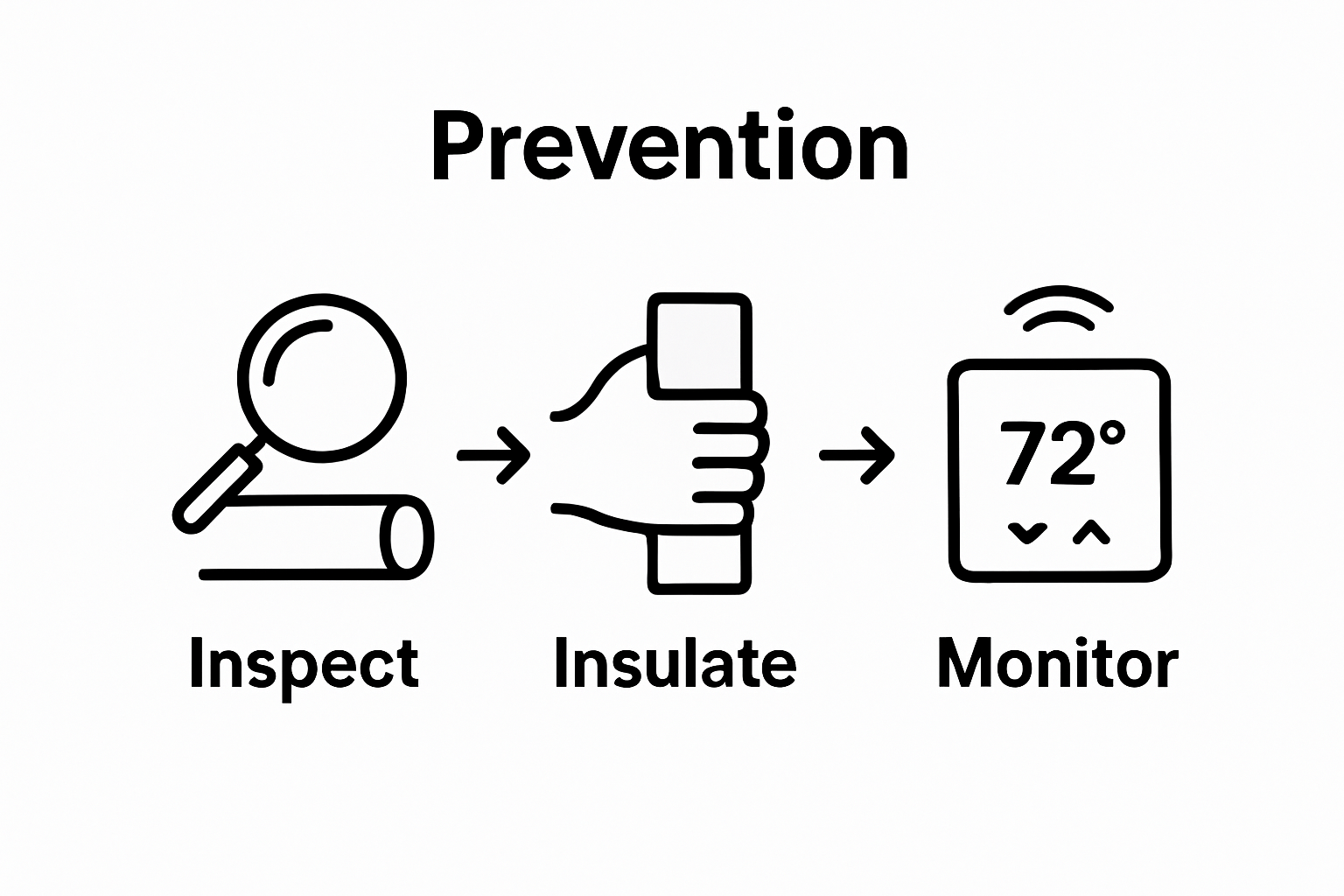
- Step 1: Inspect Plumbing For Vulnerabilities
- Step 2: Insulate Exposed Pipes Effectively
- Step 3: Monitor Indoor And Outdoor Temperatures Regularly
- Step 4: Maintain Consistent Heating In Your Home
- Step 5: Schedule Regular Plumbing Inspections And Maintenance
Quick Summary
| Key Point | Explanation |
|---|---|
| 1. Inspect plumbing for vulnerabilities | Conduct thorough inspections to identify signs of wear, such as rust or leaks, before they escalate into costly repairs. |
| 2. Insulate exposed pipes effectively | Use foam pipe sleeves or heat tape to protect vulnerable pipes from freezing and potential bursts. |
| 3. Monitor indoor and outdoor temperatures regularly | Track temperature changes with digital thermometers to prevent freezing near plumbing during extreme weather. |
| 4. Maintain consistent heating in your home | Set thermostats to 56°F-68°F and keep heating consistent to avoid drastic temperature changes that can damage pipes. |
| 5. Schedule regular plumbing inspections and maintenance | Arrange biannual professional assessments to catch plumbing issues early, reducing the risk of unexpected water damage. |
Step 1: Inspect plumbing for vulnerabilities
Preventing pipe bursts starts with a thorough understanding of your home’s plumbing system and its potential weaknesses. A comprehensive inspection serves as your first line of defense against costly water damage and unexpected plumbing emergencies. Most homeowners overlook subtle signs that could indicate developing vulnerabilities, but with careful examination, you can catch potential issues before they escalate.
Begin your inspection by systematically reviewing all accessible plumbing components throughout your home. Check exposed pipes in basements, crawl spaces, attics, and under sinks for any signs of wear, corrosion, or minor damage. Look for tell-tale warning signs such as rust-colored stains, small pinhole leaks, mineral buildup, or hairline cracks that could compromise pipe integrity. Pay special attention to pipe joints and connections, as these areas are often the most susceptible to stress and potential failure.
Pipes in unheated or poorly insulated areas require extra scrutiny. Temperature fluctuations can cause significant stress on plumbing systems, leading to potential ruptures. Check out our homeowner’s plumbing checklist for a comprehensive guide to identifying vulnerable areas. When examining pipes, use a bright flashlight and wear protective gloves. Run your hand carefully along pipe surfaces to feel for slight irregularities or soft spots that might indicate developing weaknesses.
Key areas to focus during your inspection include:
- Pipes near exterior walls
- Pipe sections in unheated garage spaces
- Plumbing beneath kitchen and bathroom sinks
- Connections to water heaters and major appliances
- Pipe sections in attics and crawl spaces
If you discover any concerning signs during your inspection, document them with clear photographs and measurements. Some minor issues can be addressed with simple repairs, while others might require professional intervention. When in doubt, contact a professional plumber who can provide a detailed assessment and recommend preventative measures to protect your home’s plumbing infrastructure.
Successful inspection means identifying potential vulnerabilities before they become major problems.
 Look for consistent water pressure, absence of discoloration, and no signs of water damage or moisture around pipe connections. By dedicating time to a thorough plumbing inspection, you are taking a proactive step in safeguarding your home against potential pipe burst scenarios.
Step 2: Insulate exposed pipes effectively
Pipe insulation is a critical strategy in preventing potential pipe bursts, especially in regions experiencing significant temperature variations. By creating a protective barrier around vulnerable pipes, you significantly reduce the risk of freezing and potential structural damage. Proper insulation acts as a thermal shield, maintaining consistent pipe temperatures and preventing sudden contractions or expansions that can lead to catastrophic failures.
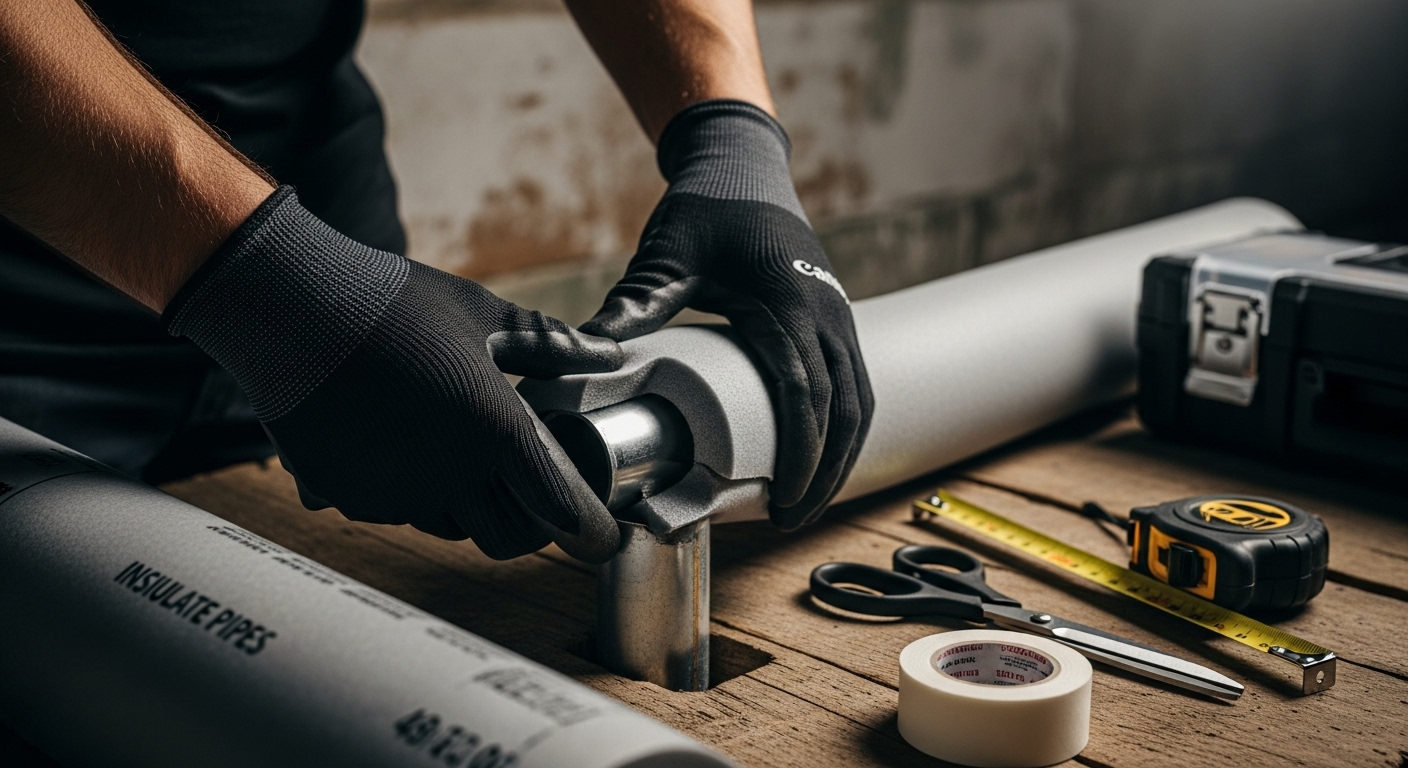
Selecting the right insulation materials requires careful consideration of your specific plumbing configuration and environmental conditions. Foam pipe sleeves represent the most common and accessible insulation solution for most homeowners. These flexible tubes come in various lengths and diameters, designed to wrap snugly around exposed pipes in unheated spaces like basements, attics, and crawl spaces. When installing foam sleeves, ensure you measure pipes precisely and choose insulation with the appropriate thickness typically ranging from 1/2 inch to 1 inch, depending on your local climate and pipe location.
Our emergency plumbing tips for Sacramento homeowners provide additional insights into regional insulation strategies. During installation, pay close attention to pipe joints and connections, as these areas are most susceptible to temperature fluctuations. Use additional insulating tape or specialized connectors to seal potential gaps, creating a continuous thermal barrier that protects against cold air infiltration.
Essential tools and materials for effective pipe insulation include:
- Foam pipe sleeves
- Measuring tape
- Utility knife
- Insulation tape
- Protective gloves
- Safety glasses
Beyond foam sleeves, consider alternative insulation methods for comprehensive protection. Heat tape or heat cables offer an additional layer of warmth for pipes in extremely cold environments. These electrical heating elements wrap around pipes and can be plugged into standard electrical outlets, providing consistent temperature regulation. When installing heat tape, follow manufacturer instructions carefully and ensure proper electrical connections to prevent potential hazards.
Verify your insulation effectiveness by checking pipe surface temperatures during cold periods. Properly insulated pipes should maintain a consistent temperature close to the surrounding indoor environment.
Below is a table summarizing key tools and materials needed for effective pipe insulation, with their specifications and intended purposes.
| Tool/Material | Specification/Type | Purpose |
|---|---|---|
| Foam pipe sleeves | 1/2 inch to 1 inch thickness | Insulate exposed pipes to prevent freezing |
| Measuring tape | Flexible, standard length | Measure pipe lengths for accurate insulation cuts |
| Utility knife | Sharp, retractable blade | Cut foam insulation sleeves to size |
| Insulation tape | Weatherproof, adhesive | Seal joints and secure foam sleeves tightly |
| Protective gloves | Durable, cut-resistant | Protect hands during installation and inspection |
| Safety glasses | Standard safety lenses | Shield eyes while cutting insulation materials |
| Heat tape/heat cables | Electric, manufacturer-rated | Provide supplemental heat for extreme cold areas |
Step 3: Monitor indoor and outdoor temperatures regularly
Temperature monitoring represents a critical defense mechanism in preventing pipe bursts, transforming passive homeownership into proactive protection. Understanding and managing temperature fluctuations can mean the difference between a secure plumbing system and a potential water damage disaster. Consistently tracking both indoor and outdoor temperatures allows you to anticipate and mitigate risks before they escalate into costly emergencies.
Invest in a reliable digital thermometer system that provides real-time temperature readings for different areas of your home. Place indoor thermometers strategically near vulnerable pipe locations such as basements, crawl spaces, and exterior walls. For outdoor monitoring, consider a weather station or digital thermometer with remote sensing capabilities that can track temperature changes throughout the day and night. Explore our emergency plumbing tips for comprehensive temperature management to understand regional variations and specific monitoring techniques.
When monitoring temperatures, establish critical thresholds that trigger preventative actions. Pay special attention when indoor temperatures approach 56°F or lower, as this represents a potential freezing risk for unprotected pipes. During extreme cold periods, implement additional warming strategies such as opening cabinet doors to allow warm air circulation around interior pipes, maintaining consistent thermostat settings, and using supplemental heat sources in vulnerable areas.
Key temperature monitoring strategies include:
- Install digital thermometers near primary plumbing infrastructure
- Track daily temperature ranges both indoors and outdoors
- Set temperature alerts on smart home systems
- Maintain consistent indoor heating during cold periods
- Check temperature variations in less frequented home areas
Beyond standard thermometers, consider smart home technology that provides continuous temperature monitoring and instant alerts. Many modern systems can send notifications directly to your smartphone when temperatures drop below predetermined safety thresholds, enabling immediate intervention. This technological approach transforms temperature monitoring from a manual task into an automated protection mechanism.
Successful temperature monitoring means maintaining awareness and taking proactive steps. Verify your monitoring effectiveness by checking that pipe surfaces remain consistently warm, without condensation or frost formation. Regular temperature tracking not only prevents pipe bursts but also helps you understand your home’s unique thermal characteristics, allowing for more targeted insulation and heating strategies.
Step 4: Maintain consistent heating in your home
Maintaining consistent home heating is your primary defense against pipe bursts, transforming temperature management from a passive activity into an active protection strategy. Consistent indoor temperatures create a stable environment that prevents sudden thermal shock to your plumbing infrastructure. Homeowners often underestimate how critical steady heating is in preventing potentially catastrophic pipe damage during cold weather periods.
Your thermostat becomes the most crucial tool in this preventative approach. Set your home’s temperature to a consistent range between 56°F and 68°F, even during nighttime or when you are away. Many people mistakenly lower temperatures to save on energy costs, but the potential expense of pipe repairs far outweighs minor heating bill savings. Our emergency plumbing tips provide additional insights into temperature management for protecting your home’s plumbing system.
Invest in a programmable or smart thermostat that allows precise temperature control and remote monitoring. These advanced systems enable you to maintain steady temperatures automatically, with some models providing smartphone alerts if indoor temperatures drop unexpectedly. Modern smart thermostats can learn your home’s thermal characteristics, making automatic adjustments that optimize both comfort and pipe protection.
Key strategies for maintaining consistent home heating include:
- Keep interior doors open to promote heat circulation
- Seal potential drafts around windows and exterior walls
- Use supplemental space heaters in vulnerable areas
- Maintain minimum nighttime temperatures
- Check heating system performance regularly
Pay special attention to areas with exposed pipes, such as basements, attics, and crawl spaces. These locations often experience more significant temperature fluctuations and require additional heating considerations. Consider using radiant heat panels or specialized pipe heating cables in these zones to provide extra thermal protection. Supplemental heat sources can make a substantial difference in preventing pipes from reaching dangerous temperature thresholds.
Verify your heating strategy’s effectiveness by monitoring pipe surface temperatures and checking for any signs of potential freezing. Successful consistent heating means maintaining a stable indoor environment where pipes remain safely above freezing temperatures, regardless of external weather conditions. By treating your home’s heating system as a critical component of your pipe burst prevention strategy, you transform a simple utility into a proactive protection mechanism.
Step 5: Schedule regular plumbing inspections and maintenance
Regular plumbing inspections represent a critical preventative strategy that transforms potential pipe burst risks into manageable maintenance opportunities. Professional assessments provide an expert lens into your home’s hidden plumbing infrastructure, identifying vulnerabilities long before they escalate into catastrophic failures. Homeowners who adopt a proactive maintenance approach significantly reduce their chances of unexpected water damage and costly emergency repairs.
Schedule comprehensive plumbing inspections at least twice annually, ideally during spring and fall seasons when temperature transitions are most likely to stress your plumbing system. During these professional evaluations, experienced plumbers will conduct thorough examinations of your entire plumbing network, using specialized diagnostic tools to detect microscopic cracks, potential corrosion points, and hidden structural weaknesses. Explore our comprehensive guide to routine home plumbing care to understand the full scope of professional maintenance strategies.
Between professional inspections, develop a personal maintenance routine that complements expert assessments. This involves conducting monthly visual inspections of exposed pipes, checking for any signs of moisture, discoloration, or minor leaks. Pay particular attention to pipe joints, connections, and areas near potential stress points like water heaters, washing machine connections, and under-sink cabinets. Your keen observation can catch developing issues before they transform into major plumbing emergencies.
Key elements of effective plumbing maintenance include:
- Document and photograph any discovered pipe conditions
- Track repair history and maintenance dates
- Maintain a log of professional inspection findings
- Replace worn pipe sections promptly
- Clean pipe fixtures and remove mineral buildup
Invest in a relationship with a reliable local plumbing service that understands your home’s specific infrastructure. Many professional plumbing companies offer maintenance packages that include comprehensive inspections, priority service, and detailed reporting. These packages often provide cost-effective solutions that can save you thousands in potential repair expenses.
Successful plumbing maintenance means creating a systematic approach to monitoring your home’s water infrastructure. Verify the effectiveness of your maintenance strategy by tracking the condition of your pipes over time, noting any changes or improvements. By treating your plumbing system as a dynamic, living network that requires consistent care and attention, you transform potential vulnerabilities into a robust, reliable home infrastructure.
Protect Your Home from Pipe Bursts with Legacy Plumbing & Drain Inc
You put in the effort to inspect your pipes, insulate exposed plumbing, and maintain steady heat. Still, you may worry about hidden vulnerabilities and unexpected water damage that can strike at any time. The stress of not knowing if your current preparations are enough can leave anyone uneasy—especially when Sacramento’s seasons put your pipes to the test.
Don’t wait for a pipe burst to disrupt your life. Trust the experienced team at Legacy Plumbing & Drain Inc to take your home protection strategy further. We combine professional plumbing inspections with preventive maintenance to target the exact pain points from the article. Our rapid response team is available any time you face an emergency, and our technicians can help with everything from pipe insulation to system diagnostics. Call us now to schedule your personalized plumbing checkup or request emergency assistance, and see why Legacy Plumbing & Drain Inc is Sacramento’s top choice for peace of mind and flawless service.
Frequently Asked Questions
How can I inspect my plumbing for vulnerabilities?
Inspect your plumbing by systematically reviewing all accessible pipes in your home. Look for signs of wear, corrosion, rust-colored stains, small leaks, and hairline cracks. Pay extra attention to pipe joints and connections, as these are often the most susceptible to failure.
What materials are best for insulating exposed pipes?
Foam pipe sleeves are the most common insulation solution for exposed pipes. They are available in various sizes and can be wrapped around pipes in unheated areas. For extremely cold environments, consider using heat tape or heat cables for additional protection.
How can I monitor indoor and outdoor temperatures effectively?
Invest in digital thermometers for real-time temperature readings in vulnerable areas like basements and crawl spaces. Set alerts on smart home systems to notify you when temperatures approach critical thresholds, especially when they fall to 56°F or lower.
Why is consistent heating important for preventing pipe bursts?
Maintaining consistent heating creates a stable environment that prevents sudden temperature changes that could stress plumbing systems. Keeping indoor temperatures between 56°F and 68°F helps protect vulnerable pipes from freezing, particularly during cold weather.