
A leaking faucet or unexpected pool of water in your bathroom can throw an entire day off track for any Sacramento homeowner. Plumbing systems involve more than just visible pipes—these complex networks quietly deliver hot and cold water while safely directing wastewater away, keeping daily routines running smoothly. Understanding the essentials of bathroom plumbing systems can help you spot problems early and make informed decisions, whether you need expert help or want to improve your bathroom’s long-term reliability.
Table of Contents
- Defining Bathroom Plumbing Systems
- Types of Bathroom Fixtures and Piping
- How Bathroom Plumbing Functions Daily
- Local Plumbing Codes and Permit Rules
- Risks, Costs, and Common Mistakes
Key Takeaways
| Point | Details |
|---|---|
| Understanding Components | Bathroom plumbing systems consist of essential elements like water supply lines, drain pipes, vent pipes, and fixtures, all crucial for effective water management. |
| Material Selection | The choice of piping materials, such as Copper, PVC, and PEX, affects durability, installation flexibility, and water quality. |
| Permit Necessity | Homeowners should be aware that most plumbing modifications require official permits, and hiring licensed professionals helps ensure code compliance. |
| Inspection and Maintenance | Regular inspections of plumbing connections can prevent leaks and expensive repairs, enhancing the longevity of your plumbing system. |
Defining Bathroom Plumbing Systems
Bathroom plumbing systems are intricate networks designed to manage water supply and waste removal within residential spaces. These complex systems involve multiple components that work together to ensure safe, efficient water delivery and sanitation for Sacramento homeowners. Building plumbing systems require specialized knowledge to understand their sophisticated design and functionality.
The core elements of a bathroom plumbing system include several critical components:
- Water Supply Lines: Deliver hot and cold water to fixtures
- Drain Pipes: Remove wastewater from sinks, toilets, and showers
- Vent Pipes: Regulate air pressure within the plumbing system
- Fixtures: Sinks, toilets, showers, and bathtubs
- Shut-off Valves: Control water flow to different areas
Modern bathroom plumbing systems utilize diverse materials that impact water quality and system performance. Copper, PVC, and cross-linked polyethylene (PEX) pipes each offer unique advantages for different installation requirements. These materials must meet strict national plumbing standards to ensure safe water transportation and waste management.
Here’s a reference table summarizing common bathroom pipe materials and their key properties:
| Pipe Material | Durability | Water Quality Impact | Installation Flexibility | Typical Applications |
|---|---|---|---|---|
| Copper | Long-lasting | Excellent, non-reactive | Moderate | Water supply lines |
| PVC | Good | Neutral, non-corrosive | Easy | Waste and vent pipes |
| PEX | Highly resilient | No taste or odor | Very flexible | Supply lines for fixtures |
Pro tip: Regularly inspect your bathroom plumbing connections and look for signs of corrosion or leaks to prevent potential water damage.
Types of Bathroom Fixtures and Piping
Bathroom plumbing systems encompass a diverse range of fixtures and piping designed to manage water supply, waste removal, and overall sanitation. Plumbing drainage systems involve multiple specialized components that work together to ensure efficient water management in residential spaces.
The primary types of bathroom fixtures and piping include:
-
Water Supply Fixtures:
- Sink faucets
- Shower heads
- Bathtub spouts
- Toilet water inlet valves
-
Drainage Fixtures:
- Sink drains
- Shower drains
- Toilet waste pipes
- Bathtub overflow drains
Each bathroom fixture requires specific pipe types and drainage systems to function effectively. The most common pipe materials used in modern bathroom plumbing include copper, PVC, and cross-linked polyethylene (PEX), which offer different advantages based on water pressure, temperature requirements, and installation conditions.

Modern bathroom plumbing systems are designed with complex networks that include soil pipes, waste pipes, vent pipes, and specialized anti-siphonage pipes. These intricate systems ensure proper water flow, prevent backups, and maintain hygienic conditions in residential bathrooms.
Pro tip: When renovating your bathroom, consult a professional plumber to ensure proper fixture and pipe compatibility for optimal system performance.
How Bathroom Plumbing Functions Daily
Bathroom plumbing systems operate through a complex network of interconnected components that manage water supply and waste removal throughout daily household activities. Daily plumbing functions involve precise water delivery mechanisms and strategic waste management processes that ensure consistent performance and hygiene.
The primary daily functions of bathroom plumbing include:
-
Water Supply Management:
- Delivering hot and cold water to fixtures
- Maintaining consistent water pressure
- Regulating water temperature
- Preventing contamination
-
Waste Removal Systems:
- Transporting wastewater away from fixtures
- Preventing sewage backups
- Maintaining proper drainage slopes
- Blocking potential odors
Modern bathroom plumbing systems rely on intricate plumbing code standards to ensure efficient water distribution and waste disposal. Each fixture connects to a network of pipes designed to handle specific pressure requirements, water temperatures, and waste removal needs.
The functionality of bathroom plumbing depends on several critical components working seamlessly together. Traps beneath sinks and toilets prevent sewer gases from entering living spaces, while vent pipes regulate air pressure to maintain smooth water flow and prevent potential drainage issues.
Pro tip: Perform monthly visual inspections of your bathroom plumbing to catch potential issues before they become expensive repairs.
Local Plumbing Codes and Permit Rules
Homeowners in Sacramento must navigate complex plumbing permit regulations that govern residential plumbing installations and modifications. These local regulations ensure public safety, maintain infrastructure quality, and protect homeowners from potential legal and financial risks associated with improper plumbing work.
Key aspects of local plumbing codes and permit requirements include:
-
Permit Necessity:
- Most plumbing modifications require official permits
- Exceptions for minor repairs and maintenance
- Mandatory for new installations and significant renovations
-
Professional Qualifications:
- Licensed plumbers must complete permit applications
- Proof of professional certification required
- Technical documentation must accompany permit requests
Under National Standard Plumbing Code guidelines, Sacramento enforces strict regulations that cover multiple aspects of plumbing work. These standards address material specifications, installation techniques, safety protocols, and health considerations to ensure comprehensive protection for residential properties.
The permit process typically involves multiple stages of review and inspection. City officials examine submitted plans, verify contractor credentials, conduct on-site inspections during critical installation phases, and issue final approvals only after comprehensive technical evaluations.
Pro tip: Always consult a licensed local plumber who understands Sacramento’s specific permit requirements before starting any significant plumbing project.
Risks, Costs, and Common Mistakes
Bathroom plumbing involves numerous potential risks and costly mistakes that Sacramento homeowners must carefully navigate. Plumbing installation challenges can lead to significant financial and structural consequences if not addressed professionally and proactively.
Common plumbing risks and mistakes include:
-
Installation Errors:
- Incorrect pipe sizing
- Improper material selection
- Inadequate joint sealing
- Poor pipe layout design
-
Potential Consequences:
- Water damage to walls and floors
- Mold and mildew growth
- Contamination risks
- Reduced property value
- Expensive emergency repairs
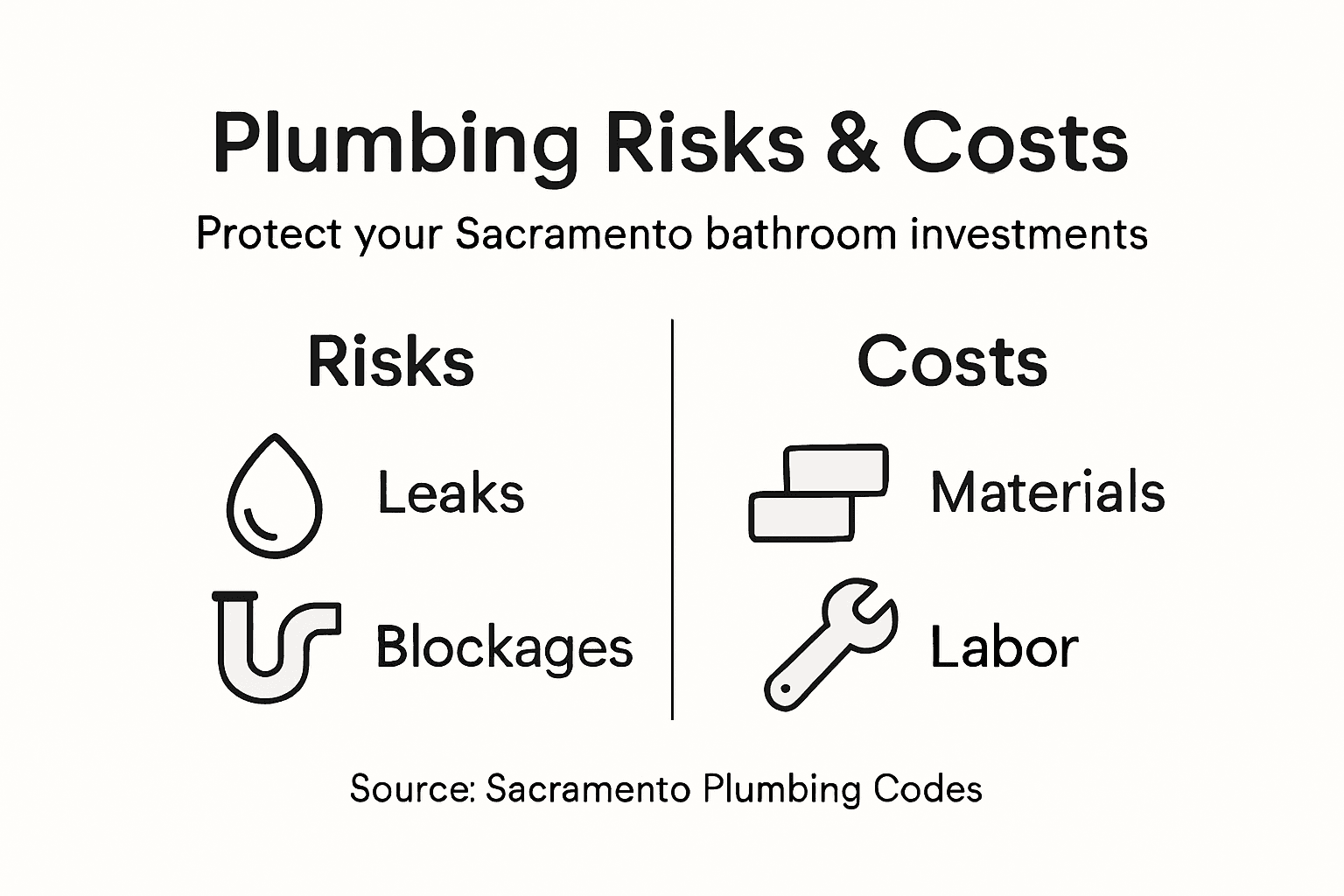
Bathroom plumbing cost factors encompass multiple complex variables. Professional installation, high-quality materials, and adherence to local building codes significantly impact overall expenses. Homeowners frequently underestimate the long-term financial implications of seemingly minor installation errors, which can result in substantial repair and replacement costs.
Below is a comparison of professional vs. DIY bathroom plumbing installation considerations:
| Factor | Professional Installation | DIY Installation |
|---|---|---|
| Code Compliance | Guaranteed adherence to codes | Risk of violation |
| Long-term Cost | Fewer repairs over time | Possible high repair costs |
| Project Timeline | Streamlined and efficient | Can face long delays |
| Warranty Coverage | Labor and parts often included | No or limited coverage |
Risks extend beyond immediate financial considerations, potentially compromising home safety and structural integrity. Improper backflow prevention, insufficient venting, and substandard material choices can create health hazards and compromise the entire plumbing system’s functionality.
Pro tip: Invest in professional inspection and quality materials to prevent costly long-term plumbing complications.
Protect Your Sacramento Home with Expert Bathroom Plumbing Solutions
Understanding the complexity of bathroom plumbing systems and the challenges like improper installation or leaks is vital to protecting your home from costly water damage and health hazards. Whether you face concerns about pipe materials, fixture compatibility, or compliance with local plumbing codes our team at Legacy Plumbing & Drain Inc is here to help. We specialize in addressing common pain points such as preventing sewer gas entry, ensuring proper venting, and maintaining efficient waste removal to keep your bathroom safe and functional.
Don’t wait for a small leak or installation flaw to become a major emergency. Trust the Sacramento emergency plumbers who know the intricacies of bathroom fixtures and piping and the risks homeowners face. Visit Legacy Plumbing & Drain Inc now and take action with skilled professionals committed to quality, compliance, and your peace of mind. Protect your home today with expert plumbing services designed for Sacramento residents.
Frequently Asked Questions
What are the main components of a bathroom plumbing system?
The core elements of a bathroom plumbing system include water supply lines, drain pipes, vent pipes, fixtures (like sinks, toilets, and showers), and shut-off valves. Together, these components ensure efficient water delivery and waste removal.
What materials are commonly used in bathroom plumbing, and what are their properties?
Common materials for bathroom plumbing include copper, PVC, and cross-linked polyethylene (PEX). Copper is durable and non-reactive, PVC is lightweight and easy to install, while PEX is flexible and resistant to bursting. Each material has its advantages depending on the application.
How does proper plumbing function in a bathroom impact daily hygiene and safety?
Proper bathroom plumbing ensures that clean water is delivered efficiently and that wastewater is removed without causing backups or contamination. This functionality helps maintain hygiene and protects the home from potential water damage and health hazards.
What can homeowners do to prevent plumbing issues in their bathrooms?
Homeowners can perform regular visual inspections for signs of corrosion or leaks, consult professionals for installations or renovations, and ensure adherence to local plumbing codes. Investing in quality materials and inspections can help prevent costly long-term plumbing problems.
Recommended
- Residential Plumbing Explained: Safe Home Water Systems – Legacy Plumbing & Drain – Emergency Plumbers Of Sacramento
- Why Maintain Bathroom Plumbing – Protect Your Sacramento Home – Legacy Plumbing & Drain – Emergency Plumbers Of Sacramento
- Types Of Home Plumbing Systems: A Guide For Sacramento Area Homeowners 2025 – Legacy Plumbing & Drain – Emergency Plumbers Of Sacramento
- Understanding Plumbing Codes: A Guide For Sacramento Area Homeowners – Legacy Plumbing & Drain – Emergency Plumbers Of Sacramento