

Sacramento homeowners rely on their plumbing systems for everything from that hot morning shower to the simple task of washing dishes. Here’s something most people miss. Over 60 percent of Sacramento homes use a mix of old copper and new PEX or PVC pipes. The surprise? Many don’t know what type of plumbing runs through their walls or whether it meets local regulations, setting them up for expensive repairs down the line.
Table of Contents
- Overview Of Main Home Plumbing Systems
- How To Identify Your Home’s Plumbing System
- Best Plumbing Systems For Local Sacramento Area Homes
- When To Call A Professional: Emergency Plumbing Scenarios
Quick Summary
| Takeaway | Explanation |
|---|---|
| Understand your plumbing components | The three primary components of home plumbing systems are the potable water supply system, sanitary drainage system, and stormwater drainage system, all of which work together to manage water distribution and waste removal effectively. |
| Identify your plumbing system | Conduct a visual inspection of exposed pipes to determine materials (copper, galvanized steel, PVC, or PEX) and consider the age of your home to understand its plumbing infrastructure better. |
| Choose suitable materials for Sacramento | For local homes, PEX and PVC pipes are recommended due to their flexibility, durability, and compliance with California building standards, especially considering Sacramento’s water conditions. |
| Recognize plumbing emergencies | Be aware of critical plumbing emergencies like burst pipes and sewage backups, which require immediate professional intervention to prevent extensive damage and health risks. |
| Call professionals for complex issues | While some minor plumbing issues can be handled by homeowners, knowing when to seek professional help is crucial for protecting your home’s infrastructure and avoiding costly repairs. |
Overview of Main Home Plumbing Systems
Understanding the types of home plumbing systems is crucial for Sacramento homeowners looking to maintain their property’s essential infrastructure. Plumbing maintenance insights can help prevent costly repairs and ensure smooth household operations.
The Three Primary Plumbing System Components
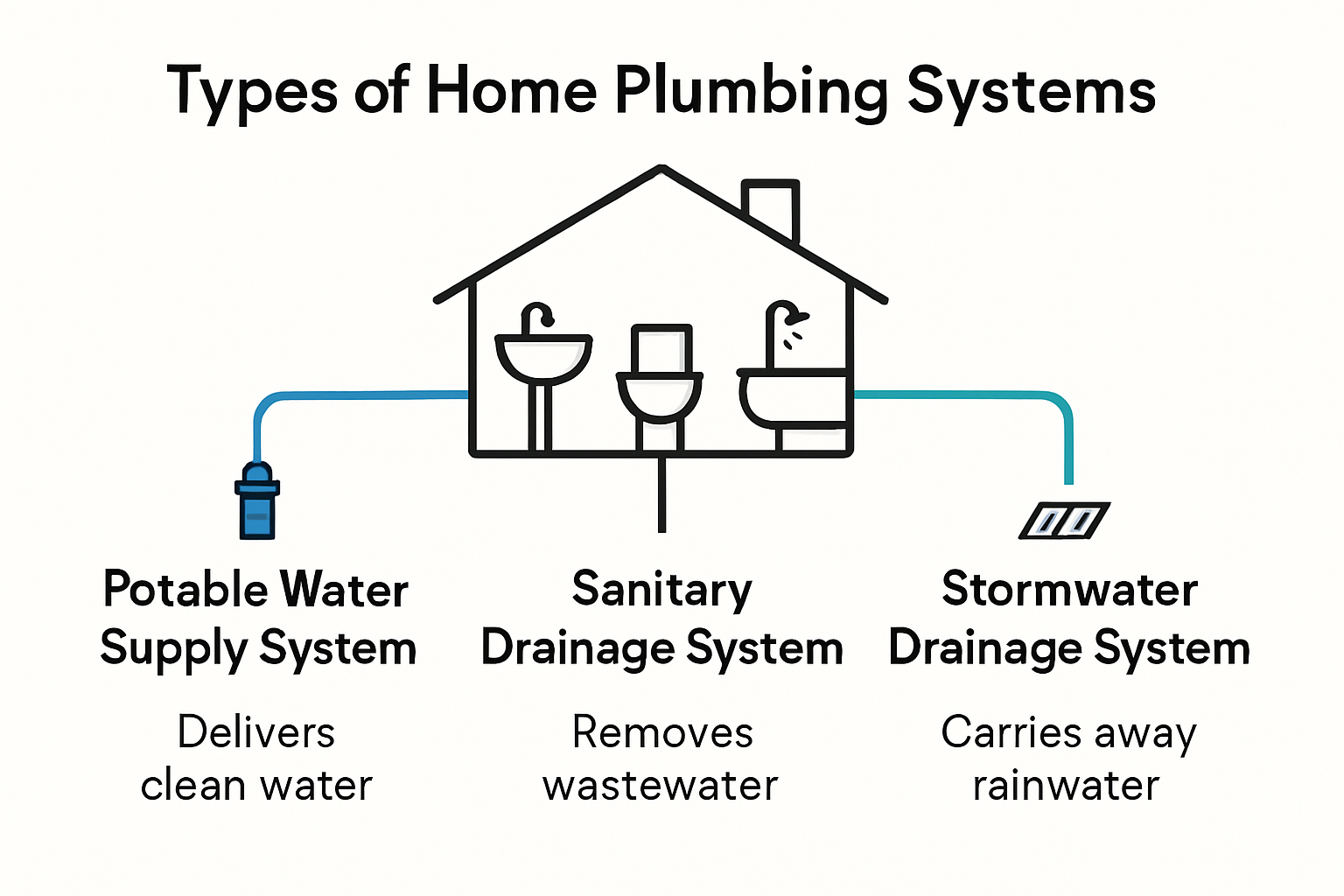
Residential plumbing is a complex network designed to manage water distribution and waste removal efficiently. According to Wikipedia, home plumbing systems typically comprise three primary components: the potable water supply system, the sanitary drainage system, and the stormwater drainage system.
Potable Water Supply System
The potable water supply system represents the lifeline of your home’s water infrastructure. As This Old House explains, this pressurized system delivers clean water to every fixture in your home. It ensures that multiple fixtures can operate simultaneously while maintaining consistent water pressure and flow. The system includes main water lines, pipes, valves, and connections that bring fresh water from municipal sources or private wells directly into your home.
Sanitary Drainage System
The sanitary drainage system plays a critical role in removing wastewater from your home. Unlike the water supply system, this network relies primarily on gravity to transport waste from sinks, toilets, showers, and appliances to either the municipal sewer system or a private septic tank. Specialized components like traps and vents prevent sewer gases from entering living spaces and ensure proper drainage flow. These intricate design elements protect your home’s indoor environment and maintain hygiene standards.
To help you understand the three core components of a residential plumbing system, here is a summary table highlighting their functions:
| Plumbing System Component | Primary Function | Key Features |
|---|---|---|
| Potable Water Supply System | Delivers fresh, clean water to fixtures | Pressurized, uses valves & meters |
| Sanitary Drainage System | Removes wastewater from fixtures | Gravity-based, uses traps & vents |
| Stormwater Drainage System | Diverts rainwater from property to prevent flooding | Gutters, downspouts, surface drains |
System Interconnectivity and Design
Modern home plumbing systems are meticulously engineered to work seamlessly together. Each component must function correctly to prevent water contamination, manage waste effectively, and protect your home’s structural integrity. The interconnected nature of these systems means that a problem in one area can quickly cascade into more significant issues if not addressed promptly.
Homeowners should understand that while these systems appear simple on the surface, they represent complex networks of pipes, valves, and connections working in harmony. Regular inspection and maintenance are key to preventing potential failures. By recognizing the fundamental components and their functions, Sacramento area residents can take proactive steps to protect their home’s plumbing infrastructure.
Whether you’re dealing with a new construction project or maintaining an existing home, comprehending these plumbing systems provides valuable insights into your property’s critical water management infrastructure. Knowledge is the first step toward effective home maintenance and preventing unexpected plumbing emergencies.
How to Identify Your Home’s Plumbing System
Identifying the specific type of plumbing system in your Sacramento home requires careful observation and understanding of different pipe materials and characteristics. Emergency plumbing experts recommend conducting a thorough inspection to prevent potential future issues.
Visual Pipe Inspection Techniques
Home plumbing systems can be identified through multiple visual and contextual clues. According to Armour Insurance, homeowners should carefully examine exposed pipes in areas like basements, crawl spaces, and under sinks.
Pipe Material Identification
Different pipe materials offer distinct visual characteristics that can help homeowners determine their plumbing system’s composition. Copper pipes typically display a reddish-brown hue with a smooth surface and are commonly found in homes built between the 1960s and 1980s. Galvanized steel pipes appear silver-gray and often show signs of rust, indicating an older plumbing system. Plastic variants like PVC pipes are white or off-white with a synthetic texture, while PEX pipes are flexible and come in various colors such as red, blue, and white.
Age-Based System Identification
The age of your home provides significant insights into its likely plumbing system. Streetsmart Insurance suggests that homes constructed before the 1960s predominantly used galvanized steel pipes. Homes built from the 1960s to 1980s typically feature copper piping, while those constructed from the 1990s onward are more likely to utilize modern materials like CPVC or PEX pipes.
The following table summarizes key visual clues and the typical home build periods associated with each common pipe material:
| Pipe Material | Visual Clues | Typical Home Build Dates |
|---|---|---|
| Galvanized Steel | Silver-gray, rust spots | Pre-1960s |
| Copper | Reddish-brown, smooth surface | 1960s–1980s |
| PVC (Plastic) | White or off-white, synthetic feel | 1990s–present |
| PEX | Flexible, red/blue/white colors | 1990s–present |
Advanced Identification Strategies
Beyond visual inspection, homeowners can employ additional strategies to confirm their plumbing system’s characteristics. Examining water heater connections can provide crucial information. Copper pipes are traditionally used for hot water lines, while newer systems might incorporate PVC or PEX for cold water connections.
For Sacramento homeowners uncertain about their home’s plumbing infrastructure, professional assessment remains the most reliable method. Experienced plumbers can conduct comprehensive evaluations, identifying potential vulnerabilities and recommending appropriate maintenance or replacement strategies.
Understanding your home’s plumbing system is more than a technical exercise. It represents a critical aspect of home maintenance that can prevent costly repairs and ensure long-term property value. By recognizing the materials and characteristics of your plumbing infrastructure, you can make informed decisions about maintenance, upgrades, and potential renovations.

Best Plumbing Systems for Local Sacramento Area Homes
Selecting the optimal plumbing system for Sacramento homes requires careful consideration of local environmental conditions, water quality, and regulatory standards. Local plumbing experts recommend understanding the unique challenges of our region’s infrastructure.
Modern Piping Materials for Sacramento Homes
The Sacramento area demands robust plumbing solutions that can withstand local water conditions and environmental challenges. According to Sacramento Plumbing Specialists, two primary materials stand out for modern home plumbing: PEX and PVC pipes.
PEX Piping Advantages
PEX (cross-linked polyethylene) pipes have become increasingly popular in Sacramento homes due to their exceptional flexibility and durability. These pipes offer remarkable resistance to temperature fluctuations and mineral buildup, which is crucial given the area’s water hardness. Plumbing Remodelers highlight that PEX pipes can easily navigate complex home layouts, reducing the number of connections and potential leak points. Their ability to expand slightly helps prevent burst pipes during unexpected temperature drops, making them an ideal choice for Sacramento’s variable climate.
Compliance with Local Building Standards
The California Green Building Standards Code (CALGreen) plays a critical role in determining acceptable plumbing systems. As Wikipedia explains, these regulations mandate water efficiency and sustainable building practices. For Sacramento homeowners, this means prioritizing low-flow fixtures, water-efficient irrigation systems, and pipes that minimize water waste.
Water Quality Considerations
Sacramento’s water characteristics present unique challenges for home plumbing systems. The region is known for moderately to very hard water, which can cause significant mineral buildup in pipes and appliances. Homeowners should consider additional water treatment solutions such as whole-house water softeners or filtration systems to protect their plumbing infrastructure.
The ideal plumbing system for a Sacramento home goes beyond just selecting the right pipes. It involves a comprehensive approach that considers water quality, local building codes, environmental sustainability, and long-term performance. PVC and PEX pipes offer excellent solutions, but their effectiveness depends on proper installation and maintenance.
Homeowners should consult with local plumbing professionals who understand Sacramento’s specific environmental and regulatory landscape. Professional assessment can help identify the most suitable plumbing system for your specific home, taking into account factors like water hardness, potential temperature variations, and individual household needs.
Ultimately, investing in the right plumbing system is an investment in your home’s long-term functionality and value. By carefully selecting materials that meet local standards and can withstand Sacramento’s unique environmental conditions, homeowners can ensure a reliable and efficient water infrastructure for years to come.
When to Call a Professional: Emergency Plumbing Scenarios
Recognizing critical plumbing emergencies can mean the difference between minor repairs and catastrophic home damage. Emergency plumbing experts emphasize the importance of swift professional intervention during high-risk scenarios.
Identifying High-Risk Plumbing Emergencies
Plumbing emergencies require immediate attention to prevent extensive property damage and potential health hazards. Sacramento homeowners must understand the most critical situations that demand professional expertise.
Severe Water Damage Scenarios
Burst pipes represent one of the most urgent plumbing emergencies. These incidents can rapidly flood homes, causing structural damage, mold growth, and potentially compromising electrical systems. When water begins pooling or you notice significant pipe damage, immediate professional intervention becomes crucial. The speed of response can dramatically reduce potential repair costs and prevent long-term structural complications.
Sewage and Contamination Risks
Sewer line backups pose significant health risks and require immediate professional attention. Signs include multiple drain clogs, sewage odors, gurgling sounds from toilets, or raw sewage emerging in sinks or basement areas. These situations can introduce dangerous pathogens into your living environment, making professional remediation essential. Emergency plumbing tips recommend shutting off main water valves and avoiding contact with contaminated areas until professionals arrive.
Critical Warning Signs Requiring Immediate Action
Certain plumbing warning signs should never be ignored. Gas leaks, characterized by a distinctive sulfur or rotten egg smell, represent an immediate life-threatening emergency. If you detect such odors, evacuate the premises immediately and contact emergency services.
Additionally, significant water pressure changes, unexplained water bill increases, or persistent underground water sounds can indicate hidden pipe failures. These subtle indicators might precede catastrophic system failures and warrant professional assessment.
Sacramento homeowners should maintain a proactive approach to plumbing maintenance. While some minor issues can be addressed independently, complex scenarios demand professional expertise. Attempting complex repairs without proper knowledge can exacerbate existing problems, leading to more extensive and expensive damage.
Understanding when to call a professional plumber is not just about solving immediate problems. It’s about protecting your home’s infrastructure, ensuring your family’s safety, and potentially saving thousands in potential repair costs. Professional plumbers bring specialized diagnostic tools, extensive experience, and the ability to address root causes rather than merely treating symptoms.
Remember, in plumbing emergencies, time is of the essence. Having a trusted professional’s contact information readily available can make a significant difference in mitigating potential damage and ensuring swift, effective resolution.
Frequently Asked Questions
What are the main types of plumbing systems in homes?
The main types of plumbing systems in homes include the potable water supply system, the sanitary drainage system, and the stormwater drainage system. Each serves a specific purpose in managing water distribution and waste removal effectively.
How can I identify the type of plumbing pipes in my home?
You can identify the type of plumbing pipes by conducting a visual inspection of exposed pipes in areas like basements or under sinks. Look for distinct features: copper pipes are reddish-brown, galvanized steel is silver-gray and may rust, PVC pipes are white, and PEX is flexible and can be red or blue.
What plumbing materials are recommended for Sacramento homes?
For Sacramento homes, PEX and PVC pipes are recommended due to their flexibility, durability, and compliance with California building standards. These materials are especially apt for managing the area’s water conditions.
When should I call a professional plumber for plumbing emergencies?
You should call a professional plumber for emergencies such as burst pipes causing severe water damage or sewage backups, which can pose health risks. Recognizing these high-risk scenarios early can prevent extensive damage and costly repairs.
Secure Your Sacramento Home With Plumbing Systems That Last
Are you worried about hidden issues in your home’s plumbing after reading about aging pipes, uncertain compliance, or rising emergency risks? If you recognize your property in those scenarios or feel unsure about your current pipe material, you’re not alone. Sacramento homes face water quality challenges, outdated infrastructure, and strict building codes, putting both comfort and safety at risk if your plumbing system is not up to date.
Let the experts at Legacy Plumbing & Drain Inc help you protect your investment and bring you peace of mind. Our skilled team understands the specific needs of Sacramento-area homes, from evaluating your pipe materials to recommending the best solutions for water quality, compliance, and emergency readiness. Take a proactive step today. Schedule your inspection or emergency service fast with Legacy Plumbing & Drain Inc before a simple issue turns into major damage. Your home deserves trusted, dependable plumbing that stands up to Sacramento’s unique demands.
Recommended
- Trusted Plumbing Services In The Sacramento Area
- Regular Plumbing Maintenance In Sacramento: Prevent Leaks & Emergencies | Legacy Plumbing & Drain
- How Much Does Water Heater Replacement Cost? Best 10 Tips
- What Causes Water Leaks? A Comprehensive Insight
- Your Local Plumber – Fast, Reliable Service
- Repiping Services In Sacramento: When To Repipe & How To Choose | Legacy Plumbing & Drain