
Cold showers in the morning are never welcome, especially when your water heater suddenly fails in Sacramento or Roseville. Choosing the right system matters for everyday comfort and can affect your home’s energy efficiency. This guide breaks down the differences between storage tank, tankless, heat pump, and solar water heaters while covering the unique challenges and maintenance tips local homeowners need to know.
Table of Contents
- What Is A Water Heater And How It Works
- Comparing Storage, Tankless, Heat Pump, And Solar Models
- Key Features And Benefits Of Each Type
- Costs, Longevity, And Energy Efficiency Factors
- Maintenance Needs And Common Issues In Sacramento
- Making The Right Choice For Your Sacramento Home
Key Takeaways
| Point | Details |
|---|---|
| Understanding Types | Choose between Storage Tank, Tankless, Heat Pump, and Solar Water Heaters based on household needs and energy efficiency. |
| Cost and Longevity | Evaluate initial costs, expected lifespan, and potential energy savings to determine long-term value. |
| Regular Maintenance | Conduct annual maintenance checks to extend the lifespan and efficiency of your water heater, especially in regions with hard water. |
| Professional Consultation | Engage a local plumbing professional to tailor recommendations based on specific household demands and local conditions. |
What Is a Water Heater and How It Works
A water heater is a critical home appliance designed to heat and store water for daily household use. Heating water efficiently requires understanding its fundamental mechanics and different operational approaches.
Water heaters function through several core mechanisms, typically involving energy sources like electricity, natural gas, or oil. The primary goal is transforming cold water into hot water ready for various domestic needs such as bathing, cleaning, and cooking. These systems generally fall into three main categories:
- Storage Tank Water Heaters: Traditional units that keep a large volume of water heated and ready for use
- Tankless Water Heaters: On-demand systems that heat water instantly as it flows through the unit
- Heat Pump Water Heaters: Advanced units that transfer thermal energy to heat water more efficiently
The heating process involves sophisticated temperature control mechanisms. A thermostat monitors water temperature inside the tank, activating heating elements or gas burners when temperatures drop below the preset level. Water heating technologies have evolved significantly, incorporating energy-efficient designs that minimize heat loss and reduce overall energy consumption.
Key Components of a Typical Water Heater:
- Cold water inlet pipe
- Heating element or gas burner
- Thermostat
- Temperature and pressure relief valve
- Hot water outlet pipe
Water heaters represent a critical intersection between household comfort and energy efficiency, transforming basic utilities into essential home infrastructure.
Pro tip: Check your water heater’s age and efficiency rating annually to ensure optimal performance and potential energy savings.
Comparing Storage, Tankless, Heat Pump, and Solar Models
Homeowners have multiple options when selecting a water heater, each with unique advantages and considerations. Water heater technologies have evolved significantly, offering diverse solutions for different household needs and energy efficiency requirements.
Storage Tank Water Heaters remain the most traditional and widely used model. These units maintain a large reservoir of hot water, ready for immediate use, but come with inherent drawbacks:
- Continuous energy consumption to maintain water temperature
- Limited hot water capacity
- Higher standby energy losses
- Lower initial purchase cost
- Simpler installation process
By contrast, Tankless Water Heaters provide an innovative alternative. These on-demand systems heat water instantly as it flows through the unit, eliminating standby energy losses and offering several compelling benefits:
- Endless hot water supply
- Compact design
- Significantly reduced energy consumption
- Longer equipment lifespan
- Higher upfront installation costs
Heat Pump Water Heaters represent a more advanced technological approach. Energy-efficient water heating systems transfer thermal energy from the surrounding environment rather than generating heat directly, making them substantially more efficient than traditional electric models.
Solar Water Heaters offer an environmentally conscious solution by utilizing solar thermal collectors. These systems can dramatically reduce energy costs but require specific geographic and architectural considerations:
- Significant initial investment
- Dependence on sunlight availability
- Potential need for supplemental heating systems
- Reduced carbon footprint
- Long-term energy savings
Selecting the right water heater involves balancing initial costs, long-term efficiency, and your specific household hot water requirements.
Pro tip: Consult a professional plumber to assess your home’s specific hot water needs and potential energy savings before making a final water heater selection.
Here’s a side-by-side comparison to help you choose the best water heater type for your needs:
| Type | Best For | Biggest Drawback | Notable Long-Term Benefit |
|---|---|---|---|
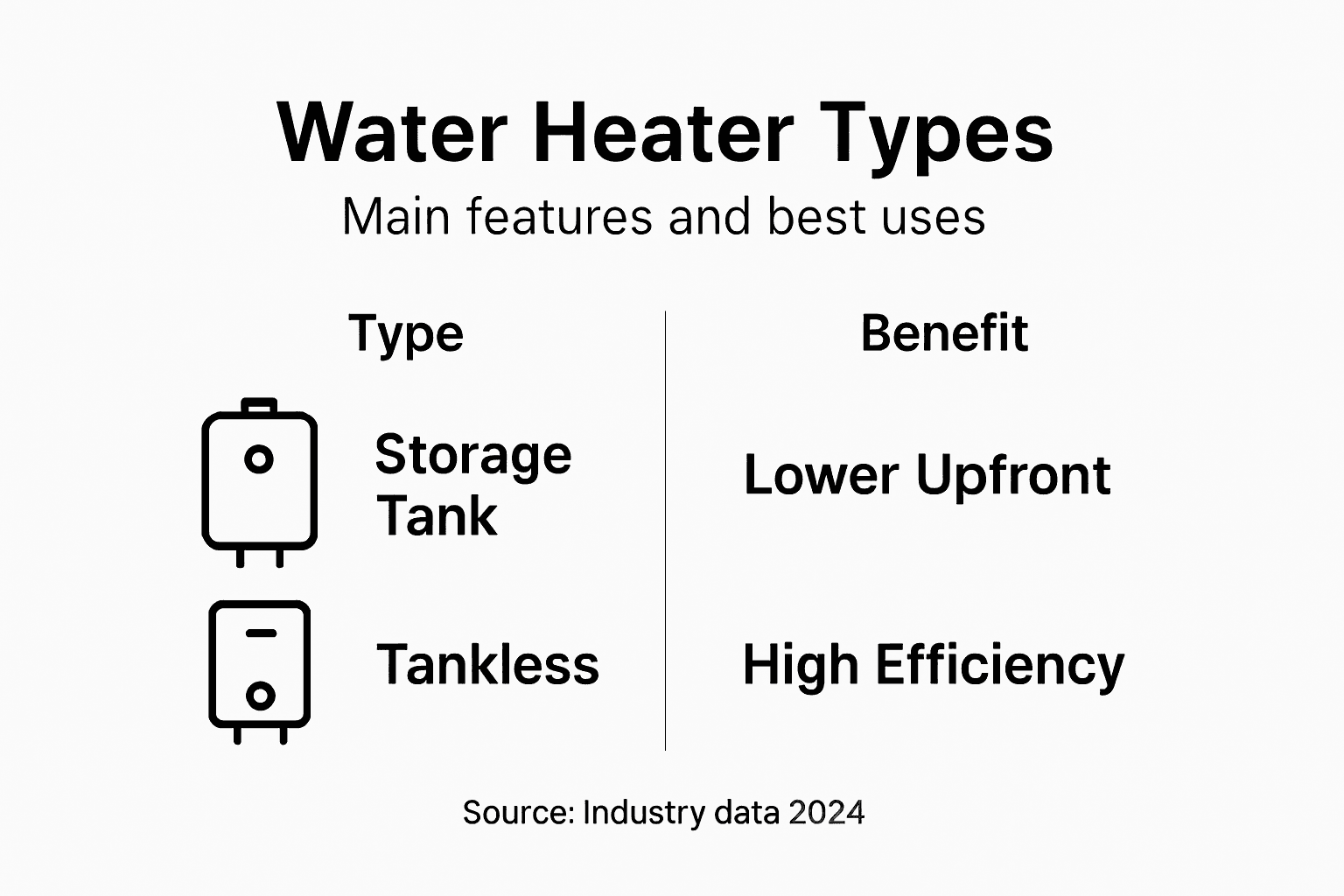
| Storage Tank | Large, consistent use | High standby losses | Lower upfront cost |
| Tankless | Small homes, space saving | Expensive installation | Endless hot water, long lifespan |
| Heat Pump | Mild climates, efficiency | Slower water heating | Major energy savings |
| Solar | Sunny areas, eco-focus | Weather dependent | Minimal energy bills |
Key Features and Benefits of Each Type
Understanding the unique characteristics of different water heater types can help homeowners make informed decisions about their home’s hot water system. Tankless water heater technologies offer innovative solutions that address many traditional heating challenges.
Storage Tank Water Heaters provide reliable performance with several distinct features:
- Familiar and straightforward technology
- Lower initial purchase cost
- Available in multiple size ranges
- Relatively simple maintenance
- Predictable hot water supply
- Suitable for homes with consistent hot water demands
Tankless Water Heaters represent a more modern approach to water heating, characterized by these key benefits:
- Compact and space-saving design
- On-demand hot water generation
- Elimination of standby energy losses
- Extended equipment lifespan (15-20 years)
- Potential for significant energy cost savings
- Ideal for smaller households or targeted hot water needs
Heat Pump Water Heaters utilize advanced thermal transfer technologies, offering unique advantages:
- Two to three times more energy efficient
- Lower operational electricity consumption
- Reduced carbon footprint
- Effective in moderate climate environments
- Potential for substantial long-term energy savings
- Qualify for various energy efficiency rebates
Solar Water Heaters provide an environmentally conscious alternative with compelling features:
- Dramatically reduced energy costs
- Minimal carbon emissions
- Government tax incentives available
- Works effectively in sunny regions
- Potential for complete energy independence
- Contributes to sustainable home design
Modern water heating technologies offer homeowners unprecedented flexibility in balancing efficiency, cost, and environmental responsibility.
Pro tip: Consider consulting an energy efficiency professional to perform a comprehensive assessment of your home’s specific water heating requirements before making a final selection.
Costs, Longevity, and Energy Efficiency Factors
Homeowners must carefully evaluate the financial and performance implications of different water heating technologies. Energy efficiency measurements provide critical insights into long-term value and operational expenses.
Initial Purchase and Installation Costs:
- Storage Tank Water Heaters: Lowest upfront investment
- Tankless Water Heaters: Highest initial cost (30-50% more)
- Heat Pump Water Heaters: Moderate to high initial expense
- Solar Water Heaters: Most significant upfront investment
Longevity Expectations:
- Storage Tank Water Heaters: 10-15 years typical lifespan
- Tankless Water Heaters: 20-25 years potential duration
- Heat Pump Water Heaters: 15-20 years average performance
- Solar Water Heaters: 20-30 years with proper maintenance
Energy Efficiency Considerations offer the most significant long-term financial impact. Heat pump water heater technologies demonstrate remarkable efficiency advantages:
- Reduced energy consumption by 50-66%
- Substantially lower utility bills
- Minimal carbon emissions
- Advanced thermal transfer capabilities
- Potential for significant annual savings
Comparative Energy Performance Metrics:
- Storage Tank: Lowest energy efficiency
- Tankless: Moderate energy savings
- Heat Pump: Highest energy efficiency
- Solar: Near-zero operational energy costs
Understanding total cost of ownership requires evaluating initial investment, operational expenses, potential energy savings, and expected equipment lifespan.
Pro tip: Request detailed energy efficiency calculations from professional installers to accurately compare long-term financial implications of different water heater technologies.
Maintenance Needs and Common Issues in Sacramento
Sacramento homeowners face unique water heater maintenance challenges due to local environmental and infrastructure conditions. Sacramento’s Leak Free program highlights the critical importance of proactive plumbing maintenance for water and energy conservation.
Common Water Heater Issues in Sacramento:
- Sediment buildup from hard water
- Corrosion in older systems
- Mineral deposits reducing efficiency
- Temperature and pressure valve failures
- Potential water quality impacts
- Increased energy consumption
Annual Maintenance Checklist:
- Flush water heater tank annually
- Inspect anode rod for corrosion
- Check pressure relief valve functionality
- Examine electrical connections
- Test water temperature settings
- Look for signs of leakage or rust
Water Heater Performance Factors specific to Sacramento’s environment include:
- Local water hardness levels
- Temperature fluctuations
- Potential mineral content
- Seasonal water quality variations
- Potential water pressure issues
- Energy efficiency considerations
Utility department guidelines emphasize the importance of proper maintenance to prevent system failures and reduce long-term repair costs. Sacramento residents should be particularly attentive to:
- Proper disposal of household waste
- Regular system inspections
- Understanding local water quality
- Monitoring energy consumption
- Addressing minor issues promptly
Consistent maintenance is the key to extending your water heater’s lifespan and maintaining optimal performance in Sacramento’s unique environmental conditions.
Pro tip: Schedule a professional water heater inspection annually, preferably before the peak summer or winter seasons, to catch potential issues early and maximize system efficiency.
The table below summarizes how Sacramento’s local factors impact water heater performance and maintenance.
| Local Factor | Effect on Water Heaters | Maintenance Recommendation |
|---|---|---|
| Hard water | Speeds sediment buildup | Annual tank flush advised |
| Water temperature swings | Affects heating efficiency | Regular temperature checks |
| High mineral content | Risks internal scaling | Inspect for mineral deposits yearly |
| Water pressure issues | Can stress tank and valves | Monitor and adjust pressure as needed |
Making the Right Choice for Your Sacramento Home
Selecting the ideal water heater requires careful evaluation of your home’s specific needs and local environmental conditions. Water heater sizing strategies play a crucial role in ensuring optimal performance and energy efficiency.
Key Decision Factors for Sacramento Homeowners:
- Household hot water consumption patterns
- Available energy sources (gas or electric)
- Home’s physical space constraints
- Long-term energy cost considerations
- Local water quality characteristics
- Budget for initial installation
Household Hot Water Demand Assessment:
- Calculate peak simultaneous hot water usage
- Determine number of bathrooms
- Evaluate kitchen and laundry requirements
- Consider household occupancy
- Analyze typical daily hot water consumption
Energy Source Compatibility:
- Natural gas: Lower operational costs
- Electric: More installation flexibility
- Hybrid heat pump: Maximum energy efficiency
- Solar: Environmentally sustainable option
Choosing the right water heater involves balancing multiple technical and financial considerations specific to Sacramento’s unique residential landscape:
- New energy efficiency standards
- Potential infrastructure modifications
- Local utility rebate programs
- Climate-specific performance requirements
- Long-term maintenance expectations
Sacramento homeowners must consider not just immediate costs, but comprehensive lifetime value when selecting a water heating system.
Pro tip: Consult a local plumbing professional who understands Sacramento’s specific water quality and environmental conditions to get personalized water heater recommendations.
Find the Perfect Water Heater Solution for Your Sacramento Home
Choosing the right water heater is a crucial step toward enhancing your home’s comfort and energy efficiency. Whether you are overwhelmed by the choices between storage tank, tankless, heat pump, or solar models, Legacy Plumbing & Drain Inc is here to help. We understand the challenges of balancing upfront costs, energy savings, and local Sacramento water conditions described in the article. Our expert plumbers specialize in customizing water heater installations and repairs tailored to your household’s specific needs.
Don’t wait for a cold shower or rising energy bills to make a change. Contact Legacy Plumbing & Drain Inc today for professional advice on water heater types and local maintenance. Benefit from reliable installations, expert maintenance, and emergency plumbing service that Sacramento homeowners trust. Act now to improve your home’s hot water efficiency and enjoy peace of mind with every use.
Frequently Asked Questions
What is a storage tank water heater?
A storage tank water heater is a traditional unit that heats and stores a large volume of water, keeping it ready for immediate use. It continues to consume energy to maintain the water temperature, which can lead to higher standby energy losses.
How do tankless water heaters work?
Tankless water heaters provide hot water on demand by heating water instantly as it flows through the unit. This eliminates standby energy losses and can supply a continuous stream of hot water, making it a great option for smaller homes or specific hot water needs.
What are the benefits of a heat pump water heater?
Heat pump water heaters are highly efficient as they transfer thermal energy from the surrounding environment to heat water, rather than generating heat directly. They can be two to three times more energy efficient than traditional electric models, resulting in significant energy savings.
Why should I consider solar water heaters?
Solar water heaters harness energy from the sun through thermal collectors, providing an environmentally friendly solution with minimal carbon emissions. While they require an initial investment and depend on sunlight availability, they can dramatically reduce energy costs over time.