Every home relies on a steady supply of hot water for daily comfort and cleanliness. Yet over 8 million water heaters are replaced every year in the US and most replacements only happen after a surprise cold shower or a flooded floor. The real secret is that spotting the warning signs early can save you hundreds and help you avoid emergencies others never see coming.
Table of Contents
- What Is A Water Heater And Its Functionality?
- Why Knowing When To Replace Water Heater Is Crucial?
- Key Signs Indicating It’s Time For A Replacement
- Understanding The Lifespan And Maintenance Of Water Heaters
- Evaluating Cost-Effectiveness Of Water Heater Replacement
Quick Summary
| Takeaway | Explanation |
|---|---|
| Monitor for warning signs | Regularly check for noises, leaks, or rust in your water heater. These indicate potential failures or the need for replacement. |
| Consider age for replacement | Most water heaters last 8-12 years. If your unit is older than 10 years, it’s time to evaluate its efficiency and replacement options. |
| Maintain with regular inspections | Schedule annual professional inspections and perform regular maintenance, like flushing sediment and checking the pressure relief valve. This extends the lifespan of your heater. |
| Evaluate energy efficiency when replacing | New energy-efficient models may have higher initial costs but can save significantly on utility bills over time. Consider long-term savings when making your choice. |
What is a Water Heater and Its Functionality?
A water heater is an essential home appliance designed to heat and store water for various domestic uses. Understanding its core functionality helps homeowners make informed decisions about maintenance and replacement. Learn more about water heater basics.
Basic Components and Operation
Water heaters operate through a straightforward yet ingenious mechanism. At its core, the system consists of several critical components:
- A large tank for storing heated water
- A heating element (electric or gas-powered)
- Thermostat for temperature regulation
- Inlet and outlet water connections
- Pressure relief valve for safety
When cold water enters the tank, the heating element activates to raise the water temperature to a preset level. The thermostat monitors and maintains this temperature, ensuring a consistent hot water supply for showers, dishwashing, and other household needs.
Types of Water Heaters
Homeowners can choose from multiple water heater designs, each with unique characteristics. According to the U.S. Department of Energy, the most common types include:
- Storage Tank Water Heaters: Traditional models that store and continuously heat a large volume of water
- Tankless Water Heaters: Compact units that heat water on demand, providing energy efficiency
- Heat Pump Water Heaters: Utilize ambient heat to warm water, reducing electricity consumption
- Solar Water Heaters: Leverage solar energy to heat water, offering environmentally friendly solutions
Each type presents distinct advantages, allowing homeowners to select a system that best matches their specific household requirements, budget, and energy efficiency goals.
Below is a comparison table summarizing the key features, benefits, and considerations for the different types of water heaters discussed in this article.
| Type of Water Heater | Description | Key Benefits | Primary Considerations |
|---|---|---|---|
| Storage Tank | Stores and heats a large volume of water continuously | Reliable, familiar, easy to install | Less energy-efficient, standby losses |
| Tankless | Heats water on demand without a storage tank | Energy-saving, compact, endless hot water | Higher upfront cost, limited flow rate |
| Heat Pump | Uses ambient heat to warm water | Reduces electricity consumption | Needs suitable installation location |
| Solar | Uses solar energy panels to heat water | Eco-friendly, utility bill savings | High initial cost, weather dependent |
Why Knowing When to Replace Water Heater is Crucial?
Recognizing the right time to replace your water heater prevents unexpected breakdowns, potential water damage, and significant financial losses. Homeowners must understand the critical signs that indicate a water heater is approaching the end of its functional lifespan. Learn about water heater maintenance and replacement signals.
Financial and Safety Implications
Delaying water heater replacement can lead to substantial economic and safety risks. According to the U.S. Department of Energy, older water heaters become progressively less efficient, causing increased energy consumption and higher utility bills. The potential consequences extend beyond financial strain:
-
Unexpected water heater failure can cause extensive property damage
-
Older units are more prone to leaks and potential flooding
-
Inefficient systems consume more energy, raising monthly utility expenses
-
Potential safety hazards from malfunctioning heating elements
Warning Signs of Water Heater Deterioration
Savvy homeowners should monitor their water heater for specific indicators that suggest replacement might be necessary. Key warning signs include:
- Unusual Noises: Popping, crackling, or rumbling sounds indicating sediment buildup
- Inconsistent Water Temperature: Fluctuating hot water or rapid temperature changes
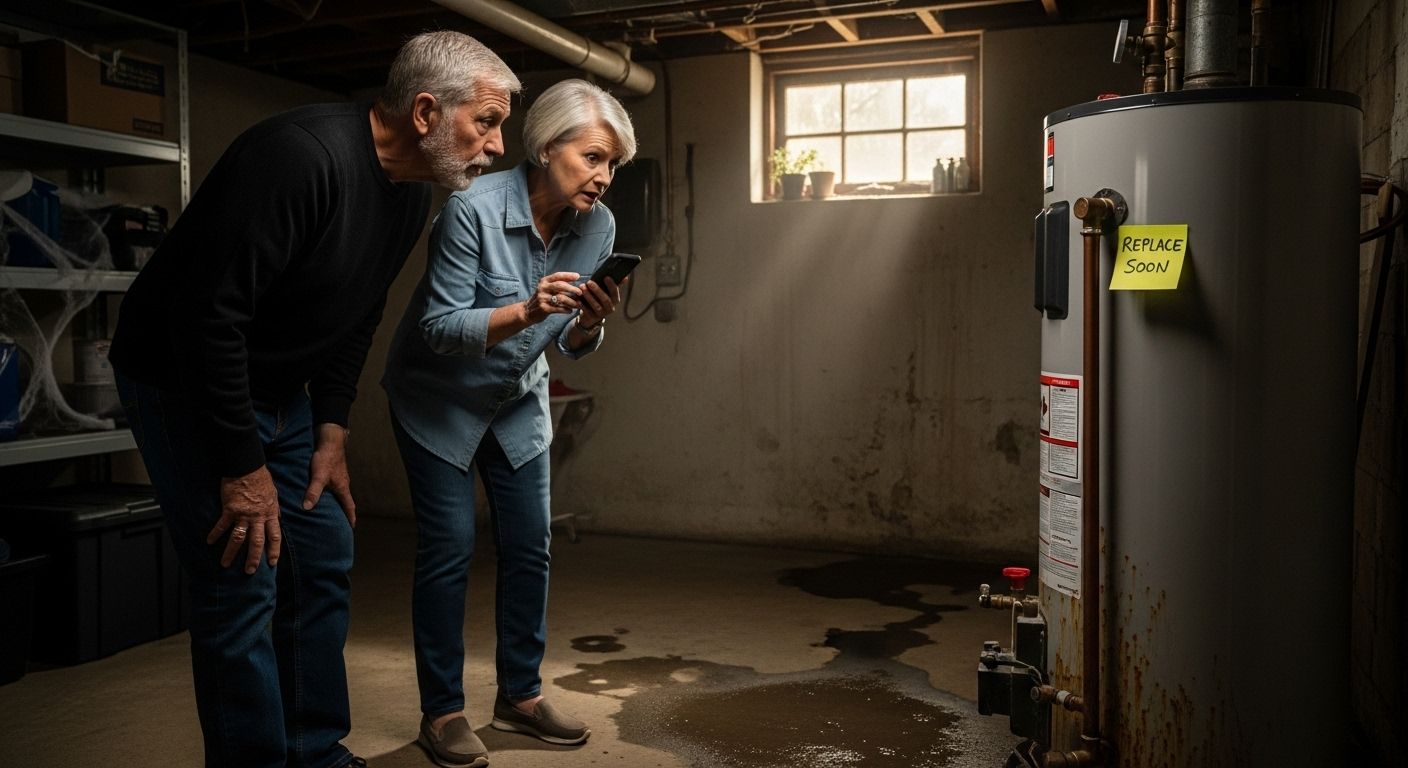
- Discolored Water: Rusty or brownish water suggesting internal tank corrosion
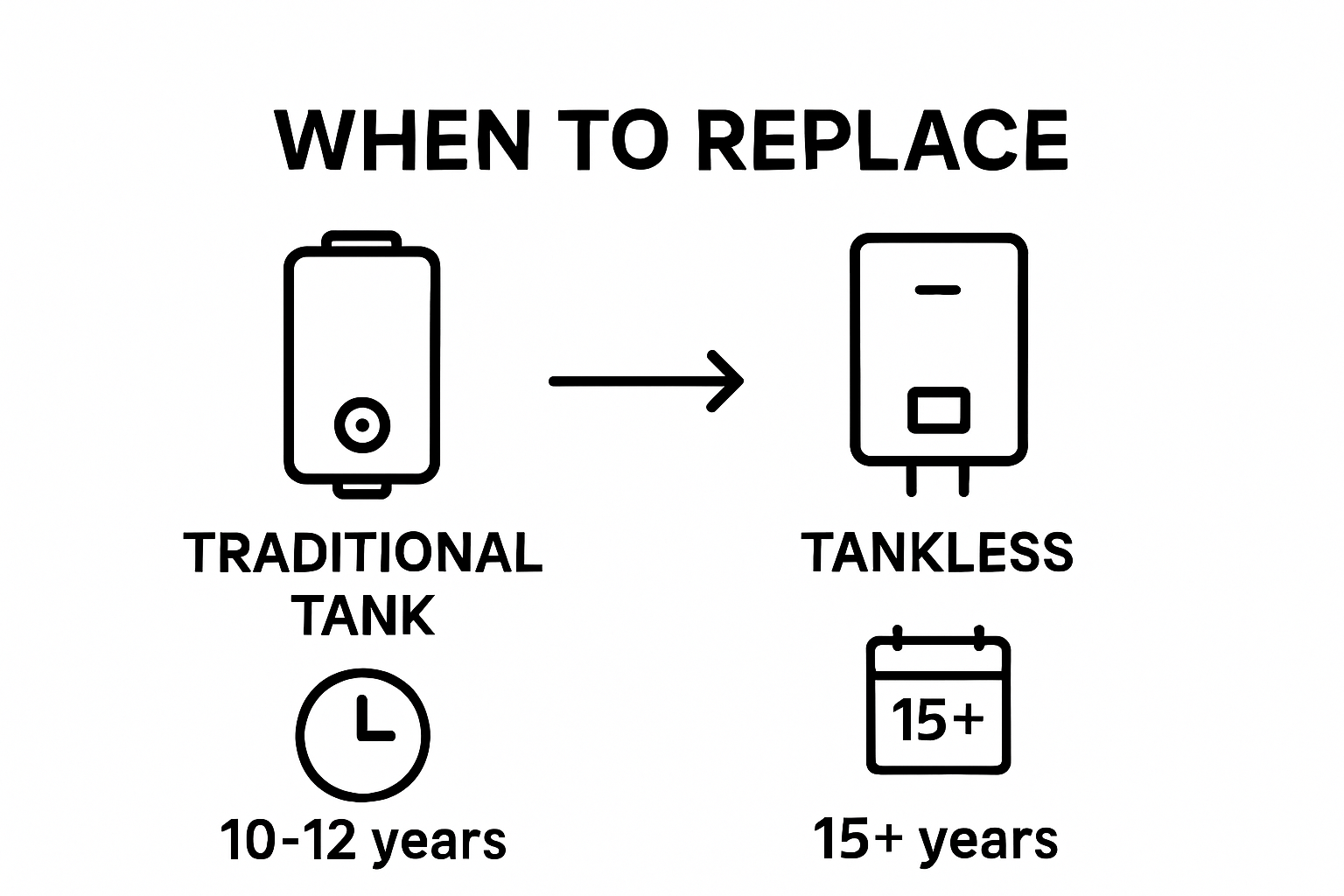
- Age of the Unit: Most water heaters last 8-12 years before performance significantly declines
- Frequent Repairs: Repeated maintenance issues signaling systemic problems
By proactively identifying these warning signs, homeowners can schedule timely replacements, avoiding potential emergencies and ensuring consistent hot water supply.
Key Signs Indicating It’s Time for a Replacement
Recognizing when your water heater needs replacement can save you from unexpected breakdowns and costly repairs. Homeowners must be vigilant about monitoring their water heating system’s performance and condition. Explore expert troubleshooting techniques.
Age and Performance Indicators
Water heaters are not designed to last indefinitely. According to City of Portland guidelines, the typical lifespan of a tank-style water heater is approximately 10 years. Beyond this point, performance typically declines, signaling potential replacement needs:
- 10+ Years Old: Significant efficiency reduction
- Constant Repair Requirements: Escalating maintenance costs
- Declining Hot Water Quality: Inconsistent temperature or reduced volume
- Rising Energy Bills: Indication of decreased operational efficiency
Visual and Functional Warning Signs
Some warning signs are more immediate and demand urgent attention. Homeowners should watch for these critical indicators:
- Rust-Colored Water: Suggests internal tank corrosion
- Persistent Leaking: Water pooling around the base of the heater
- Strange Noises: Popping, crackling, or rumbling sounds during operation
- Reduced Hot Water Pressure: Potential sediment buildup or internal damage
- Visible Tank Damage: Cracks, dents, or significant exterior deterioration
By understanding these signals, homeowners can proactively manage their water heater replacement, preventing potential water damage and ensuring consistent hot water supply.
The following table condenses common warning signs and their likely meanings, helping homeowners quickly identify issues that signal the need for water heater maintenance or replacement.
| Warning Sign | Possible Cause | Action Recommended |
|---|---|---|
| Unusual noises | Sediment buildup | Flush tank, inspect unit |
| Inconsistent water temperature | Failing heating element/thermostat | Professional inspection |
| Discolored water | Internal tank corrosion | Consider replacement |
| Persistent leaking | Tank or valve failure | Immediate replacement |
| Reduced hot water pressure | Sediment or internal damage | Flush system, inspect pipes |
| Visible tank damage | Physical deterioration | Replace water heater |
Understanding the Lifespan and Maintenance of Water Heaters
Water heaters are complex appliances requiring consistent care and strategic maintenance to maximize their operational efficiency and longevity. Learn about professional maintenance strategies.
Expected Operational Lifespan
According to the Air-Conditioning, Heating, and Refrigeration Institute, most water heaters have a predictable service life ranging between 10 to 13 years. The actual duration depends on several critical factors:
- Water Quality: Hard water accelerates internal component deterioration
- Maintenance Frequency: Regular professional inspections extend unit lifespan
- Installation Environment: Temperature and humidity impact overall performance
- Manufacturing Quality: Higher-grade materials increase durability
Critical Maintenance Recommendations
Proactive homeowners can significantly extend their water heater’s operational life through strategic maintenance practices. Essential maintenance tasks include:
- Annual Professional Inspection: Comprehensive system evaluation
- Pressure Relief Valve Check: Ensure safety mechanisms function correctly
- Sediment Flushing: Remove mineral buildup every six months
- Temperature Regulation: Maintain optimal settings to prevent unnecessary strain
- Insulation Assessment: Verify thermal efficiency of unit and connecting pipes
By implementing these maintenance strategies, homeowners can prevent unexpected breakdowns, reduce energy consumption, and maximize their water heating system’s overall performance and reliability.
Evaluating Cost-Effectiveness of Water Heater Replacement
Making an informed decision about water heater replacement requires a comprehensive analysis of immediate costs and long-term financial implications. Explore top water heater options for your home.
Financial Considerations and Potential Savings
According to the U.S. Department of Energy, upgrading to an energy-efficient water heater can generate substantial economic benefits. Homeowners should evaluate several critical financial factors:
- Initial Investment: Purchase and installation costs
- Energy Efficiency Ratings: Potential long-term utility bill reductions
- Annual Operating Expenses: Comparative analysis of current and potential new systems
- Potential Tax Credits: Available incentives for energy-efficient upgrades
- Maintenance and Repair Costs: Projected expenses for existing versus new units
Comparative Analysis of Replacement Options
The decision to replace a water heater involves weighing multiple technological and financial variables. Key factors influencing cost-effectiveness include:
- Technology Type: Tankless, heat pump, solar, and traditional storage models
- Energy Source: Electric, gas, or hybrid systems
- System Capacity: Matching unit size to household water consumption needs
- Expected Lifespan: Projected operational duration of different water heater types
- Energy Efficiency Potential: Long-term savings through reduced energy consumption
Careful evaluation of these factors helps homeowners make financially prudent decisions that balance upfront costs with future energy savings and performance reliability.
Ensure Reliable Hot Water for Your Family
Worried about inconsistent or aging water heaters causing sudden breakdowns at home? As highlighted in our article, neglecting signs like strange noises, leaking, or fluctuating temperatures can lead to major water damage and unexpected expenses. These issues not only disrupt daily comfort but also risk your home’s safety and your peace of mind.
Take charge of your home’s hot water reliability with the experts at Legacy Plumbing & Drain Inc. Our experienced technicians will assess your current system, offer personalized maintenance plans, or recommend timely replacements to keep your water heater running efficiently. Stop worrying about cold showers and hidden leaks. Contact us today for trusted solutions and restore comfort to your Sacramento home before small issues become costly emergencies.
Frequently Asked Questions
What are the signs that indicate I need to replace my water heater?
Key indicators include unusual noises, inconsistent water temperature, discolored water, frequent repairs, and the age of the unit (10 years or older).
How long do water heaters typically last?
Most water heaters have a lifespan of 10 to 13 years, but factors such as water quality and maintenance frequency can influence their durability.
What is the impact of delaying water heater replacement?
Delaying replacement can lead to unexpected failures, higher energy bills, more frequent repairs, and potential safety hazards like leaks or flooding.
What maintenance practices can extend the life of my water heater?
Essential maintenance includes annual professional inspections, checking the pressure relief valve, flushing out sediment, regulating temperature settings, and ensuring proper insulation of the unit.