
Sewer backups are among the most expensive and overwhelming disasters a homeowner can face. One major backup can cost tens of thousands of dollars in repairs and total restoration. It sounds like the kind of thing that only happens after a major storm or a burst city pipe. The shock is that most sewer backups actually start with tiny ignored warning signs and build up over time right under your feet.
Table of Contents
- What Is A Sewer Backup And Its Causes?
- Why Identifying Signs Of Sewer Backup Is Crucial
- How Sewer Backup Occurs: Understanding The Process
- Key Signs Indicating A Potential Sewer Backup
- What To Do When You Notice Signs Of Sewer Backup
Quick Summary
| Takeaway | Explanation |
|---|---|
| Act Quickly on Signs of Backup | Early detection can save you from extensive damage. Recognizing symptoms ensures timely action and potentially prevents costly repairs. |
| Avoid Flushing Improper Items | Ensure only appropriate materials are flushed to prevent blockages. This includes avoiding grease, fats, and non-degradable items. |
| Monitor for Warning Signs | Stay attentive to slow drains and unusual sounds. These symptoms can indicate an emerging backup situation needing immediate attention. |
| Consult Professionals Immediately | Contact a licensed plumber at the first sign of trouble. Professional intervention can diagnose the issue and minimize damage effectively. |
| Prioritize Personal Safety | When backup signs appear, ensure safety first. Isolate affected areas and avoid using plumbing fixtures to prevent contamination. |
What is a Sewer Backup and Its Causes?
A sewer backup represents a serious plumbing emergency where wastewater cannot flow through pipes and instead reverses direction, potentially causing significant damage to your home. When signs of sewer backup emerge, homeowners face potential health risks and substantial property destruction.
Understanding the Mechanics of Sewer Backups
Sewer backups occur when normal wastewater drainage becomes obstructed, forcing sewage to flow backward into your home through drain pipes, toilets, and other plumbing fixtures. This problematic scenario can result from multiple interconnected factors:
- Extensive pipe blockages from accumulated debris
- Tree root infiltration into underground sewer lines
- Aging or damaged municipal sewer infrastructure
- Significant rainfall overwhelming drainage systems
Primary Causes of Residential Sewer Blockages
Homeowners should recognize that sewer backups rarely happen suddenly. Multiple underlying conditions contribute to these plumbing nightmares. Our comprehensive guide on sewer line issues can help you understand the complex dynamics.
According to the Environmental Protection Agency, residential sewer problems often stem from:
- Inappropriate materials flushed down toilets
- Grease and fat accumulation in pipe systems
- Structural pipe deterioration over time
Recognizing these potential causes helps homeowners take proactive measures to prevent catastrophic sewer backup scenarios. Early detection and professional intervention can save thousands of dollars in potential repair and restoration expenses.
Below is a table summarizing the primary causes of residential sewer backups and the impacts they may have, helping homeowners better understand and address risks.
| Cause | Description | Potential Impact |
|---|---|---|
| Inappropriate materials flushed down toilets | Flushing items like wipes or hygiene products | Blockages and flow restrictions |
| Grease and fat accumulation in pipe systems | Pouring cooking grease/fats down drains | Pipe narrowing and clog formation |
| Structural pipe deterioration over time | Aging pipes developing cracks or breaks | Leaks and system vulnerability |
| Tree root infiltration into sewer lines | Roots entering through small pipe openings | Severe clogs and pipe damage |
| Accumulated debris and sediment | Build-up from normal household use | Gradual drainage reduction |
| Municipal sewer infrastructure issues | Failures in city-maintained main lines | Large-scale backups affecting homes |
| Significant rainfall overwhelming drainage | Stormwater overloading combined systems | Increased risk of rapid backups |
Why Identifying Signs of Sewer Backup is Crucial
Identifying early signs of sewer backup is not just about preventing property damage it is about protecting your family’s health, preserving your home’s structural integrity, and avoiding potentially catastrophic financial consequences. Early detection can mean the difference between a minor repair and a major reconstruction project.
Health Risks of Untreated Sewer Backups
Sewer backups create a breeding ground for dangerous pathogens and bacteria. Raw sewage contains numerous health hazards that can cause serious medical conditions. Learn more about our emergency plumbing services when these critical situations arise.
According to the Centers for Disease Control and Prevention, untreated sewage exposure can lead to multiple severe health risks:
- Gastrointestinal illnesses like hepatitis
- Serious bacterial infections
- Potential viral transmission
- Respiratory complications from mold growth
Financial and Structural Implications
Beyond health concerns, sewer backups represent a significant financial threat to homeowners. Water damage from sewage can compromise your home’s foundational structures, electrical systems, and interior finishes. Professional restoration costs can rapidly escalate from a few thousand dollars to tens of thousands of dollars.
Key potential damages include:
- Permanent structural weakening
- Electrical system destruction
- Flooring and wall material replacement
- Potential complete home reconstruction in extreme scenarios
Quick recognition of sewer backup signs allows homeowners to take immediate action, potentially saving substantial money and preventing long term property damage. Professional intervention at the first indication of trouble can make a significant difference in managing these critical plumbing emergencies.
How Sewer Backup Occurs: Understanding the Process
Sewer backups represent a complex plumbing phenomenon involving multiple interconnected systems and potential failure points. Understanding the intricate mechanics behind these incidents can help homeowners recognize warning signs and take preventative action. The sewer backup process is rarely a sudden occurrence but typically develops through progressive system degradation.
The Hydraulic Failure Mechanism
At its core, a sewer backup occurs when wastewater cannot flow through standard drainage pathways. This hydraulic disruption happens when internal pipe pressure exceeds the system’s designed capacity, forcing sewage to reverse its natural flow direction. Explore our comprehensive guide on main sewer line maintenance to understand these complex dynamics.
According to the American Society of Civil Engineers, several critical factors contribute to sewer system failures:
- Pipe material degradation over time
- Accumulated sediment and debris
- Ground shifting and structural movement
- Extreme weather and environmental changes
Root Causes and Progression
Sewer backups develop through a progressive sequence of events. Initial blockages might start small but can rapidly escalate into complete system failure. Critical warning signs often emerge gradually, providing homeowners opportunities for early intervention.
Key progression stages typically include:
- Initial partial blockage
- Reduced drainage efficiency
- Localized pressure buildup
- Complete hydraulic system failure
Recognizing these progression stages allows homeowners to take proactive measures before a minor plumbing issue transforms into a catastrophic sewage event. Professional assessment and timely maintenance can prevent extensive property damage and potential health hazards.
This table highlights the progression of sewer backup problems, making it easier to visualize how minor issues can escalate if left unaddressed.
| Progression Stage | Description | Typical Sign |
|---|---|---|
| Initial partial blockage | Beginning of debris or roots impairing flow | Occasional slow drainage |
| Reduced drainage efficiency | Wastewater flow becomes noticeably restricted | Frequent slow sinks or tubs |
| Localized pressure buildup | Pressure increases behind the growing blockage | Gurgling sounds, water rising in drains |
| Complete hydraulic system failure | Wastewater reverses, overflowing into home fixtures | Sewage backup in toilets or drains |
Key Signs Indicating a Potential Sewer Backup
Homeowners must remain vigilant about subtle yet critical indicators that signal an impending sewer backup. Recognizing these warning signs early can prevent extensive property damage and costly repairs. Understanding what to look for becomes your first line of defense against potential plumbing disasters.
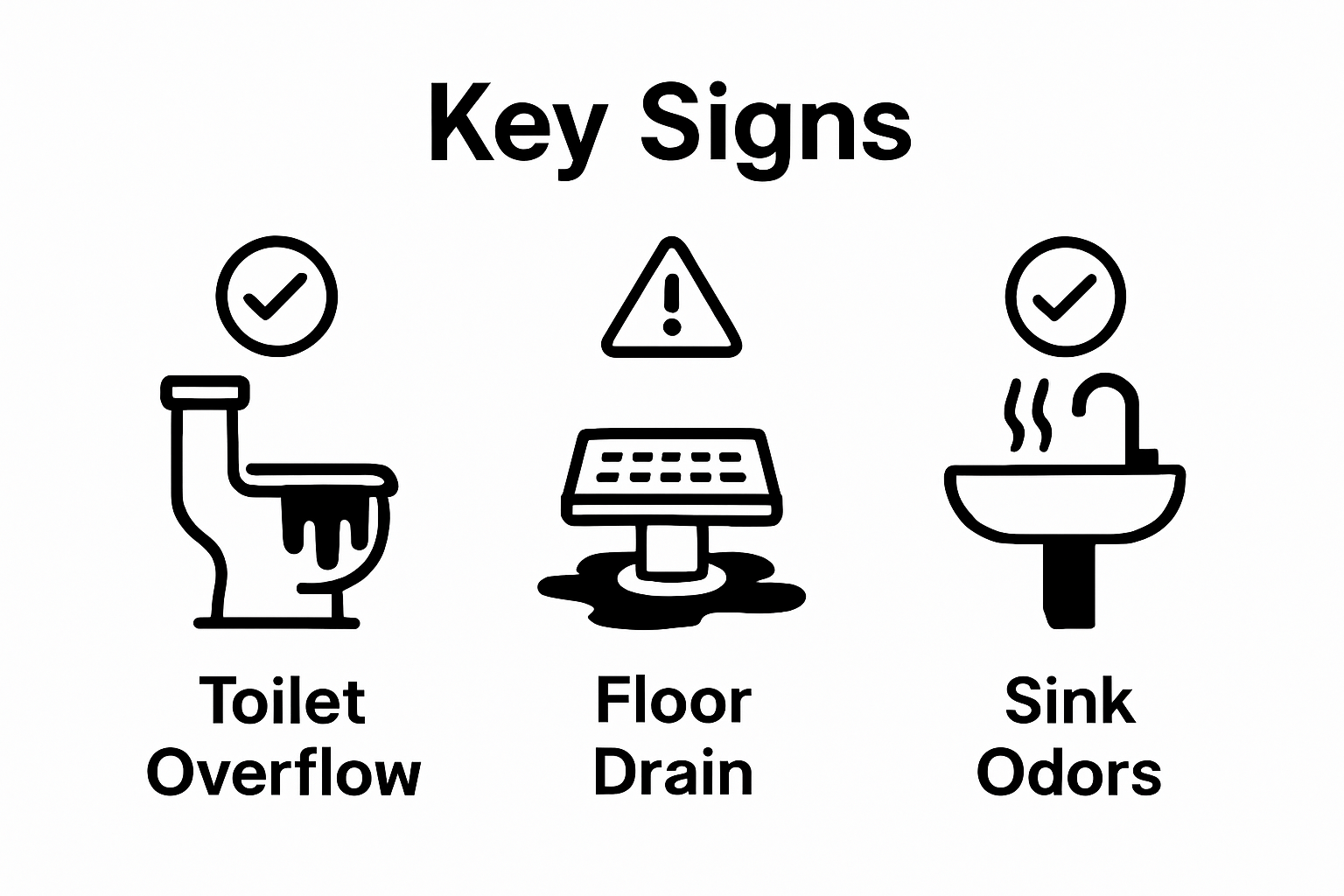
Drainage System Warning Signals
Multiple interconnected drainage symptoms can suggest an emerging sewer backup scenario. Check our comprehensive guide on plumbing emergency signs to better understand these complex indicators.
According to the National Association of Home Builders, homeowners should watch for these critical drainage warning signs:
- Slow drainage across multiple fixtures simultaneously
- Gurgling sounds from toilets, sinks, or drains
- Unexplained water pooling around floor drains
- Foul sewage odors emerging from plumbing systems
Advanced Diagnostic Indicators
Beyond basic drainage issues, several advanced symptoms suggest a more serious underlying sewer system problem. These indicators represent urgent red flags requiring immediate professional assessment.
Key advanced warning signs include:

- Sewage backing up in toilets or floor drains
- Recurring clogs in multiple household plumbing fixtures
- Visible sewage or wastewater in basement areas
- Unusual changes in toilet water levels
- Persistent moisture or wet spots in yard near sewer line
Quick recognition and professional intervention can transform a potential catastrophic sewer backup into a manageable maintenance task. Homeowners who understand these signs can protect their property, health, and financial investment through proactive monitoring and timely professional consultation.
What to Do When You Notice Signs of Sewer Backup
Discovering potential sewer backup signs demands immediate and strategic action. Homeowners must balance quick response with careful prevention to minimize potential property damage and health risks. Understanding the correct protocol can significantly reduce the severity of a developing plumbing emergency.
Immediate Safety and Damage Control
Upon recognizing sewer backup warning signs, prioritizing personal safety becomes paramount. Check our emergency plumbing tips guide for comprehensive initial response strategies.
According to the Environmental Protection Agency, critical initial steps include:
- Avoid using any household plumbing fixtures
- Isolate affected areas to prevent contamination
- Turn off main water supply if possible
- Remove valuable or electronic items from potential flood zones
- Wear protective equipment like rubber gloves and boots
Professional Intervention and Documentation
Professional assessment represents the most crucial step in managing a potential sewer backup. Documentation and expert evaluation can protect both your property and potential insurance claims. Homeowners should take strategic actions that support comprehensive professional diagnosis:
- Contact a licensed emergency plumbing service immediately
- Capture photographic evidence of drainage issues
- Note precise locations and times of observed symptoms
- Preserve any potential blockage materials for professional inspection
- Request a comprehensive diagnostic assessment
Timely and methodical response can transform a potentially catastrophic sewer backup into a manageable maintenance issue. Professional plumbers can provide targeted interventions that prevent extensive property damage and restore your home’s drainage system to optimal functionality.
Restore Peace of Mind with Fast Sewer Backup Solutions
Worried about slow drains, foul odors, or the threat of wastewater damaging your home? The article explained how signs of sewer backup not only jeopardize your property’s structure but also your family’s health. When you notice early symptoms like gurgling sounds or water pooling, taking action right away can keep your home safe and save thousands of dollars in repairs.
Do not wait for a plumbing emergency to spiral out of control. Whether you need expert diagnosis, emergency repairs, or preventative help, Legacy Plumbing & Drain Inc is ready with 24/7 service throughout Sacramento. Restore comfort and safety to your home. Contact our specialists today to schedule your consultation and take the first step toward dependable drainage and total peace of mind.
Frequently Asked Questions
What are the common signs of a sewer backup?
Common signs of a sewer backup include slow drainage across multiple fixtures, gurgling sounds from toilets or drains, unexplained pooling of water around floor drains, and foul sewage odors from plumbing systems.
How can I prevent a sewer backup in my home?
To prevent a sewer backup, avoid flushing inappropriate materials, minimize grease and fat accumulation in drains, and schedule regular maintenance checks of your sewer lines to address any potential issues before they escalate.
What should I do immediately when I notice signs of a sewer backup?
Immediately stop using all household plumbing fixtures, isolate affected areas to prevent contamination, turn off the main water supply if possible, remove any valuable or electronic items from potential flood zones, and wear protective gear like rubber gloves and boots.
Why is it important to identify sewer backup signs early?
Early identification of sewer backup signs can prevent severe property damage, protect your family’s health from untreated sewage hazards, and reduce potential financial ramifications associated with extensive repairs and restoration efforts.
Recommended
- Sewer Line Issues: Warning Signs And Fast Solutions – Legacy Plumbing & Drain – Emergency Plumbers Of Sacramento
- Top Signs Of Plumbing Emergencies For Sacramento Homeowners 2025 – Legacy Plumbing & Drain – Emergency Plumbers Of Sacramento
- Emergency Plumbing Tips For Sacramento Homeowners | Legacy Plumbing & Drain
- Top Signs Of Plumbing Emergencies For Sacramento Homeowners 2025 – Legacy Plumbing & Drain – Emergency Plumbers Of Sacramento
- Understanding the Warning Signs of Sewer Line Problems – 8th Bend Plumbing Heating and Cooling
- Signs You Need a Backflow Preventer Repair | Lawn Sense