Did you know that over 70 percent of homes have mold hidden somewhere inside? This tiny intruder thrives in damp, dark places like your plumbing system, often escaping notice until problems arise. Persistent leaks, high humidity, or poor ventilation can quietly set the stage for mold to grow. Understanding how and why plumbing mold forms can help you spot issues early, safeguard your indoor air quality, and protect your family’s health.
Table of Contents
- What Is Plumbing Mold and Why It Forms
- Common Signs of Mold in Plumbing Systems
- Health Risks Linked to Plumbing Mold Exposure
- Detecting Plumbing Mold: Methods and Tools
- Preventing and Addressing Plumbing Mold Problems
Key Takeaways
| Point | Details |
|---|---|
| Understanding Mold Formation | Plumbing mold thrives in damp environments caused by leaks, high humidity, and poor ventilation; homeowners should identify these risk factors for prevention. |
| Recognizing Mold Signs | Common indicators of plumbing mold include visual stains, musty odors, and respiratory health symptoms that may signal hidden growth. |
| Health Risks | Prolonged exposure to plumbing mold can lead to serious health issues, particularly for vulnerable individuals with respiratory conditions. |
| Prevention Strategies | Effective mold prevention relies on moisture control, prompt leak repairs, and maintaining proper ventilation in moisture-prone areas. |
What Is Plumbing Mold and Why It Forms
Mold is a microscopic fungal organism that secretly thrives in damp, dark environments within your home’s plumbing system. According to the National Institute of Environmental Health Sciences, these fungi are naturally occurring microorganisms that reproduce through airborne spores and require moisture to survive.
Plumbing mold develops when consistent moisture conditions create an ideal breeding ground for fungal growth. As detailed by Lung.org, excessive moisture from leaks, condensation, or high humidity enables mold to rapidly colonize pipes, drains, and surrounding surfaces. Common indoor mold varieties like Alternaria, Aspergillus, Cladosporium, and Penicillium can quickly spread through your home’s plumbing infrastructure.
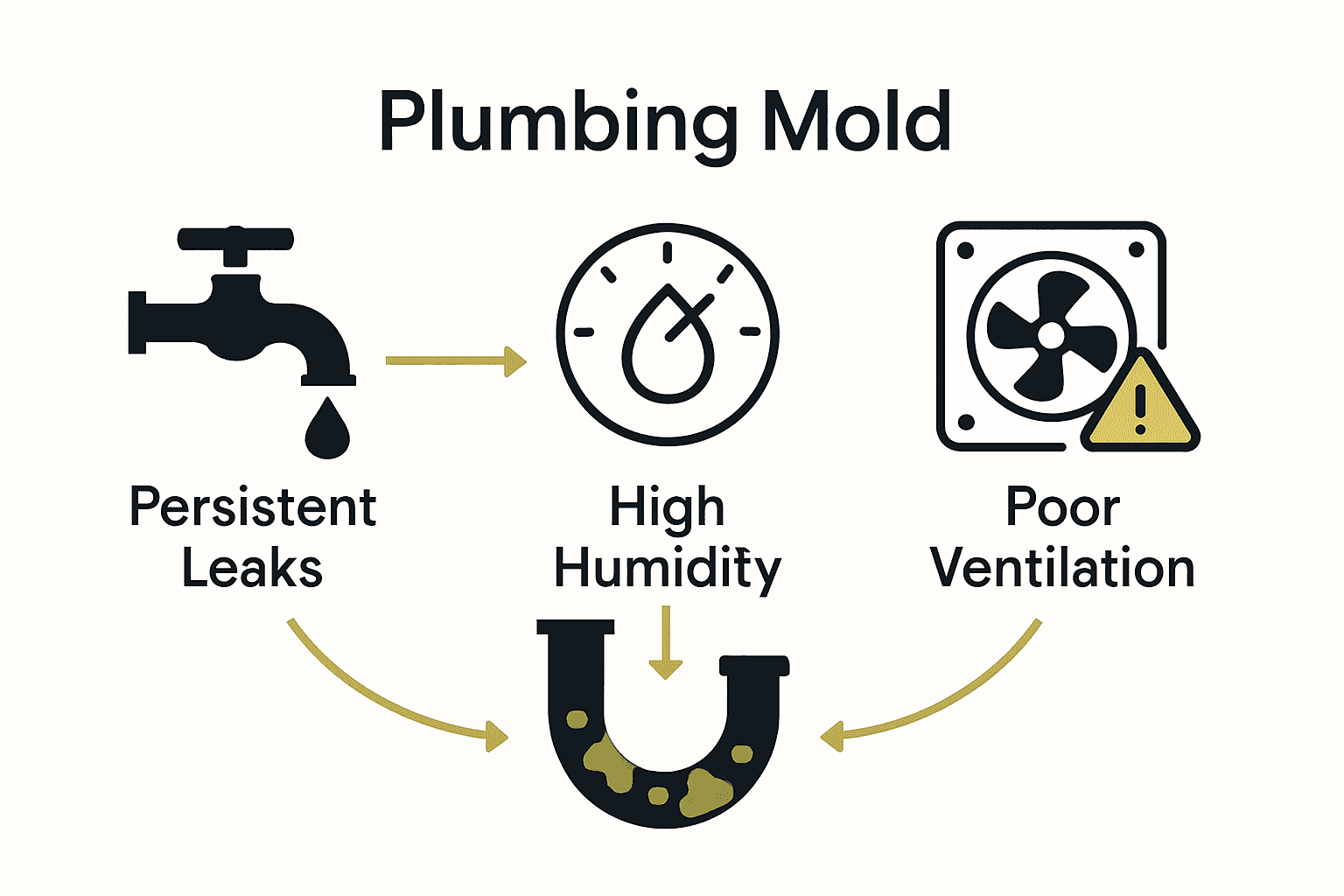
The primary conditions that trigger plumbing mold formation include:
- Persistent water leaks
- High indoor humidity levels (above 60%)
- Poor ventilation in bathrooms and kitchens
- Condensation around pipes
- Undetected water damage
- Inadequate drainage systems
Understanding these conditions helps homeowners recognize potential mold risks and take proactive prevention measures.
 Signs of Mold in Plumbing: Sacramento Homeowners Guide provides additional insights into identifying and addressing potential mold growth in your home’s plumbing system.
Common Signs of Mold in Plumbing Systems
Mold in plumbing systems can manifest through subtle yet distinctive warning signs that homeowners should never ignore. Springfield Healthy Homes highlights several critical indicators of potential mold growth, including rusting metal components, persistent condensation on pipes, water stains, and unexplained surface discoloration.
Here’s a summary of the key signs of plumbing mold:
| Type of Indicator | Example Signs | Description |
|---|---|---|
| Visual | Dark patches Water stains Discoloration |
Spots or stains near pipes or on walls, ceilings, fixtures |
| Physical | Rusty pipes Peeling paint Condensation |
Rusting metal, flaking surfaces, moisture on pipes |
| Sensory | Musty odors Damp smell |
Unpleasant, persistent smells near plumbing |
| Health Symptoms | Coughing Eye irritation Sinus issues |
Ongoing respiratory or allergy symptoms occurring at home |
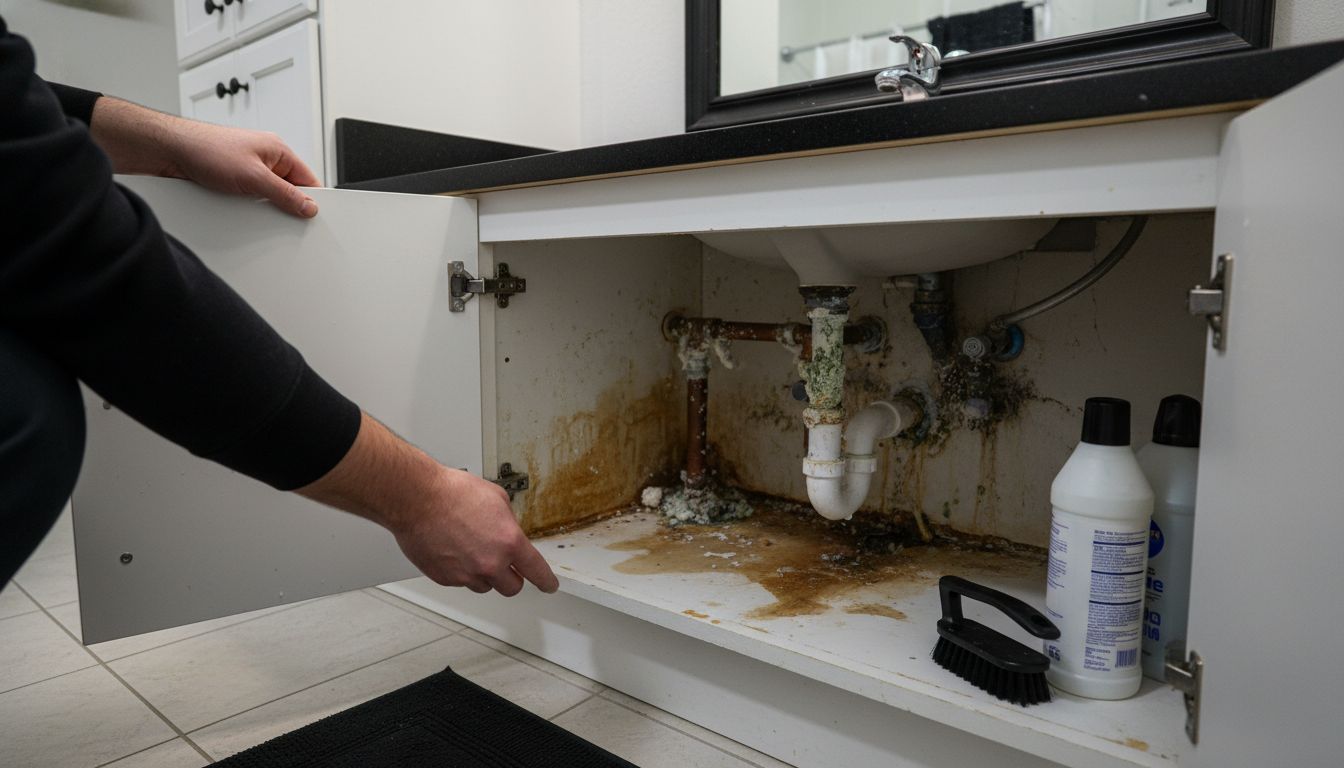
Visual indicators are often the first signals of developing mold problems. These can include dark or discolored patches around pipe joints, visible water damage, or mysterious stains on walls and ceilings near plumbing fixtures. Some telltale signs include greenish-black spots, white powdery residue, or unusual fuzzy textures on surfaces connected to your home’s plumbing infrastructure.
Beyond visual cues, health symptoms can also reveal hidden mold issues. According to New York State Health Department, prolonged mold exposure can trigger respiratory and physical reactions such as:
- Nasal and sinus congestion
- Persistent coughing
- Eye irritation
- Skin rashes
- Wheezing
- Unexplained headaches
- Throat irritation
If you’re experiencing these symptoms consistently at home, it might signal an underlying mold problem in your plumbing system. Signs Your Pipes Need Replacing can provide additional insights into identifying potential plumbing issues that might contribute to mold growth.
Health Risks Linked to Plumbing Mold Exposure
Mold exposure through plumbing systems can pose significant health risks that extend far beyond simple property damage. Centers for Disease Control and Prevention warns that mold can trigger serious health complications, particularly for individuals with pre-existing respiratory conditions or weakened immune systems.
Respiratory complications are the most immediate concern when dealing with plumbing mold. According to Johns Hopkins Medicine, exposure can lead to a range of symptoms including nasal stuffiness, persistent wheezing, and potentially severe reactions like shortness of breath. People with asthma or chronic lung conditions are especially vulnerable to these health impacts.
The specific health risks associated with prolonged mold exposure include:
- Allergic reactions
- Asthma attacks
- Eye and skin irritation
- Persistent coughing
- Throat inflammation
- Potential lung infections
- Compromised immune response
Individuals experiencing chronic respiratory issues or unexplained health symptoms should consider mold in their plumbing system as a potential underlying cause. For comprehensive guidance on preventing water-related health risks, Understanding Water Damage Risks offers valuable insights into protecting your home and health.
Detecting Plumbing Mold: Methods and Tools
Detecting mold in plumbing systems requires a systematic and thorough approach. National Center for Healthy Housing emphasizes that the most reliable method involves comprehensive visual inspection, which extends beyond surface-level examinations to include checking behind walls, under furniture, in crawl spaces, and basement areas.
Professional detection tools play a crucial role in identifying hidden mold growth. Advanced moisture meters, thermal imaging cameras, and specialized borescopes allow plumbing professionals to explore areas typically inaccessible to homeowners. These instruments can detect moisture levels and temperature variations that indicate potential mold development, even when no visible signs are present.
Homeowners should focus on key inspection areas and warning signs:
- Discolored patches around pipe joints
- Musty or damp odors
- Unexplained water stains
- Peeling paint or wallpaper
- Soft or warped surfaces near plumbing
- Persistent condensation
- Unexplained respiratory symptoms
Understanding the intricacies of mold detection requires expertise and specialized knowledge.
How Plumbers Detect Leaks: Sacramento Homeowners Guide provides additional insights into professional leak and moisture detection techniques that can help prevent mold growth in your home’s plumbing system.
Preventing and Addressing Plumbing Mold Problems
Preventing mold growth in your plumbing system requires a proactive and strategic approach. According to the Environmental Protection Agency, the fundamental principle of mold control is moisture management. Any water-damaged areas must be dried within 24-48 hours to prevent mold from establishing a foothold in your home’s infrastructure.
Moisture control strategies are critical in combating potential mold issues. Minnesota Department of Health recommends several key preventative measures to minimize moisture accumulation. These include promptly repairing leaks, reducing indoor condensation, and ensuring proper ventilation in moisture-prone areas like bathrooms and kitchens.
Essential prevention techniques include:
- Install exhaust fans in bathrooms and kitchen
- Regularly inspect and maintain plumbing connections
- Use dehumidifiers in high-moisture areas
- Fix leaks immediately
- Ensure proper drainage around your home’s foundation
- Maintain consistent indoor humidity levels (below 50%)
- Regularly clean and dry potential moisture-prone surfaces
For comprehensive guidance on preventing water-related home maintenance issues, Prevent Leaks At Home: Your Ultimate Useful Guide offers additional strategies for protecting your home from potential moisture and mold problems.
Protect Your Home From Plumbing Mold Before It’s Too Late
Mold growth in plumbing systems is a hidden danger that can quickly damage your home and harm your health. If you notice signs like musty odors, water stains, or persistent condensation, it is crucial to act fast. Ignoring these warning signals may lead to costly repairs and ongoing respiratory issues. At Legacy Plumbing & Drain Inc, we understand the urgency of addressing plumbing mold and moisture problems with reliable solutions.
Choose expert help from Sacramento’s trusted emergency plumbers. Our skilled technicians offer comprehensive plumbing inspections and repairs to eliminate leaks and prevent mold growth. We stand ready 24/7 to restore your home’s safety and comfort. Don’t wait until mold takes over your pipes and walls. Visit Legacy Plumbing & Drain Inc today to schedule a professional assessment and start protecting your home now. Learn more about preventing water damage risks or signs your pipes need replacing to stay ahead of plumbing troubles.
Frequently Asked Questions
What are the common signs of plumbing mold?
Common signs of plumbing mold include dark patches or discoloration around pipes, water stains on walls and ceilings, persistent condensation on pipes, musty odors, and unexplained respiratory symptoms like coughing and sinus issues.
How can I detect plumbing mold in my home?
You can detect plumbing mold through a thorough visual inspection, checking areas behind walls and under furniture. Professional tools like moisture meters and thermal imaging cameras can help identify hidden mold growth and moisture levels.
What health risks are associated with mold in plumbing systems?
Exposure to plumbing mold can lead to various health risks, including allergic reactions, respiratory complications, coughing, eye irritation, and aggravated asthma symptoms, particularly in individuals with pre-existing conditions.
What steps can I take to prevent plumbing mold?
To prevent plumbing mold, manage moisture levels by repairing leaks promptly, using exhaust fans in moisture-prone areas, maintaining indoor humidity levels below 50%, and regularly inspecting your plumbing for any signs of water damage.
Recommended
- Top Signs Of Mold In Plumbing: What Sacramento Homeowners Need To Know (2025) – Legacy Plumbing & Drain – Emergency Plumbers Of Sacramento
- Emergency Plumbing Tips For Sacramento Homeowners | Legacy Plumbing & Drain
- Signs Your Pipes Need Replacing: Understanding The Indicators – Legacy Plumbing & Drain – Emergency Plumbers Of Sacramento
- 7 Key Items In Your Plumbing Inspection Checklist – Legacy Plumbing & Drain – Emergency Plumbers Of Sacramento