
Did you know that water leaks cost American homeowners over $10 billion in property damage every year? Plumbing emergencies happen fast and can leave a trail of destruction in their wake if not dealt with quickly. Acting in those first few minutes makes all the difference between a small repair and a costly disaster. With clear steps and expert tips, you can take control as soon as trouble starts, protecting your home from lasting damage.
Table of Contents
- Step 1: Shut Off The Water Supply Immediately
- Step 2: Assess The Source And Severity Of The Leak
- Step 3: Minimize Water Damage With Quick Actions
- Step 4: Apply Temporary Fixes To Plumbing Issues
- Step 5: Contact Emergency Plumbing Professionals
Quick Summary
| Key Point | Explanation |
|---|---|
| 1. Shut off water supply immediately | Locate and close the main water valve to prevent extensive damage from leaks before any further action. |
| 2. Assess the source and severity of the leak | Examine the leak area carefully to determine its origin and evaluate potential damage for effective communication with plumbers. |
| 3. Minimize water damage quickly | Remove standing water and isolate affected areas to prevent further spread and damage to your home. |
| 4. Apply temporary fixes if needed | Use pipe repair tape or tighten connections to temporarily control leaks until professional help arrives. |
| 5. Contact emergency plumbing professionals | Quickly call a plumber for serious issues and provide clear details to facilitate prompt assistance and effective response. |
Step 1: Shut Off the Water Supply Immediately
When a plumbing emergency strikes, your first action is stopping water flow to prevent extensive property damage. Understanding how to quickly locate and shut off your main water valve can save you thousands in potential repairs.
Start by identifying your home’s primary water shutoff valve. In most homes, you’ll find this near the perimeter of your house, often close to where the main water line enters. According to research from utility experts, there are typically two key valves involved: the curb stop (utility valve) and the customer hand valve. For home emergencies, focus on using your customer hand valve.
Look for two primary valve types. Gate valves have a round wheel handle that requires turning clockwise two or more full revolutions to completely stop water flow. Ball valves feature a lever handle that stops water when turned perpendicular to the pipe in just a quarter turn. Choose the valve closest to your current leak or nearest your home’s entry point.
Here’s a quick comparison of main water shutoff valve types:
| Valve Type | Handle Style | How to Operate | Shutoff Speed |
|---|---|---|---|
| Gate Valve | Round wheel | Turn clockwise 2+ full turns |
Slower |
| Ball Valve | Lever handle | Turn handle 90° to pipe |
Fast |
Pro Tip: Take a moment right now to locate your main water shutoff valve and ensure everyone in your household knows its exact location.
Once you’ve found the valve, turn it firmly but smoothly. For gate valves, rotate clockwise until fully closed. With ball valves, turn the handle 90 degrees until it sits at a right angle to the pipe. You should feel resistance as the water flow stops.
Quick action here prevents water from continuing to flood your space and minimizes potential structural damage. After shutting off water, assess the situation and prepare to contact emergency plumbing professionals who can provide immediate assistance.
Step 2: Assess the Source and Severity of the Leak
After stopping the water flow, your next critical step is determining exactly where the leak originated and how severe the damage might be. Understanding the source helps you communicate effectively with professional plumbers and potentially minimize repair costs.
Carefully examine the area around the leak. Look for water pooling, dampness on walls or floors, and any visible pipe damage. Water leak detection techniques can help you pinpoint problematic areas quickly and accurately.
Check different systems in your home where leaks commonly occur. According to home inspection experts, key areas to investigate include water supply systems, fixtures like sinks and toilets, interior drain pipes, and water heating equipment. Pay special attention to connections near sinks, under toilets, around water heaters, and in basement or crawl spaces.
Warning: Never touch electrical equipment near water to avoid potential shock risks.
Assess the leak’s potential damage level. Minor leaks might show small water spots or slight dampness. Significant leaks could involve active water streaming, substantial puddles, or visible pipe ruptures. Look for signs of water damage such as discoloration on walls, warped flooring, or musty odors that indicate potential mold growth.
If you discover a substantial leak or are uncertain about its severity, prepare to contact professional plumbers who can provide comprehensive assessment and repair services. Quick and accurate identification is your best defense against potential long term water damage.
Step 3: Minimize Water Damage with Quick Actions
Once you’ve shut off the main water supply and identified the leak, your priority is preventing further damage to your home. Quick and strategic actions can significantly reduce potential water destruction and costly repairs.
Start by removing standing water immediately. Use towels, mops, and wet vacuums to extract water from floors, carpets, and surrounding areas. Understanding water damage prevention becomes crucial in these critical moments.
Isolate the affected area to prevent water spreading. Move furniture, electronics, and valuable items away from wet zones. If the leak is near electrical outlets or equipment, exercise extreme caution. According to emergency preparedness guidelines, never touch electrical devices in water saturated areas to avoid potential shock risks.
Pro Tip: Keep a stack of old towels, a wet vacuum, and plastic tarps readily accessible for emergency water management.
For carpeted areas or extensive water pooling, consider using fans to start drying processes. Position fans to maximize air circulation and reduce moisture. If possible, open windows to improve ventilation and expedite drying. Remember that rapid response can prevent long term structural damage and potential mold growth.
Document everything for potential insurance claims. Take clear photographs of the damage and keep records of your mitigation efforts.
These steps will help protect your property and provide valuable evidence if professional restoration becomes necessary.
Step 4: Apply Temporary Fixes to Plumbing Issues
While waiting for professional help, you can apply several temporary solutions to minimize damage and control the immediate plumbing situation. These quick interventions can prevent further water loss and potential structural damage.
Emergency plumbing tips for Sacramento homeowners suggest using pipe repair tape or epoxy putty for small leaks. These products create a temporary seal that can stop water from escaping until a professional plumber arrives. For minor pipe cracks, wrap the area tightly with waterproof tape or apply a quick setting epoxy compound.
If you encounter a frozen pipe situation, proceed with extreme caution. According to emergency preparedness guidelines, never attempt to thaw pipes using an open flame. Instead, use safe methods like a hair dryer, heat lamp, or heating pad applied gently to the frozen section. Keep faucets slightly open to allow water movement and reduce pressure.
Pro Tip: Always keep a basic emergency plumbing kit with pipe repair tape, waterproof sealant, and adjustable wrenches readily accessible.
For minor leaks around fixture connections, tightening connections with an adjustable wrench might provide a temporary solution.
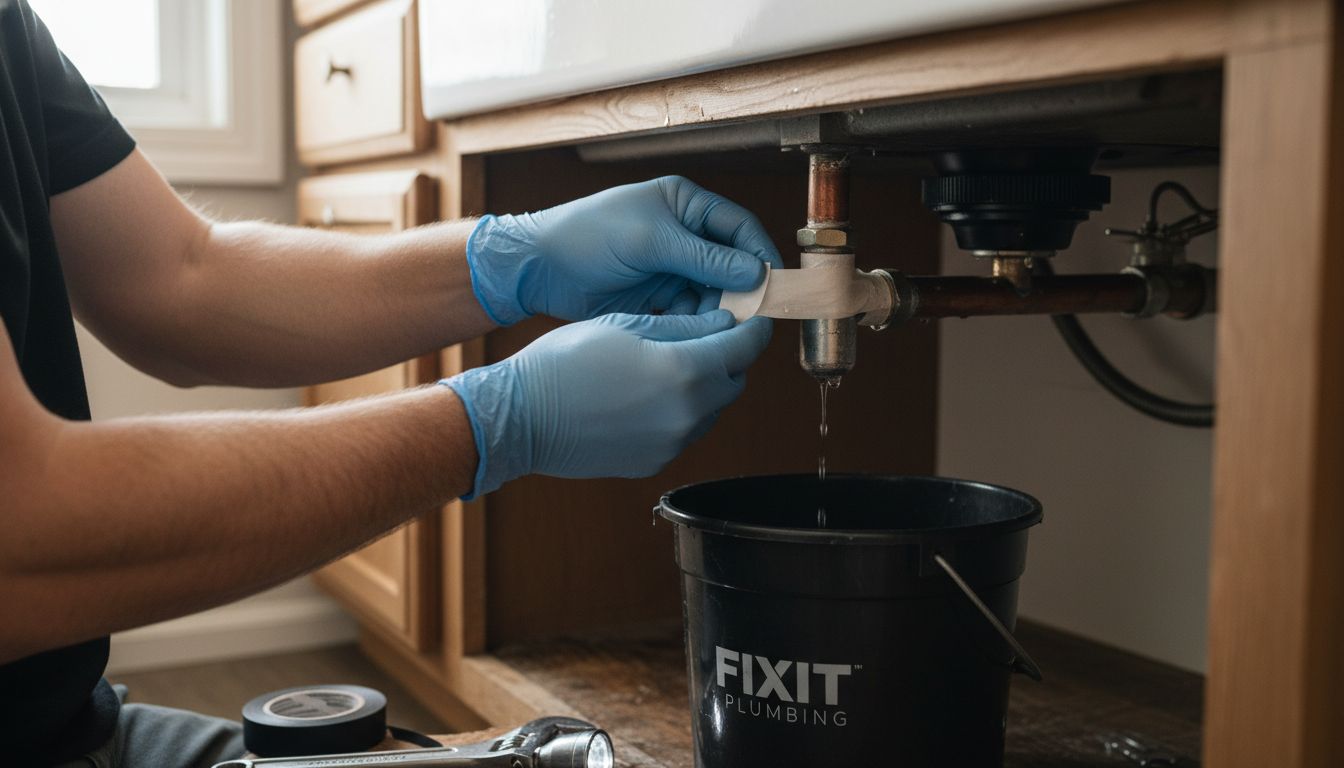 However, be careful not to overtighten, which could cause additional damage. If you notice water pooling around toilet bases or sink connections, place towels or buckets to catch water and prevent floor damage.
Remember that these are only short term solutions. Professional inspection remains critical to address the root cause and prevent future complications. Prepare to contact a licensed plumber who can provide comprehensive repair services.
Step 5: Contact Emergency Plumbing Professionals
Knowing when and how to contact professional plumbers can make the difference between a minor repair and a major home disaster. Your goal is to communicate effectively and get expert help as quickly as possible.
Plumbing emergency steps for homeowners recommend calling a professional immediately if you encounter specific critical situations. These include actively overflowing toilets, sink overflows where water cannot be shut off, substantial pipe leaks producing more than a gallon of water per hour, significant roof or ceiling leaks, and any gas related odors.
When calling, be prepared to provide clear information. Describe the exact location of the problem, the type of issue you are experiencing, and any temporary fixes you have already attempted. This helps the plumbing team understand the urgency and prepare appropriate tools and expertise before arriving.
Pro Tip: Keep your preferred emergency plumber’s contact information saved in your phone and posted visibly in your home for quick access during stressful moments.
If possible, take photographs of the damage to share with the plumbing professionals. Visual documentation can help them assess the situation more accurately and potentially provide initial guidance over the phone. Remember that most reputable plumbing services offer 24/7 emergency response to help homeowners during unexpected crisis moments.
Stay calm and follow the professionals instructions. Your quick reporting and precise information can significantly reduce potential long term damage to your home.
Stay Prepared and Protected with Legacy Plumbing & Drain Inc
Handling a plumbing emergency can feel overwhelming. From shutting off your main water valve to managing quick fixes and preventing water damage, the stress and urgency can be a heavy burden. If you want to avoid costly repairs and ensure your home stays safe, understanding the right steps and having expert support is critical. Key challenges include swift water shutoff, leak assessment, effective temporary repairs, and knowing exactly when to call professionals who respond immediately.
Take the next step toward peace of mind by partnering with Legacy Plumbing & Drain Inc, Sacramento’s trusted emergency plumbers. Our skilled technicians are available 24/7 to help with everything from fixing major leaks to supplying quality bathroom and heating equipment. Don’t wait for a small drip to become a major disaster. Visit Legacy Plumbing & Drain Inc now to learn more about our services and get the emergency support you need. Protect your home today with expert care and fast response.
Frequently Asked Questions
What should I do first when I discover a plumbing emergency in my home?
To handle a plumbing emergency, immediately shut off the main water supply to prevent further damage. Locate your main water shutoff valve, usually near where the water line enters your home, and turn it clockwise or 90 degrees to stop the flow.
How can I assess the severity of a plumbing leak?
Assess the leak’s severity by checking for active water flow, pooling water, or signs of structural damage like discoloration or warped flooring. Carefully examine the area around the leak to determine if it’s minor or requires urgent professional attention.
What actions can I take to minimize water damage in my home?
To minimize water damage, quickly remove standing water using towels and wet vacuums, and isolate the affected area by moving valuable items out of the way. Start these actions right away to limit damage and potential mold growth.
How can I temporarily fix a small plumbing leak while waiting for a professional?
Apply pipe repair tape or epoxy putty to small leaks as a temporary fix. Wrap the affected area tightly or cover it with putty to create a seal until a plumbing professional arrives to perform a comprehensive repair.
When should I contact emergency plumbing professionals?
Contact emergency plumbing professionals immediately if you experience significant leaks, overflowing toilets, or any gas odors. Quick communication can make a huge difference, so have key details ready about the issue for faster assistance.
What information should I provide when calling a plumber about a plumbing emergency?
When calling a plumber, provide details such as the location of the problem, the type of issue you’re facing, and any temporary fixes you’ve attempted. This information helps the plumbing team prioritize their response and prepare effectively for your situation.
Recommended
- Emergency Plumbing Tips: What To Do Before Help Arrives
- Roseville & Rocklin Emergency Plumbers | 24/7 Repairs Available
- Citrus Heights 24-Hour Plumber | Immediate Plumbing Repair Services
- Emergency Plumbing Services In Sacramento | 24/7 Plumber Near Me | Legacy Plumbing & Drain
- What is Emergency Boiler Repair? Understanding the Essentials – Skan Plumbing & Heating
- 7 Essential Plumbing Maintenance Tips 2025 for Homeowners – North End Plumbing, Heating and Air