
Leaky pipes can secretly drain your wallet and wreak havoc on your home even when they seem minor at first glance. Most folks think a few drips here and there are just a nuisance. But the real shock is that the average household leak can waste nearly 10,000 gallons of water every year according to the EPA. That hidden damage piles up fast and the real cost is more than anyone expects.
Table of Contents
- What Causes Leaky Pipes And Why It Matters
- Understanding The Potential Costs Of Pipe Repairs
- Factors That Influence The Cost To Fix Leaky Pipes
- How Homeowners Can Approach Repair Decisions
- The Importance Of Timely Action On Leaky Pipes
Quick Summary
| Takeaway | Explanation |
|---|---|
| Address leaks immediately | Prompt repairs prevent extensive water damage and rising costs. |
| Understand your pipes’ material | Different materials influence repair methods and costs significantly. |
| Regular inspections are essential | Conduct professional evaluations to catch problems early before they escalate. |
| Recognize signs of damage | Monitoring water bills and visual inspections can signal leaks needing attention. |
| Plan financially for repairs | Budget for potential expenses and maintain an emergency fund to handle unexpected issues. |
What Causes Leaky Pipes and Why It Matters
Leaky pipes are more than just an inconvenience they represent a significant threat to your home’s structural integrity and your financial well being. Understanding the root causes of pipe leaks can help homeowners proactively manage potential risks and minimize expensive water damage.
Material Degradation and Corrosion
Pipes are subjected to constant stress from water flow, temperature changes, and internal chemical reactions. Research from the U.S. Geological Survey reveals that corrosive water can accelerate pipe deterioration by leaching metals and creating microscopic weak points. Copper and galvanized steel pipes are particularly vulnerable to this process.
Key factors contributing to material degradation include:
- Water pH levels outside the neutral range
- High mineral content in water
- Fluctuating water temperatures
- Age of existing plumbing infrastructure
Environmental and Structural Pressures
External environmental conditions play a critical role in pipe damage. Freezing temperatures can cause water inside pipes to expand, creating significant internal pressure that ultimately leads to cracks and potential ruptures. Soil movement, ground settlement, and extreme temperature variations can also stress pipe connections and joints.
The Hidden Cost of Neglect
Ignoring minor leaks can transform a simple repair into a catastrophic and expensive problem. Water damage can compromise your home’s foundation, promote mold growth, and cause structural deterioration. For homeowners seeking more insights into preventing plumbing emergencies, read our guide on common Sacramento plumbing issues.
Recognizing the signs of potential pipe damage early can save you thousands in repair costs and protect your property from extensive water related destruction.
Understanding the Potential Costs of Pipe Repairs
Pipe repairs can range from simple patch jobs to extensive repiping projects, with costs varying dramatically based on multiple critical factors. Understanding these variables helps homeowners budget effectively and make informed decisions about their plumbing infrastructure.
Factors Influencing Repair Costs
Location and Accessibility play a significant role in determining repair expenses. Underground pipes or those hidden behind walls require more complex interventions, increasing labor and material costs.
Repairs in hard to reach areas might involve additional steps like:
- Excavation and ground restoration
- Drywall removal and replacement
- Advanced diagnostic techniques like camera inspections
- Specialized equipment for accessing confined spaces
Repair Methods and Their Financial Implications
Research from Utah State University highlights that water infrastructure repairs can be financially substantial. Different repair methods carry distinct cost structures:
Below is a comparison table summarizing the main pipe repair methods and their typical price ranges as discussed in the article.
| Repair Method | Description | Typical Cost Range |
|---|---|---|
| Pipe Patching | Fixes small, localized leaks | $100 – $500 |
| Partial Pipe Replacement | Replaces sections of damaged pipe | $500 – $1,500 |
| Full Pipe Replacement | Replaces all piping in a home/system | $2,000 – $15,000 |
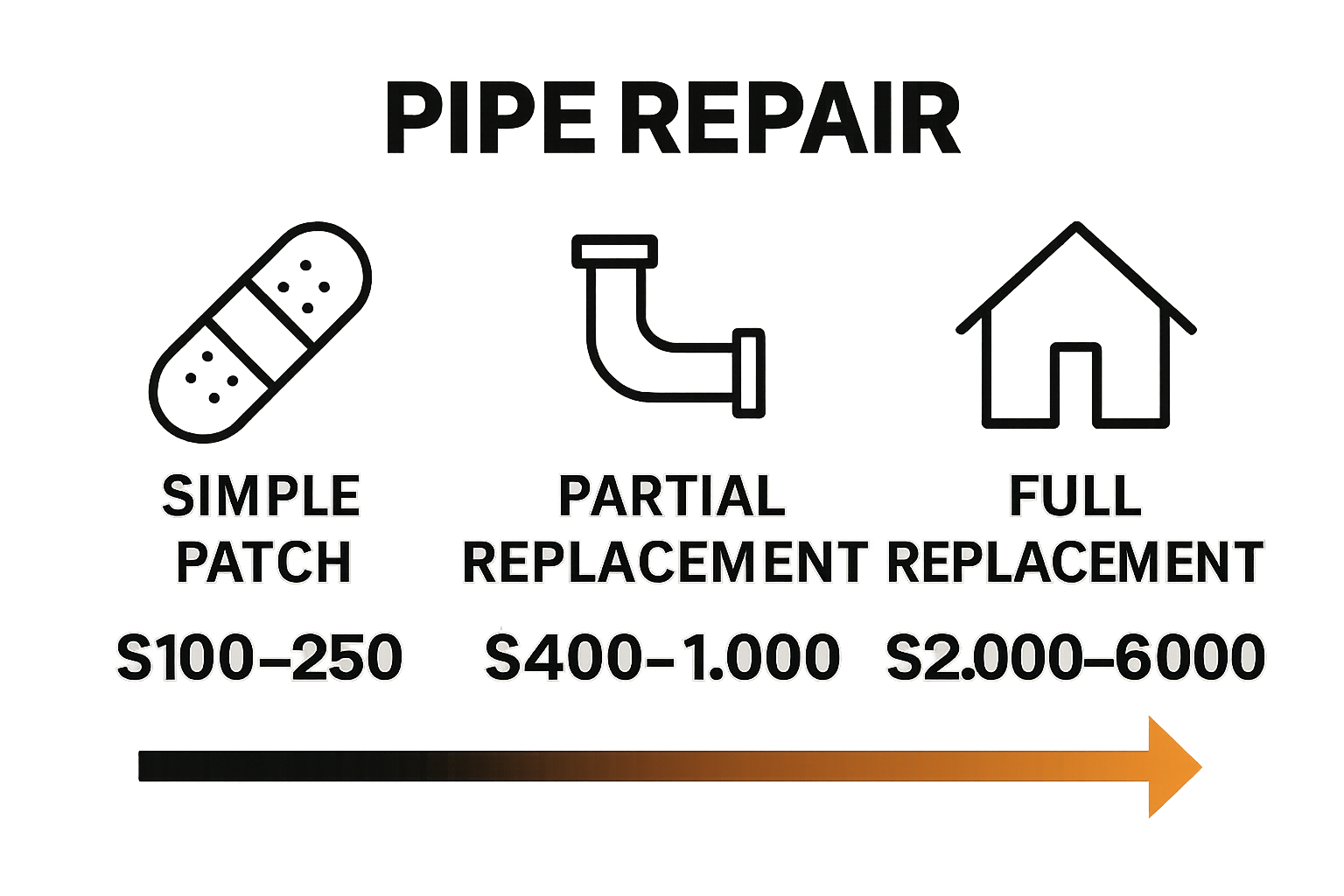
- Pipe Patching: Most affordable option, typically ranging from $100 to $500
- Partial Pipe Replacement: Costs between $500 and $1,500 depending on pipe length
- Full Pipe Replacement: Can range from $2,000 to $15,000 for entire home systems
Long Term Financial Considerations
Neglecting minor leaks can lead to exponentially higher expenses. Water damage, structural deterioration, and potential mold growth can transform a simple repair into a major renovation project. For homeowners seeking detailed insights into managing these potential expenses, explore our comprehensive guide on plumbing repair costs.
Proactive maintenance and early detection remain the most cost effective strategies for managing pipe repair expenses. By understanding potential costs and investing in regular inspections, homeowners can significantly mitigate financial risks associated with plumbing infrastructure failures.
Factors That Influence the Cost to Fix Leaky Pipes
The complexity and expense of repairing leaky pipes are not uniform. Multiple interconnected variables determine the ultimate financial investment required to restore your plumbing system to optimal condition. Understanding these factors empowers homeowners to make informed decisions and anticipate potential repair scenarios.
Pipe Material and Infrastructure Complexity
The type of piping material significantly impacts repair costs and strategies. Different materials respond uniquely to damage and require specialized repair approaches.
The following table outlines the major pipe materials covered in the article and highlights their typical repair considerations.
| Pipe Material | Repair Complexity | Cost Implication | Notable Factors |
|---|---|---|---|
| Copper | Moderate to High | High | Prone to corrosion; costly to replace |
| PVC | Low | Lower | More affordable, simpler repairs |
| Galvanized Steel | High | Moderate to High | Labor intensive |
| Cast Iron | High | High | Specialized techniques required |
| Composite Materials | Varies | Variable | Cost and complexity vary |
Pipe materials range from:
- Copper pipes (most expensive to replace)
- PVC pipes (more affordable)
- Galvanized steel (complex and labor intensive)
- Cast iron (requires specialized repair techniques)
- Newer composite materials (variable repair costs)
Location and Accessibility Challenges
Where the leak occurs dramatically influences repair complexity and cost. Pipes hidden behind walls, underneath concrete slabs, or buried underground demand more intricate and expensive intervention techniques. Repair locations can be categorized into:
- Visible and easily accessible pipe sections
- Concealed pipes within wall cavities
- Underground pipe networks
- Structural foundation pipe systems
Extent of Damage and Repair Strategy
The severity of pipe damage determines whether a simple patch, partial replacement, or complete system overhaul is necessary. For homeowners seeking detailed insights into managing potential repair expenses, check out our comprehensive guide on quick plumbing fixes.
Early detection and proactive maintenance remain the most economical approaches. By understanding these influencing factors, homeowners can make strategic decisions that minimize long term financial risks associated with pipe repairs.
How Homeowners Can Approach Repair Decisions
Navigating pipe repair decisions requires a strategic approach that balances immediate needs with long term financial considerations. Homeowners must develop a comprehensive understanding of their plumbing system to make informed choices that protect their property and minimize unnecessary expenses.
Assessing the Damage and Gathering Professional Insights
Initial damage assessment is crucial in determining the appropriate repair strategy. According to the U.S. Environmental Protection Agency, proactive leak detection and professional evaluation can prevent extensive water damage and costly repairs. Homeowners should consider:
- Scheduling professional plumbing inspections
- Utilizing advanced diagnostic tools like thermal imaging
- Obtaining multiple expert opinions
- Documenting the extent of pipe damage
Evaluating Repair versus Replacement Options
Deciding between repairing and replacing pipes involves analyzing several critical factors. Some key considerations include:
- Age of the existing plumbing system
- Frequency of previous repairs
- Cost comparison between repair and full replacement
- Potential future maintenance requirements
- Long term performance and durability
Financial Planning and Decision Making
Comprehensive financial planning is essential when addressing pipe repair challenges. For a comprehensive overview of home maintenance strategies, explore our homeowner plumbing checklist.
Homeowners should develop a systematic approach that includes budgeting for potential repairs, understanding insurance coverage, and maintaining an emergency fund for unexpected plumbing issues. By combining professional expertise, thorough research, and strategic financial planning, homeowners can make confident decisions that protect their property and minimize long term financial risks.
The Importance of Timely Action on Leaky Pipes
Ignoring or delaying pipe leak repairs can transform a minor issue into a catastrophic and financially devastating problem. Homeowners must understand that water damage compounds exponentially, creating complex challenges that extend far beyond simple plumbing repairs.
The Financial Consequences of Delayed Repairs
According to the U.S. Environmental Protection Agency, household leaks can waste nearly 10,000 gallons of water annually, translating into substantial financial and environmental impacts. Prompt intervention prevents escalating expenses through:
- Preventing structural damage to walls and foundations
- Avoiding extensive water damage restoration costs
- Reducing potential mold remediation expenses
- Minimizing long term property value depreciation
Structural and Health Risks of Unaddressed Leaks
Water leaks create complex cascading problems that compromise both home infrastructure and resident health. Unresolved pipe issues can lead to:
- Accelerated wood rot and structural weakening
- Increased risk of toxic mold growth
- Compromised electrical system safety
- Potential foundation destabilization
- Reduced indoor air quality
Proactive Maintenance Strategies
Early detection and swift action are critical in managing potential pipe damage. For comprehensive guidance on addressing plumbing issues, explore our detailed homeowner plumbing guide.
Homeowners should develop a systematic approach to leak detection, including regular visual inspections, monitoring water bills for unexplained increases, and understanding the warning signs of potential pipe damage. By treating leaks as urgent maintenance priorities, residents can protect their property, preserve its value, and avoid potentially catastrophic repair scenarios.
Get Fast Solutions for Leaky Pipe Repairs in Sacramento
If you are worried about hidden leaks, sudden water damage, or the rising costs of pipe repairs, you are not alone. As the article highlighted, ignoring small leaks can quickly turn into expensive emergencies that threaten both your home’s structure and your financial well-being. Facing issues like inaccessible pipes or aging plumbing can feel overwhelming, especially when repair costs start to pile up.

Let Legacy Plumbing & Drain Inc take away the stress with the expert support you deserve. Our Sacramento-based team specializes in urgent plumbing repairs, pipe replacement, and proactive maintenance. We help you detect leaks early and manage costs before they escalate. Take control of your home’s safety and budget today. Visit Legacy Plumbing & Drain Inc to request a rapid assessment or to learn more about our emergency plumbing solutions. If you want to understand repair costs and prevent future problems, check out our plumbing repair cost guide and use our homeowner plumbing checklist for peace of mind. Reach out now before a leak causes greater damage.
Frequently Asked Questions
What causes leaky pipes in homes?
Leaky pipes can be caused by material degradation and corrosion, environmental and structural pressures, and neglecting minor leaks. Factors such as pH levels of water, high mineral content, temperature fluctuations, and external conditions like freezing can contribute to pipe damage.
How much does it typically cost to repair leaky pipes?
Repair costs vary widely based on factors like the location and accessibility of the pipes, the extent of the damage, and the methods used. Simple patching may cost between $100 to $500, whereas partial replacements can range from $500 to $1,500, and full pipe replacements may cost anywhere from $2,000 to $15,000.
How can homeowners prevent pipe leaks from becoming costly issues?
Homeowners can prevent costly pipe leaks by conducting regular inspections, addressing minor leaks promptly, understanding the warning signs of potential damage, and investing in professional evaluations. Proactive maintenance is essential to avoid extensive repairs and associated costs.
When should I consider replacing my pipes instead of repairing them?
If your plumbing system is old, has frequent leaks, or shows signs of severe deterioration, it might be more economical to replace the pipes. Factors to consider include the age of the plumbing system, the cost comparison of repair versus replacement, and potential future maintenance needs.
Recommended
- Quick Fixes For Plumbing: 2025 Guide For Sacramento-Area Homeowners – Legacy Plumbing & Drain – Emergency Plumbers Of Sacramento
- Cost Of Plumbing Repairs 2025: Sacramento & Nearby Cities Guide – Legacy Plumbing & Drain – Emergency Plumbers Of Sacramento
- Cost Of Plumbing Repairs 2025: Sacramento & Nearby Cities Guide – Legacy Plumbing & Drain – Emergency Plumbers Of Sacramento
- Plumbing Basics Homeowners Need In Sacramento And Nearby (2025) – Legacy Plumbing & Drain – Emergency Plumbers Of Sacramento
- Sprinkler Pipe Leaking: What To Do | Lawn Sense