
A persistent drip from your kitchen or bathroom faucet can feel like a minor nuisance, but for many Sacramento homeowners, this simple issue quickly turns into a source of frustration and unexpected costs. Each leaky faucet means more than lost water—it leads to higher utility bills and risks for both property and health. Whether you want to tackle a quick fix or call a local plumber, learning the real causes and solutions behind leaky faucets helps you save money and support water conservation.
Table of Contents
- Defining Leaky Faucets And Common Misconceptions
- Types Of Faucet Leaks In Sacramento Homes
- How Leaky Faucets Waste Water And Money
- Potential Health Risks And Property Damage
- DIY Solutions Versus Professional Repairs
- Cost Implications And Water Conservation Impact
Key Takeaways
| Point | Details |
|---|---|
| Understand Leaky Faucet Causes | Leaky faucets often stem from localized mechanical failures like worn washers, corroded valve seats, or damaged O-rings, not from widespread plumbing issues. |
| Recognize the Importance of Maintenance | Regular inspections and maintenance can prevent leaks and the resulting water damage, especially in climates with hard water like Sacramento. |
| Beware of Water and Financial Waste | A single leaky faucet can waste significant water and increase utility bills by up to $200 annually, impacting both finances and the environment. |
| Assess DIY versus Professional Repairs | Homeowners should realistically evaluate their plumbing skills; complex leaks may require professional intervention to avoid escalating damage. |
Defining Leaky Faucets and Common Misconceptions
A leaky faucet represents more than just an annoying drip—it’s a potential water waste disaster for Sacramento homeowners. Understanding these plumbing problems requires recognizing their core components and dispelling widespread myths about their origins and implications.
Leaky faucets typically emerge from specific mechanical failures within your fixture’s intricate system. Corrosion and component wear represent the primary culprits behind most dripping scenarios. These issues often manifest through several distinct mechanisms:
- Deteriorated washers creating imperfect seals
- Corroded valve seats preventing complete closure
- Damaged O-rings allowing water seepage
- Loose packing nuts creating microscopic openings
Contrary to popular belief, a leaky faucet isn’t necessarily indicative of comprehensive plumbing system failure. Most leaks result from localized mechanical problems that can be addressed through targeted repairs. Homeowners frequently misunderstand these issues, assuming catastrophic damage when simple component replacement could resolve the problem.
Detecting and addressing minor leaks early can prevent significant water damage and reduce utility costs dramatically.
The Sacramento climate introduces unique challenges for residential plumbing systems. Hard water mineral buildup and temperature fluctuations accelerate component degradation, making regular inspection and proactive maintenance critical for preventing chronic leakage.
Pro tip: Conduct a monthly visual inspection of all faucet connections, checking for moisture, mineral deposits, and subtle dripping indicators.
Types of Faucet Leaks in Sacramento Homes
Sacramento homeowners encounter multiple variations of faucet leaks, each presenting unique challenges and repair requirements. Different faucet types manifest distinctive leak patterns that demand specialized diagnostic approaches.
The primary faucet leak categories impacting residential plumbing include:
- Compression Faucet Leaks: Typically originate from deteriorated washers
- Cartridge Faucet Leaks: Often result from faulty internal cartridges or compromised seals
- Ball Faucet Leaks: Develop through worn springs or damaged seals
- Ceramic Disk Faucet Leaks: Emerge from mineral buildup or cracked ceramic components
Each leak type requires a nuanced understanding of the fixture’s mechanical structure. Compression faucets, common in older Sacramento homes, frequently experience leaks around the handle or spout due to rubber washer degradation. These leaks can often be resolved through straightforward washer replacement.
Sacramento’s hard water environment accelerates faucet component wear, making proactive maintenance crucial for preventing chronic leakage.
Cartridge and ball faucets present more complex leak scenarios. Their intricate internal mechanisms demand precise diagnostics and often require complete cartridge or seal replacement. Modern ceramic disk faucets, while generally more durable, can develop microscopic fractures that lead to persistent dripping.
Pro tip: Invest in a professional plumbing inspection annually to catch potential leak sources before they escalate into costly water damage scenarios.
Here’s how various faucet leak types differ in diagnosis and repair complexity:
| Faucet Type | Typical Repair Difficulty | Common Tools Needed | Recommended For |
|---|---|---|---|
| Compression Faucet | Easy | Wrench, screwdriver | DIY homeowners |
| Cartridge Faucet | Moderate | Allen key, pliers | Intermediate users |
| Ball Faucet | Challenging | Special faucet tool kit | Professionals |
| Ceramic Disk Faucet | Moderate to Difficult | Screwdriver, soft cloth | Professional service |
How Leaky Faucets Waste Water and Money
Homeowners in Sacramento often underestimate the financial and environmental impact of seemingly minor faucet leaks. Continuous water waste represents a significant economic and ecological challenge that extends far beyond a simple annoyance.
The monetary consequences of unaddressed faucet leaks can be substantial:
- A single dripping faucet can waste up to 15 gallons of water per day
- Annual water loss from consistent leaks can exceed 5,500 gallons
- Potential utility bill increases ranging from $50 to $200 annually
- Increased long-term infrastructure stress and potential property damage
Water waste from leaky faucets isn’t just a homeowner’s financial burden—it’s an environmental concern. Each unrepaired drip contributes to broader water scarcity issues, placing unnecessary strain on Sacramento’s municipal water resources and increasing overall community water consumption.
Even a slow leak can waste hundreds of gallons of water monthly, transforming a minor plumbing issue into a significant economic and ecological problem.
The cumulative impact of leaky faucets extends beyond immediate water loss. Persistent moisture can lead to potential structural damage, mold growth, and additional repair costs that far exceed the expense of a simple faucet repair.
Pro tip: Place a small measuring cup under your faucet for 24 hours to accurately calculate your specific water waste and motivate immediate repair.
Potential Health Risks and Property Damage
Leaky faucets pose more than just financial challenges for Sacramento homeowners. Water infiltration risks extend far beyond simple water waste, creating complex health and structural threats that can compromise residential safety.
The potential health and property damages from persistent leaks include:
- Mold Growth: Thrives in consistently moist environments
- Bacterial Proliferation: Standing water creates ideal breeding conditions
- Structural Wood Rot: Continuous moisture weakens wooden infrastructure
- Pest Infestation: Damp areas attract insects and rodents
- Indoor Air Quality Degradation: Increases respiratory health risks
Standing water from unrepaired faucet leaks creates a perfect ecosystem for dangerous microorganisms. Vulnerable populations, including children and individuals with respiratory conditions like asthma, face heightened health risks from prolonged exposure to moisture-related contaminants.
Unchecked water leaks can transform your home’s environment from a safe living space into a potential health hazard within weeks.
Beyond immediate health concerns, persistent moisture can cause significant structural damage. Wood framing, drywall, and foundational elements become progressively compromised, leading to expensive repairs that far exceed the cost of addressing a simple faucet leak.
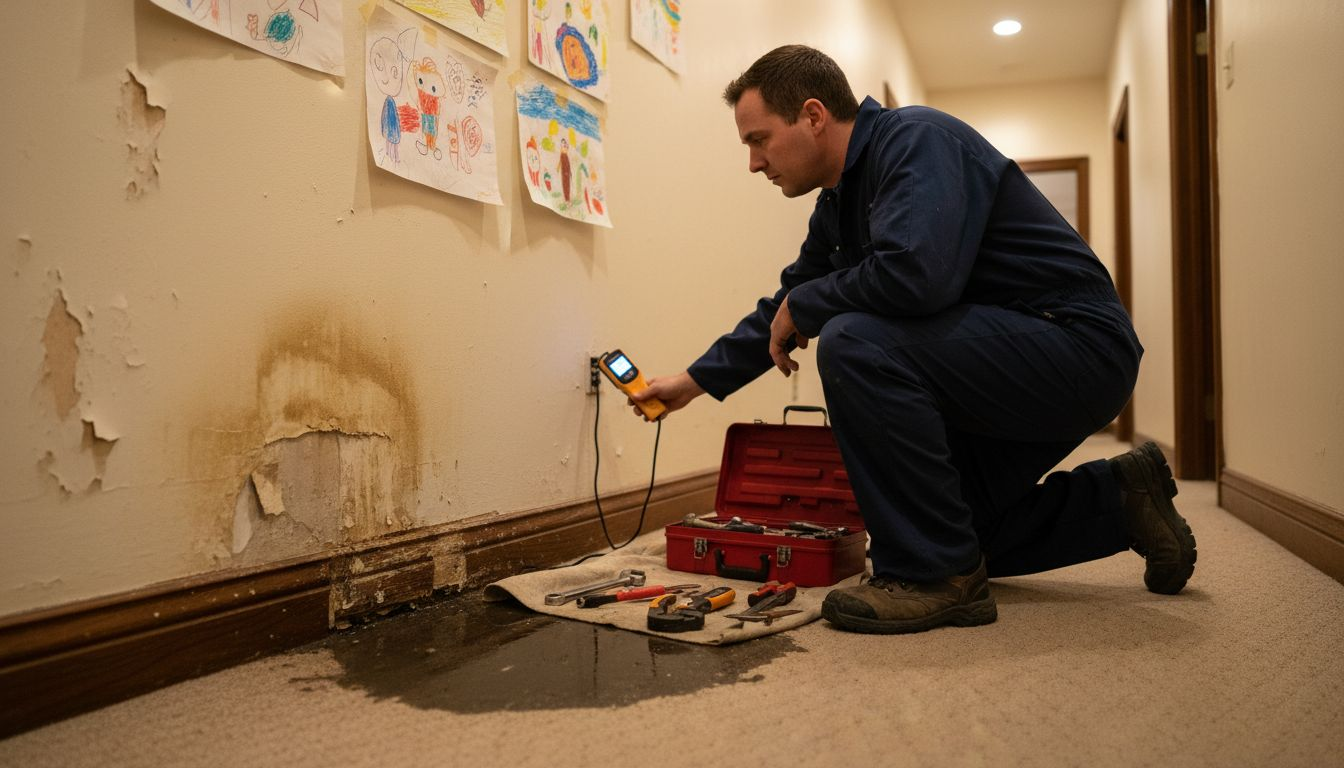
Pro tip: Install moisture detection sensors near potential leak sources to provide early warning of developing water infiltration problems.
DIY Solutions Versus Professional Repairs
Homeowners in Sacramento face a critical decision when confronting leaky faucets: tackle the repair independently or seek professional assistance. Understanding the nuanced differences between DIY solutions and professional interventions can save time, money, and potential additional damage.
The key considerations for DIY versus professional repairs include:
- Complexity of the Leak: Simple drips versus complex plumbing issues
- Technical Skill Level: Basic home maintenance versus advanced plumbing expertise
- Tool Availability: Household tools versus specialized equipment
- Potential Risk: Minor repairs versus significant structural damage potential
- Cost Implications: Immediate savings versus long-term repair expenses
DIY repairs might seem cost-effective initially, but can quickly become complicated. Homeowners without extensive plumbing knowledge risk exacerbating the problem, potentially converting a minor leak into a costly water damage scenario. Understanding repair limitations remains crucial before attempting self-repairs.
Amateur repairs without proper knowledge can transform a simple faucet leak into an expensive home restoration project.
Professional plumbers bring diagnostic expertise, specialized tools, and comprehensive repair strategies. They can identify underlying issues that might escape an untrained eye, preventing future complications and ensuring long-term fixture reliability.
Pro tip: Always assess your technical skills honestly and do not hesitate to contact professionals if a repair seems beyond your comfort zone.
Cost Implications and Water Conservation Impact
Leaky faucets represent more than an inconvenience—they are a significant financial and environmental burden for Sacramento homeowners. Water conservation strategies reveal the profound economic and ecological impact of addressing even minor plumbing issues.
The financial and environmental consequences of unrepaired leaks include:
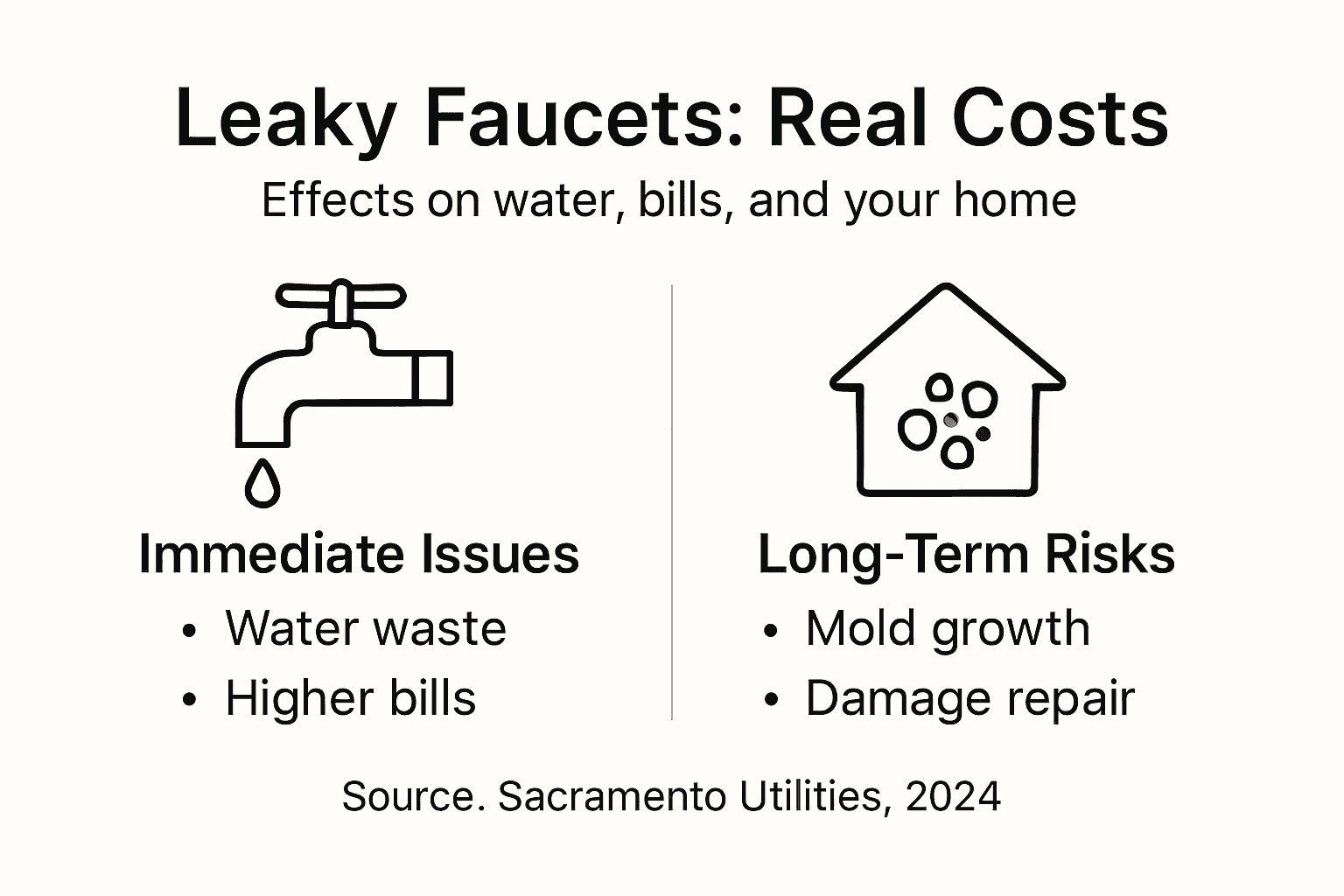
- Utility Bill Increases: Potential annual cost escalation of $50-$200
- Water Waste: Up to 10,000 gallons lost annually per household
- Infrastructure Stress: Increased municipal water system demand
- Environmental Impact: Unnecessary resource consumption
- Property Value: Potential reduction due to water damage risks
Economic analysis demonstrates that small, consistent leaks can transform into substantial financial burdens. A single dripping faucet might seem insignificant, but can waste hundreds of gallons monthly, translating into tangible monetary losses and unnecessary environmental strain.
Every drop saved is a direct investment in both household economics and community water sustainability.
Water conservation extends beyond immediate financial savings. By addressing leaks promptly, Sacramento homeowners contribute to broader community resilience, reducing overall municipal water infrastructure stress and supporting sustainable urban development.
Pro tip: Track your water meter readings monthly to quickly identify and address potential leak sources.
Summary of the financial and environmental consequences of ignoring leaky faucets:
| Consequence | Short-Term Impact | Long-Term Impact |
|---|---|---|
| Higher Utility Bills | $4-$17/month increase | $50-$200/year wasted |
| Water Resource Depletion | Local shortages rise | Adds to regional scarcity |
| Home Damage Risk | Minimal at first | Costly repairs, lower value |
| Environmental Footprint | Slightly increased | Significant over time |
Protect Your Sacramento Home from Costly Faucet Leaks Today
Leaky faucets can quietly waste thousands of gallons of water each year while driving up your utility bills and risking serious property damage. If you have noticed persistent dripping or suspect worn washers and corroded components, don’t wait until mold, structural damage, or health hazards develop in your home. At Legacy Plumbing & Drain Inc, we specialize in fast, reliable repairs tailored to the unique plumbing challenges faced by Sacramento homeowners.

Take control of your water conservation efforts and protect your property with expert help available 24/7. Whether you need a simple faucet fix or a professional inspection to address harder-to-diagnose leaks, our skilled technicians bring years of experience and the right tools to get the job done right the first time. Visit us at Legacy Plumbing & Drain Inc to schedule your service or learn more about our comprehensive plumbing solutions today.
Frequently Asked Questions
What are the main causes of leaky faucets?
Leaky faucets typically result from mechanical failures such as worn washers, corroded valve seats, damaged O-rings, or loose packing nuts. Regular wear and corrosion can lead to these issues, especially in areas with hard water.
How can ignoring a leaky faucet impact my finances?
Ignoring a leaky faucet can lead to significant financial consequences, including increased utility bills that range from $50 to $200 annually and water wastage of up to 10,000 gallons per year. Over time, these costs can accumulate, adding a substantial burden to your household expenses.
What are the potential health risks associated with leaky faucets?
Persistent leaks can create ideal conditions for mold growth, bacterial proliferation, and pest infestations, all of which can pose serious health risks, especially for vulnerable populations. Long-term exposure to moisture-related issues can also compromise indoor air quality.
Should I attempt to fix a leaky faucet myself or hire a professional?
The decision depends on the complexity of the leak and your plumbing skills. Simple leaks may be suitable for DIY repairs, but complex issues often require professional intervention to prevent further damage and ensure effective repairs.
Recommended
- How To Fix A Leaky Faucet For Lasting Results – Legacy Plumbing & Drain – Emergency Plumbers Of Sacramento
- How To Fix Leaky Faucet: Fast Solutions For Sacramento Homes – Legacy Plumbing & Drain – Emergency Plumbers Of Sacramento
- Why Fix Small Leaks – Protect Your Sacramento Home – Legacy Plumbing & Drain – Emergency Plumbers Of Sacramento
- 7 Expert Drought Tips For Roseville Homeowners In 2025 – Legacy Plumbing & Drain – Emergency Plumbers Of Sacramento