
Few household problems are as stressful as discovering a hidden water leak beneath your Sacramento home’s foundation. A slab leak can quietly damage your property, leading to costly repairs and structural concerns before any obvious symptoms appear. Understanding the causes and early signs of slab leak formation empowers you to act quickly, protect your foundation, and seek expert solutions that limit damage and financial stress.
Table of Contents
- What Is A Slab Leak And How It Forms
- Common Misconceptions About Slab Leaks
- Typical Causes And Types Of Slab Leaks
- Warning Signs And Early Detection Methods
- Risks, Repair Costs, And Insurance Factors
- Prevention Strategies For Sacramento Homes
Key Takeaways
| Point | Details |
|---|---|
| Understanding Slab Leaks | Slab leaks can arise from pipe corrosion, ground movement, and external pressures, posing risks to home foundations. Regular inspections are vital for early detection. |
| Common Misconceptions | Many believe slab leaks only affect older homes, but they can occur in modern constructions as well. Awareness of subtle signs is essential for timely action. |
| Repair and Cost Considerations | Repair costs can range from $1,500 to $6,000, with most insurance policies not covering gradual leaks. Homeowners should review their insurance for adequate coverage. |
| Prevention Strategies | Regular plumbing inspections, moisture barrier installations, and proper drainage management are key to preventing slab leaks in homes. Proactive maintenance can mitigate risks. |
What Is a Slab Leak and How It Forms
A slab leak occurs when water pipes beneath a home’s concrete foundation develop leaks, creating potential structural risks for Sacramento homeowners. These hidden plumbing problems can emerge from various conditions that compromise underground pipe integrity.
Slab leaks typically form through several critical mechanisms:
- Pipe corrosion from mineral buildup or chemical reactions
- Ground movement causing pipe stress and potential fractures
- Pipe material degradation over extended periods
- External soil pressure creating continuous pipe strain
The formation process involves complex interactions between underground pipes and environmental conditions. Concealed pipe damage mechanisms often start microscopic, gradually expanding into significant water infrastructure challenges. Pipes beneath concrete slabs experience constant pressure, temperature fluctuations, and potential chemical interactions that incrementally weaken their structural composition.
Most slab leaks originate from subtle initial indicators that homeowners might overlook. Water pipes running through concrete foundations face tremendous stress from ground shifts, temperature changes, and potential chemical interactions. These persistent environmental pressures can create tiny perforations that slowly expand, transforming minor weaknesses into major plumbing emergencies.
Pro tip: Schedule annual professional plumbing inspections to detect potential slab leak indicators before they escalate into expensive home repairs.
Common Misconceptions About Slab Leaks
Homeowners often misunderstand the complex nature of slab leaks, leading to potentially costly misconceptions about their detection and impact. Hidden leak mechanisms are far more nuanced than many Sacramento residents realize, creating significant risks when left unaddressed.
Several widespread myths about slab leaks persist:
- Myth 1: Only older homes experience slab leaks
- Myth 2: Water damage is always immediately visible
- Myth 3: Minor leaks do not require urgent attention
- Myth 4: All plumbing professionals can easily detect slab leaks
Many people mistakenly believe that slab leaks are straightforward to identify and resolve. In reality, these underground pipe issues can develop silently, causing incremental damage that might go unnoticed for months or even years. The subtle signs often include unexplained increases in water bills, strange sounds within walls, or mysterious moisture patches on floors.
Contrary to popular belief, slab leaks are not exclusive to older residential structures. Modern homes with contemporary piping materials can also experience these infrastructure challenges. Young homeowners should be particularly vigilant, understanding that pipe degradation risks exist regardless of a home’s age or construction quality.
Pro tip: Invest in annual professional plumbing inspections to catch potential slab leak indicators before they transform into expensive structural repairs.
Typical Causes and Types of Slab Leaks
Slab leaks represent a complex plumbing challenge with multiple potential origins that can significantly impact Sacramento home foundations. Pipe degradation mechanisms create intricate problems that extend far beyond simple water damage.
The primary causes of slab leaks include:
- Pipe Corrosion: Chemical reactions breaking down metal pipes
- Ground Movement: Soil shifts causing pipe stress
- External Pressure: Construction activities or tree roots damaging underground infrastructure
- Temperature Fluctuations: Expanding and contracting pipes creating microscopic fractures
- Mineral Buildup: Calcium and mineral deposits weakening pipe walls
Different types of slab leaks emerge depending on their underlying cause. Water supply line leaks typically occur in hot water pipes due to increased chemical reactions and temperature stress. Drain line leaks often result from gradual erosion or root intrusion, creating subtle but persistent moisture problems that can compromise structural integrity.
Understanding these concrete slab leak risks helps homeowners recognize potential warning signs before extensive damage occurs. Professional assessment becomes critical in determining whether minor repairs or complete pipe replacement is necessary to protect the home’s foundation.
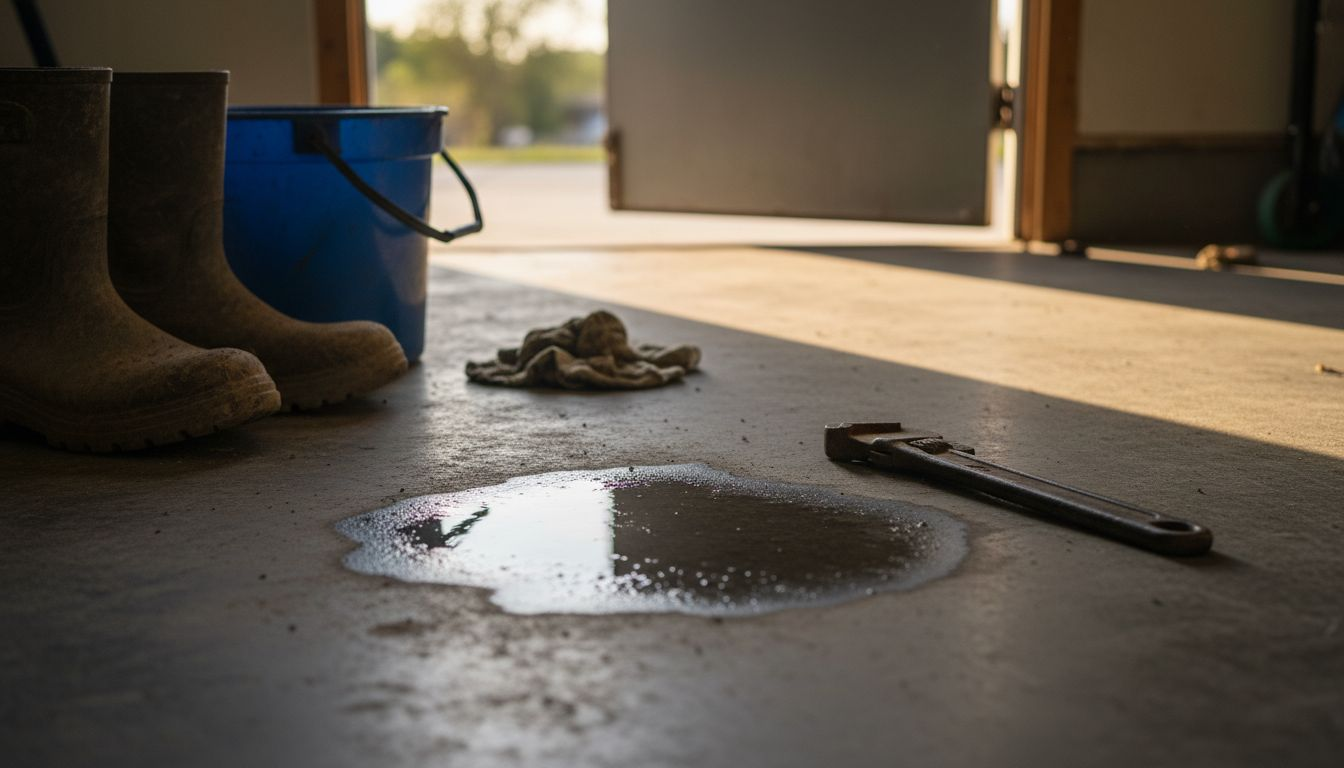
Pro tip: Conduct periodic pipe inspections and maintain a detailed record of your home’s plumbing history to anticipate potential slab leak vulnerabilities.
Warning Signs and Early Detection Methods
Detecting slab leaks early can save Sacramento homeowners thousands in potential repair costs. Early leak detection techniques require keen observation and understanding of subtle warning indicators that might otherwise go unnoticed.
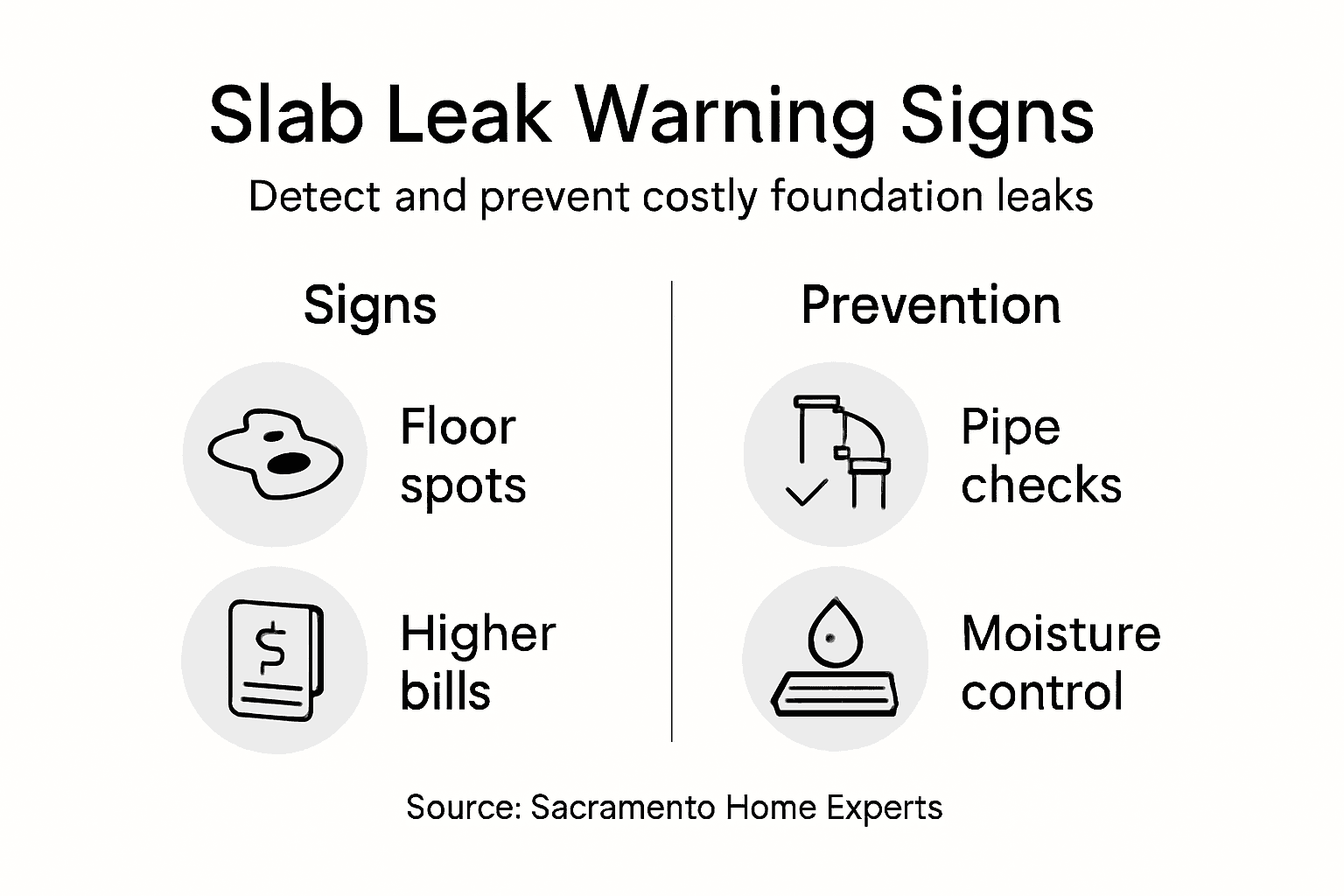
Key warning signs of potential slab leaks include:
- Unexpected Water Bill Increases: Sudden spikes in water usage without changed consumption patterns
- Mysterious Water Sounds: Running water noises when all fixtures are turned off
- Floor Anomalies: Warm spots, dampness, or unexplained soft areas
- Mold and Mildew Growth: Sudden appearance in unusual locations
- Foundation Cracks: Visible fractures or shifts in concrete structures
Professional detection methods go beyond visual inspections. Advanced technologies like electronic leak detection systems enable precise identification of underground pipe issues. Infrared thermography can reveal temperature variations indicating potential water leakage, while specialized acoustic equipment can pinpoint exact leak locations without invasive excavation.
Homeowners should remain vigilant and proactive. Unusual changes in home infrastructure, persistent moisture, or unexplained sounds should trigger immediate professional investigation. Water meter monitoring can also provide early indications of potential slab leak developments before visible damage occurs.
Here is a summary of slab leak types, detection technologies, and recommended responses:
| Leak Type | Detection Technology | Recommended Response |
|---|---|---|
| Water Supply Line | Acoustic sensors, infrared scan | Repiping or line rerouting |
| Drain Line | Moisture meters, thermal camera | Drain replacement, root removal |
| Hot Water Line | Thermal imaging, pressure test | Pipe insulation, spot repair |
| Minor Floor Moisture | Water meter check, visual exam | Professional assessment |
Pro tip: Conduct a monthly visual inspection of your home’s foundation and maintain a log of any unusual changes to catch potential slab leaks early.
Risks, Repair Costs, and Insurance Factors
Slab leaks represent a significant financial and structural threat to Sacramento homeowners, with potential consequences extending far beyond simple plumbing repairs. Comprehensive slab leak risks can quickly transform a minor issue into a major home infrastructure challenge.
Potential risks associated with untreated slab leaks include:
- Structural Damage: Foundation erosion and concrete deterioration
- Mold Growth: Health hazards from moisture accumulation
- Property Value Reduction: Compromised home integrity
- Water Waste: Continuous financial drain through increased utility bills
- Electrical System Damage: Water intrusion into electrical infrastructure
Repair costs for slab leaks vary dramatically, typically ranging from $1,500 to $6,000 depending on complexity. Insurance coverage complexities make understanding policy details critical. Most standard homeowner insurance policies exclude gradual leak damage, leaving homeowners financially responsible for extensive repairs.
Homeowners should proactively review their insurance policies, considering additional endorsements that specifically cover slab leak damage. Understanding the fine print can mean the difference between comprehensive protection and unexpected out-of-pocket expenses. Professional assessments and early detection remain the most cost-effective strategies for mitigating potential long-term financial risks.
Compare common insurance coverage outcomes for slab leak-related scenarios:
| Scenario | Standard Policy Coverage | Notes on Out-of-Pocket Costs |
|---|---|---|
| Sudden pipe burst | Often included | Deductible may apply |
| Gradual pipe corrosion | Typically denied | Homeowner pays full amount |
| Mold from undetected leak | Rarely included | Mold remediation is costly |
| Foundation damage only | Often excluded | May require policy riders |
Pro tip: Request a detailed review of your home insurance policy’s coverage for water damage and slab leak repairs to avoid unexpected financial surprises.
Prevention Strategies for Sacramento Homes
Slab leak prevention requires a proactive and comprehensive approach tailored to Sacramento’s unique environmental conditions. Concrete slab maintenance techniques can significantly reduce the risk of unexpected and costly water infrastructure failures.
Key prevention strategies include:
- Regular Plumbing Inspections: Professional annual assessments
- Moisture Barrier Installation: Protecting foundation from water intrusion
- Pipe Material Upgrades: Using corrosion-resistant materials like PEX
- Landscape Management: Controlling root systems near foundation
- Drainage System Maintenance: Ensuring proper water runoff
Sacramento homeowners must pay special attention to their home’s specific environmental challenges. Effective moisture control methods involve understanding local soil conditions, managing water drainage, and implementing protective measures that account for the region’s unique geological characteristics.
Improving home resilience means taking a holistic approach to infrastructure maintenance. This includes monitoring soil moisture levels, addressing potential foundation shifts promptly, and investing in high-quality plumbing materials that can withstand local environmental stressors. Professional consultation can help identify specific vulnerabilities unique to individual properties.
Pro tip: Create a detailed home maintenance log tracking plumbing inspections, water usage, and any observed foundation changes to catch potential slab leak risks early.
Protect Your Sacramento Home from Hidden Slab Leak Damage Today
Slab leaks under your concrete foundation can quietly cause serious problems like structural damage, mold growth, and soaring water bills. If you have noticed unusual sounds in your walls, unexplained moisture, or sudden increases in water usage, these could be signs of the complex pipe corrosion or ground movement issues discussed in this article. Ignoring these warning signs can lead to costly repairs and health risks.

Do not wait for minor leaks to become major emergencies. At Legacy Plumbing & Drain Inc, we specialize in fast and effective slab leak detection and repair in Sacramento. Our expert plumbers use advanced technology to locate leaks precisely and offer durable solutions tailored to your home’s unique needs. Visit our main page to learn how we can help protect your foundation and restore your peace of mind. Take action now before the damage spreads. Schedule your inspection with Legacy Plumbing & Drain Inc and secure your home with trusted plumbing care.
Frequently Asked Questions
What is a slab leak and how does it form?
A slab leak occurs when water pipes beneath a home’s concrete foundation develop leaks, potentially leading to structural damage. They typically form due to pipe corrosion, ground movement, external soil pressure, and temperature fluctuations.
What are the common signs of a slab leak?
Common signs include unexpected increases in water bills, mysterious sounds of running water, warm spots or damp areas on floors, mold growth, and visible cracks in the foundation.
How can I prevent slab leaks in my home?
Preventive strategies include conducting regular plumbing inspections, installing moisture barriers, using corrosion-resistant piping materials, managing landscaping to control root systems, and maintaining drainage systems to ensure proper water runoff.
What should I do if I suspect a slab leak in my home?
If you suspect a slab leak, it’s important to call a professional plumber for an assessment. They can utilize advanced detection technologies to locate the leak and determine the appropriate repair methods before significant damage occurs.
Recommended
- How To Detect Slab Leaks: Guide For Sacramento Homeowners 2025 – Legacy Plumbing & Drain – Emergency Plumbers Of Sacramento
- Slab Leak Warning Signs Every Sacramento Homeowner Must Know (2025) – Legacy Plumbing & Drain – Emergency Plumbers Of Sacramento
- How Slab Leaks Are Fixed: Fast Solutions For Sacramento Area Homes 2025 – Legacy Plumbing & Drain – Emergency Plumbers Of Sacramento
- Water Leak Detection In Sacramento: Expert Guide For Homeowners | Legacy Plumbing & Drain