
Key takeaways
- A pilot light that keeps dying is most often caused by a dirty or failing thermocouple, which stops signaling the gas valve to stay open.
- The safe relight process is turn the knob off, wait 5 to 10 minutes for gas to clear, then hold the pilot button 30 to 60 seconds after the flame catches.
- If you ever smell gas, leave the house and call your utility's emergency line before touching anything electrical.
- A healthy thermocouple reads 25 to 30 millivolts on a multimeter; a lower reading means it needs replacing.
- Natural gas heats water in roughly half of U.S. homes, so pilot light problems are among the most common water heater calls in the Sacramento area.
A pilot light that keeps dying almost always points to one small part: the thermocouple, the sensor that tells your gas valve the flame is lit. When it gets dirty, bent, or worn out, the valve shuts the gas off as a safety measure, and your pilot goes dark again a few seconds after you relight it. Water heater pilot light repair is usually a quick fix once you know what to look for, but it can also be a warning sign of a bigger gas valve problem that needs a licensed plumber.
If you are standing in a cold Sacramento home right now with no hot water, the good news is that most pilot light failures are inexpensive to fix. This guide walks you through how the system works, why the flame keeps going out, how to relight it safely, and the exact moment you should stop and call for help.
How the Pilot Light and Thermocouple Work Together
The pilot light is a small, constant flame that sits at the base of your gas water heater. Its only job is to ignite the main burner when the tank needs to heat water. For that flame to keep burning safely, your heater needs a way to confirm it is actually lit. That is where the thermocouple comes in.
A thermocouple is a thin metal probe positioned so the pilot flame touches its tip. It is made of two different metals joined together. When the flame heats that junction, it generates a tiny electrical current through a principle called the Seebeck effect. No batteries, no wall power, just heat turned into a small voltage.
That voltage holds open an electromagnetic valve inside the gas control. As long as the thermocouple stays hot and keeps producing current, the valve stays open and gas keeps flowing to the pilot. The moment the pilot goes out, the thermocouple cools within seconds, the voltage drops, and the valve snaps shut. This cuts the gas automatically so your home does not fill with it.
The key takeaway: the thermocouple is a safety device. When your pilot will not stay lit, the system is usually doing its job correctly, shutting off gas because it cannot confirm a healthy flame. Your task is to figure out why it cannot confirm that flame.
Why the "hold the button" step exists
When you relight a pilot, you press and hold a button or knob. During those seconds, you are manually forcing the gas valve open while the thermocouple heats up. Once it is hot enough to generate its own current, it takes over and holds the valve open for you. Release the button too soon and the valve slams shut before the thermocouple is ready, which is why so many relight attempts fail on the first try.
Reasons a Pilot Light Keeps Going Out
A pilot that dies has a short list of usual suspects. Running through them in order saves you time and often points straight to the fix.
- Dirty or corroded thermocouple. Soot, dust, and corrosion build up on the tip over the years. A coated thermocouple cannot sense heat properly, so it never generates enough current. This is the single most common cause.
- Worn-out thermocouple. Metal fatigue from constant heating and cooling eventually kills the part. When it can no longer produce enough voltage, the valve will not stay open no matter how long you hold the button.
- Bent or misaligned thermocouple. The tip has to sit directly in the pilot flame. If it gets knocked out of position, the flame cannot heat it fully and the current stays too weak.
- Clogged pilot orifice. The tiny opening that feeds the pilot can clog with debris. A weak, flickering, or yellow-orange flame instead of a strong blue one usually means the orifice is restricted.
- Drafts. A strong draft from a nearby door, window, or gap can physically blow the pilot out. Garages and basements in older Sacramento and Folsom homes are common culprits, especially on windy days.
- Gas supply problems. A partly closed gas valve, a regulator issue, or low pressure from the utility can starve the flame.
- Failed gas control valve. If the valve itself is faulty, it may not deliver steady gas even when everything else is fine. This is a repair for a professional.
- FVIR safety lockout. Water heaters built after 2003 include a Flammable Vapor Ignition Resistant system. If it senses flammable vapors or overheating, it locks the unit out and the pilot will not light until the cause is cleared.
A quick visual check tells you a lot. A healthy pilot flame is steady and blue and wraps around the top third of the thermocouple tip. A flame that is yellow, weak, or lifting away from the sensor is the clue that narrows down your problem.
Safe Steps to Relight a Water Heater Pilot
Before you touch anything, use your nose. If you smell gas, a rotten-egg or sulfur odor, stop here and skip to the safety section below. Do not attempt to light anything.
If there is no gas smell, here is the standard, safe relight sequence. Your heater also has a label with model-specific instructions, so follow those where they differ.
- Turn the gas control knob to OFF. Give any lingering gas time to clear.
- Wait 5 to 10 minutes. This is not optional. Residual gas needs to dissipate before you introduce a flame.
- Remove the burner access panel at the base of the heater so you can see the pilot assembly.
- Turn the gas control knob to PILOT.
- Press and hold the pilot button (sometimes a red or black knob you push in).
- Ignite the pilot. Newer units have a built-in piezo igniter, a separate button you click. Older ones need a long-reach lighter or a match held to the pilot.
- Keep holding the pilot button for 30 to 60 seconds after the flame catches. This gives the thermocouple time to heat up and take over.
- Slowly release the button. The pilot should stay lit. If it dies, wait and repeat.
- Turn the gas control knob to ON once the pilot holds steady.
- Replace the access panel.
If the pilot refuses to stay lit after two or three honest attempts, stop. Repeated tries do not fix a bad thermocouple or a faulty valve, and you risk releasing unburned gas. At that point the problem has moved from a simple relight to a repair, and it is time to diagnose the hardware.
When a Bad Thermocouple or Gas Valve Is to Blame
The symptom tells you which part failed. If the pilot lights easily but dies the instant you release the button, the thermocouple is the prime suspect almost every time. The flame is there, but the sensor is not generating enough current to hold the valve open.
You can confirm this with a multimeter. Disconnect the thermocouple, set the meter to millivolts, and measure the output while the pilot is lit. A healthy thermocouple reads 25 to 30 millivolts. Anything well below that range means the part is worn out and needs replacing. Thermocouples are inexpensive and standardized, so this is one of the more affordable water heater repairs.
Before replacing it, two cheaper checks are worth a minute each. Gently clean the tip with fine sandpaper or an emery cloth to remove soot and corrosion, then reseat it so the flame covers the top third. A surprising number of "dead" thermocouples are simply dirty or knocked out of alignment.
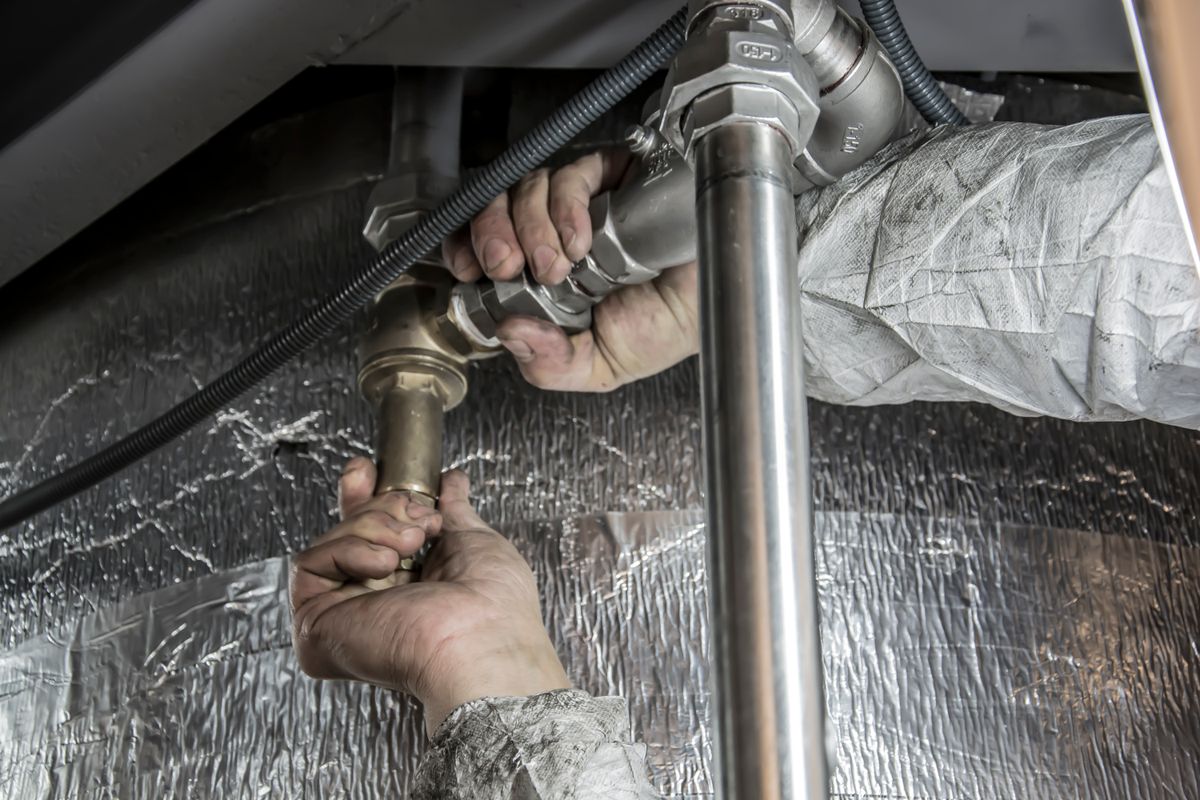
When the gas valve is the problem, the signs are different. You might see the pilot light fine and read a healthy thermocouple voltage, yet the burner still will not fire or the unit cuts out at random. Some modern valves have a small diagnostic LED that blinks error codes. A failing gas control valve is not a part most homeowners should swap, because it involves disconnecting the gas supply and matching the valve to the exact model. This is where a licensed plumber earns their keep, because a valve mismatch or loose fitting on a gas line is exactly the kind of error that leads to a leak.
Thermocouple versus thermopile
A quick note for homeowners with newer units. Some electronic-ignition heaters use a thermopile instead of a thermocouple. A thermopile is a bundle of thermocouples that produces more voltage to run the control electronics. It fails the same way and shows the same symptoms, but it reads higher on a meter, often several hundred millivolts. If your heater has no standing pilot and relies on a glow plug or spark igniter, you are likely dealing with a thermopile and an electronic board rather than a simple thermocouple.
Safety Warnings for Gas Water Heaters
Gas appliances are safe when they work correctly, but a few situations call for caution rather than a wrench. Treat these as hard rules.
If you smell gas:
- Do not light anything, and do not flip any electrical switch, which can create a spark.
- Do not use your phone inside the house.
- Leave the building right away and take everyone with you.
- Call your gas utility's emergency line or 911 from outside or a neighbor's home.
- Do not go back in until a professional says it is safe.
Carbon monoxide risk. A gas water heater that burns poorly can produce carbon monoxide, an odorless gas that is dangerous indoors. The U.S. Consumer Product Safety Commission tracks fatal carbon monoxide poisonings from consumer products each year, which is why detectors matter. Install a carbon monoxide detector near your water heater and sleeping areas. Early symptoms of exposure include headache, dizziness, and nausea. If a detector sounds or anyone feels these symptoms, get outside and call 911.
A yellow or orange pilot flame instead of a crisp blue one is a visual warning of incomplete combustion. So is soot or discoloration around the burner. Both mean the heater is not burning cleanly and should be inspected before you keep using it.
Know your limits. Cleaning a thermocouple or relighting a pilot is reasonable homeowner work. Anything that involves opening a gas line connection, replacing a gas control valve, or clearing an FVIR lockout should go to a licensed plumber. The cost of a professional visit is small next to the risk of a gas leak. If a failure strikes overnight or on a weekend, our 24-hour plumber service in Sacramento is available around the clock.
How Common Pilot Light Problems Really Are
Pilot light failures are among the most frequent water heater calls we take, and the reason is simple math. According to the Appliance Standards Awareness Project, about 48 percent of U.S. households heat their water with natural gas, nearly matched by 46 percent on electric and slightly more than 5 percent on propane or oil. That means roughly half of American homes rely on a pilot or gas ignition system that can fail.
Water heating is also a bigger part of your energy use than most people assume. The same source notes that water heating made up 18 percent of total annual household site energy consumption in the United States as of 2020. A heater that keeps losing its pilot is not just an inconvenience; it is a large appliance running below its potential, and a dying flame often foreshadows other wear.
Age matters too. The U.S. Department of Energy's Federal Energy Management Program assumes a product life of 13 years when calculating water heater costs. If your unit is near or past that mark and the pilot keeps failing, repeated thermocouple problems may be a sign the whole heater is reaching the end of its service life.
Seasonal Causes We See Around Sacramento
Local conditions shape why pilots go out. In the Sacramento region, a few patterns repeat every year.
Cold snaps from December through February drive more pilot calls than any other stretch. Garages in neighborhoods like Citrus Heights and Elk Grove get drafty, and the added airflow blows out marginal pilots that held fine in summer. If your heater sits in an unconditioned garage, draft-related outages tend to cluster in winter.
Older homes in established areas such as East Sacramento and parts of Roseville often run water heaters well past a decade old. In those units, corroded thermocouples and aging gas valves are common. Delta wind events can also push drafts through gaps around the heater closet, snuffing a weak flame.
Dust is another quiet factor. Our dry summers leave fine dust on burner assemblies, and that film coats the thermocouple tip over time. A heater that starts dropping its pilot in late summer is often just overdue for a cleaning.
Clearing an FVIR Lockout Without Making It Worse
Water heaters manufactured after 2003 carry a Flammable Vapor Ignition Resistant design. The idea is simple: if gasoline fumes or other flammable vapors drift toward the heater, a sensor shuts the burner down so the vapor cannot ignite. It is a genuine safety win, but it also catches homeowners off guard, because the pilot will not relight until the trip is cleared.
Here is how to tell an FVIR lockout from an ordinary dead thermocouple. On a lockout, the pilot often will not light at all, and many units flash a specific LED pattern on the gas control. The cause is frequently something you stored too close: a gas can, paint thinner, a lawn mower, or spilled solvent in the garage. Move those items well away and air the space out first.
Some FVIR models reset once the vapor clears and you cycle the control knob. Others use a one-time thermal cutoff that must be replaced after it trips, which is not a homeowner job. If your pilot will not light and you see a steady error code rather than a flame that simply dies, do not keep forcing it. A repeated reset attempt on a locked-out unit can mask a real vapor hazard. This is the point to bring in a licensed plumber who can read the code, confirm the air is safe, and replace the cutoff if needed.
Preventing the Next Pilot Outage
A little upkeep keeps the flame burning and spares you another cold morning. These steps address the specific failure causes covered above rather than generic advice.
- Keep the burner area clean. Vacuum dust and debris from around the base once or twice a year. Dust buildup on the thermocouple tip is a slow, quiet cause of weak signals.
- Clear the air intake. Modern sealed-combustion and FVIR units pull air through a screen at the bottom. Lint and pet hair clog it, starving the flame. A soft brush clears it in a minute.
- Store flammables elsewhere. Gasoline, solvents, and paint do not belong in the same space as a gas water heater. Beyond the fire risk, their vapors trip FVIR lockouts.
- Block drafts. If the pilot sits in a drafty garage or closet, seal gaps around doors and vents so wind cannot reach the flame.
- Watch the flame color. Make a habit of a quick look. A steady blue flame is healthy; yellow or lazy orange signals a combustion problem worth a service call.
- Schedule an annual inspection. A yearly check of the thermocouple, venting, and gas pressure catches a tired part before it leaves you without hot water, and it confirms the unit is burning cleanly.
Older homes in the Sacramento area benefit most from that annual look, since corrosion and sediment build up faster in aging tanks. A heater that has needed two or three thermocouples in a short span is telling you something, and a professional can help you decide whether to keep repairing or plan a replacement.
What Professional Pilot Light Repair Looks Like
When homeowners call us for a pilot that will not stay lit, we work through a consistent diagnostic rather than guessing. First we check for gas odor and verify the gas supply is open and at proper pressure. Then we inspect the pilot assembly for drafts, a clogged orifice, and the condition and position of the thermocouple.
Next comes a millivolt test on the thermocouple or thermopile. A reading in the 25 to 30 millivolt range on a thermocouple clears it; a low reading confirms a replacement. If the sensor is healthy but the burner still misbehaves, we move to the gas control valve and any diagnostic codes it shows. We also check the venting and flame color to rule out combustion problems that create carbon monoxide.
Most pilot repairs come down to a cleaning or a thermocouple swap, both quick and affordable. A gas valve replacement takes longer and costs more, which is exactly why an upfront quote matters before any work starts.
Professional Pilot Light Repair in Sacramento
Legacy Plumbing & Drain has spent more than 15 years keeping hot water flowing across the Greater Sacramento area, including Roseville, Elk Grove, Folsom, and Citrus Heights. When your pilot will not cooperate, our licensed technicians diagnose the real cause, whether that is a 20-dollar thermocouple or a gas valve, and tell you the price before we begin. No hidden fees, no upsell on a part you do not need.
Because water heater failures rarely wait for business hours, we offer 24/7 emergency service for homeowners left with a cold shower and a dead pilot. If you would rather prevent the next outage than react to it, our preventative maintenance program includes burner and thermocouple inspections that catch a tired part before it strands you.
If your water heater pilot keeps going out and the relight steps above are not holding, call Legacy Plumbing & Drain for a straight answer and an upfront quote. We will get the flame burning blue and the hot water back where it belongs.
Frequently asked questions
Why does my water heater pilot light keep going out?
The most common reason is a dirty or worn thermocouple that no longer senses the flame and tells the gas valve to stay open. Drafts, a clogged pilot orifice, or a failing gas control valve can also cause it.
Can I relight my water heater pilot myself?
Yes, if you do not smell gas. Turn the knob to off, wait 5 to 10 minutes, switch to pilot, hold the button while you light the flame, and keep holding for 30 to 60 seconds so the thermocouple heats up. If it will not stay lit after a few tries, stop and call a plumber.
How do I know if my thermocouple is bad?
A bad thermocouple usually means the pilot lights but dies the moment you release the button. Tested with a multimeter, a healthy one reads 25 to 30 millivolts. A reading below that range points to a worn thermocouple that should be replaced.
Is a water heater pilot light dangerous?
A working pilot light is safe, but a gas appliance that is leaking gas or burning poorly can produce carbon monoxide. Keep a carbon monoxide detector nearby, watch for a yellow instead of blue flame, and call a professional if you notice soot or persistent odors.
How much does pilot light repair cost in Sacramento?
A thermocouple replacement is one of the more affordable water heater repairs, while a failed gas control valve costs more. Legacy Plumbing & Drain gives upfront quotes with no hidden fees before any work begins.