
Key takeaways
- Most Rinnai faults trace back to three things in Sacramento: gas supply, venting, and hard-water scale in the heat exchanger.
- An LC code is a descaling reminder, not a shutdown. Ignore it and scale can wreck a heat exchanger that costs $400 to $800 or more to replace.
- Sacramento city water averages 141 ppm (8.2 grains per gallon), hard enough that most tankless units need an annual flush.
- Codes 10, 11, and 12 involve combustion and gas safety. Try two resets, then stop and call a licensed plumber.
- Legacy Plumbing & Drain offers 24/7 emergency Rinnai service across Sacramento, Roseville, Elk Grove, Folsom, and Citrus Heights with upfront quotes.
A flashing error code on your Rinnai usually points to one of three things: a gas or venting problem, a sensor fault, or hard-water scale choking the heat exchanger. Most of those have a clear fix, and a few are safe to check yourself before you ever pick up the phone. This Rinnai tankless water heater repair guide walks Sacramento homeowners through the common codes, what they mean, and the exact point where a do-it-yourself check should turn into a call to a licensed plumber.
Rinnai units are everywhere in the Sacramento area for good reason, and they are built to last. When one acts up, the problem is often minor. Knowing how to read the signs saves you a cold shower, an unnecessary service call, or worse, a cracked heat exchanger.
Why Rinnai Tankless Units Are So Popular in Sacramento
Rinnai dominates local utility rooms because tankless heating fits how Sacramento homes use hot water and energy. ENERGY STAR certified gas tankless models use about 10% less energy than a standard gas water heater, according to the ENERGY STAR Gas Water Heater Fact Sheet, and they skip the standby losses that drain a tank unit around the clock.
Those standby losses matter more than most homeowners realize. ENERGY STAR estimates standby heat loss accounts for 10% to 20% of a water heater's annual energy use. A tankless unit heats water only on demand, so that waste largely disappears.
There is also the space and lifespan angle. A wall-mounted Rinnai frees up floor space in a garage or closet, and tankless units commonly run 20 years or more with maintenance, well past the 8-to-12-year life many tank heaters reach. For a family in Natomas or a rental property manager in Midtown, that longevity turns into fewer replacements over the life of the home.
New federal rules reinforce the trend. In 2024, the U.S. Department of Energy finalized efficiency standards that push gas tankless models to use roughly 13% less energy than the least efficient units on the market. As standards tighten, high-efficiency condensing units like Rinnai's KB and RU lines become the default choice.
How to Read Rinnai Error Codes
Rinnai error codes are the fastest way to diagnose a problem, because the unit tells you exactly which system failed. The controller displays a two-digit number (or a letter code like LC) that maps to a specific fault, from a blocked vent to a failed flow sensor. Rinnai publishes the full list, and matching the code to its cause is the first step in any repair.
Codes fall into two groups. Hard lockouts, such as 10, 11, and 12, stop the unit until the fault clears. Soft codes, like LC, let the heater keep running while warning you that maintenance is overdue. Treating those two groups the same is where many homeowners go wrong.
Here are the codes Sacramento technicians see most often:
- Code 10, air supply or exhaust blockage. A clogged intake filter, debris or a bird nest in the vent, a frozen condensate line, or incorrect vent length. This is a safety fault.
- Code 11, no ignition. Gas is off, the gas type is wrong, or the igniter or gas valve has failed.
- Code 12, flame failure. The flame lit but went out, often from a gas pressure drop under demand, vent recirculation, or carbon on the flame rod.
- Code 14, thermal fuse or overheat. The board cannot confirm continuity through the thermal fuse circuit. Rinnai's TB-107 bulletin treats this as a professional diagnosis.
- Code 16, over-temperature warning. Restricted airflow or low water flow causing the unit to short-cycle.
- Code LC (and LC0 to LC9), scale buildup. Mineral scale in the heat exchanger. The unit keeps working but needs a flush.
- Code 65, water flow control fault. The bath-fill valve failed to close; shut off the water and call a pro.
Rinnai's official diagnostic sheet lists each code with its cause and remedy, and it is worth bookmarking (Rinnai Troubleshooting TWH Diagnostic Codes). Match your display to the list before you touch anything.
What to Do When No Code Appears
Not every Rinnai problem throws a code. Sometimes you get lukewarm water, a cold-water sandwich, or a unit that cycles on and off, with a blank fault display. These symptoms usually point to flow, thermostat settings, or a recirculation issue rather than a hard component failure.
Start with the simple checks. Confirm the temperature setpoint on the controller has not been bumped down. A unit set to 110 degrees will feel weak at a far faucet. Then check whether the problem happens at every fixture or just one. A single weak faucet points to an aerator or that fixture's supply, not the heater.
The classic "cold-water sandwich," a burst of hot, then cold, then hot again, happens because the burner takes a moment to fire after you open the tap. It is normal behavior on a basic tankless setup. If it bothers you, a recirculation kit or a small buffer tank smooths it out, and Rinnai sells models with built-in recirculation for exactly this reason.
If water runs hot but pressure or volume has dropped over months, scale is the likely culprit, which leads to the next section.
Descaling and Flow Issues in Sacramento's Hard Water
Hard water is the single biggest maintenance issue for Rinnai units in the Sacramento region. City of Sacramento water averages 141 ppm, about 8.2 grains per gallon, with some areas reaching 320 ppm (City of Sacramento 2024 Consumer Confidence Report). At that hardness, mineral scale builds steadily inside the heat exchanger and narrows the water path.
That scale shows up as a few familiar symptoms: dropping flow rate, a temperature that swings during a shower, longer wait times for hot water, and eventually an LC code on the display. Because our tap water sits firmly in the "hard" range, most local Rinnai units need a descaling flush once a year. Homes on well water or in very hard pockets may need it every six months.
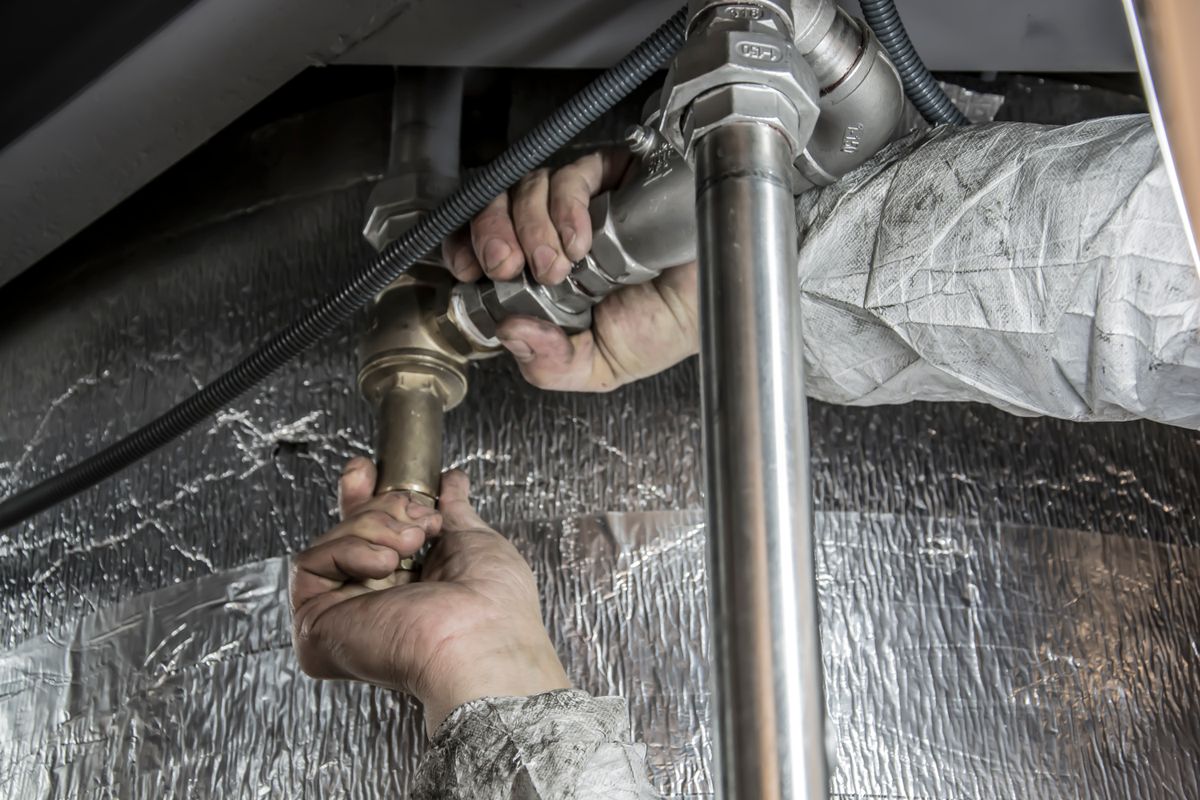
A proper descale is a straightforward process if your unit has isolation valves installed:
- Power down the unit and close the hot and cold isolation valves.
- Connect hoses to the service ports and submerge a small pump in a bucket of white vinegar or a commercial descaler.
- Circulate the solution through the heat exchanger for 45 to 60 minutes.
- Flush with clean water, reopen the valves, and restore power.
If your Rinnai was installed without isolation valves, descaling gets much harder and is a job for a plumber, who can add the valves while they are there. One lasting fix for Sacramento's hardness is a whole-house water softener or an inline scale inhibitor. Softening the water stretches the time between flushes and protects the heat exchanger, the most expensive part of the unit. Our team can set up a preventative plumbing maintenance plan that keeps the flush on schedule so you never see that LC code.
Why the LC Code Deserves Your Attention
The LC code is a maintenance reminder, and ignoring it is one of the costliest mistakes a Rinnai owner can make. Unlike a hard lockout, LC lets the unit keep heating while it alternates the code with the temperature on the display. That convenience fools people into living with it for months.
Here is the risk. As scale thickens, the heat exchanger has to work harder and run hotter to push water through the restricted passage. Left unchecked, that overheating can crack the heat exchanger, the part at the heart of the unit. A replacement exchanger often runs $400 to $800 or more for the part alone, before labor, which can push the repair close to the cost of a new unit.
An annual flush, by contrast, is routine maintenance. The math strongly favors clearing the LC code the first time you see it rather than waiting for a hard failure. If you are weighing costs, it helps to know what descaling runs versus major component work before you decide.
Troubleshooting Rinnai Ignition Problems
Ignition faults, Codes 11 and 12, almost always come back to gas delivery or the components that light and sense the flame. Code 11 means the unit never lit; Code 12 means it lit and then lost the flame. Both are hard lockouts, so the heater stays off until the cause is fixed and the code is cleared.
Before calling anyone, a homeowner can safely run through a short checklist:
- Confirm the gas is turned on at the unit and at the meter or propane tank.
- Check whether other gas appliances, like a range or furnace, still work. If they also stopped, the problem is supply-side, not the heater.
- Verify the unit is set for the right fuel. A natural-gas unit fed propane, or the reverse, will refuse to run.
- Reset the unit by turning off all hot-water fixtures and pressing the controller's on/off button twice.
If the code returns after two resets, stop there. The next steps, measuring gas pressure, cleaning carbon off the flame rod, or testing the igniter and gas valve, involve live gas and internal components. Those belong to a licensed technician. Carbon buildup on the flame rod is a common cause of Code 12, and while the rod can be cleaned, doing it safely means opening the sealed combustion chamber.
Repeated ignition failures can also signal undersized gas lines, a frequent issue when a tankless unit replaces an old tank heater without a gas-line upgrade. A pro can measure the pressure drop under full demand and tell you whether the line needs resizing.
Combustion, Venting, and the Code 10 Safety Fault
Code 10 is a combustion-air problem, and it is the one fault you should never repeatedly reset. It means the unit cannot move air in or exhaust out properly, which can lead to incomplete combustion and carbon monoxide. Rinnai treats it as a safety lockout for that reason.
Common causes split between the intake and the exhaust side. On the intake, a dirty air filter or a blocked louver starves the burner. On the exhaust, the usual suspects are a bird nest or wasp nest in the vent terminal, a frozen condensate line during a cold Sacramento snap, or a vent run that is too long or the wrong diameter for the model.
A homeowner can safely check a few of these: clean or replace the intake air filter per the manual, look at the outdoor vent terminal for obvious debris or nests, and make sure nothing has been stacked against the unit. What you should not do is modify the venting or keep clearing the code to force the unit back on. Improper vent material or length is a leading cause of Code 10, and venting repairs have to follow Rinnai's exact specifications to stay safe and keep the warranty intact.
Because this fault touches combustion safety, it is the clearest case in this guide for calling a professional. If Code 10 appears and the vent terminal looks clear, have the full venting path and combustion checked before running the unit again.
When Professional Rinnai Service Is Required
Some Rinnai repairs cross a line where a licensed plumber is the right call, both for safety and to protect your warranty. As a rule, anything involving live gas, sealed combustion components, or the control board should go to a certified technician rather than a DIY fix.
Call a professional when you see any of these:
- Codes 10, 11, 12, or 14, which involve combustion, gas, or the thermal safety circuit.
- Codes 65, 71, or 72, which point to failed valves, the PC board, or the flame-sensing device.
- An LC code with no isolation valves, since descaling then requires added plumbing.
- Repeated lockouts after two resets, which signal a real component failure rather than a glitch.
- Any gas smell, soot, or a vent you suspect is blocked, which is an emergency, not a maintenance item.
There is also a warranty angle. Rinnai's residential warranties generally require professional installation and service for coverage to hold. A well-meaning DIY repair on a sealed component can void the protection on an expensive unit. For a broader look at where the line falls across water heater types, our guide on DIY versus calling a pro is a useful companion.
When no hot water hits during a cold snap and resets will not clear the fault, that is a same-day problem. A licensed plumber can diagnose the exact component, confirm gas pressure and venting, and get you back to hot water without guesswork.
Seasonal Rinnai Problems Specific to the Sacramento Climate
Sacramento's weather creates a predictable repair calendar for Rinnai owners, and knowing the pattern helps you head off faults before they strand you. Our mild climate is easy on tankless units most of the year, but the valley's cold-snap mornings and the dry, dusty winds that sweep through in spring and fall each put stress on different parts of the system.
Winter brings the condensate problem. Condensing Rinnai models produce acidic condensate that drains through a thin line, and a December cold snap in the 20s and 30s can freeze that line overnight. A frozen condensate drain can back up into the unit and trigger a Code 10, which is why the fault spikes locally during the first hard freeze. Insulating the line or routing it to drain indoors prevents most winter no-heat calls.
The dry season brings a different issue: airflow. Valley dust and pollen clog the intake air filter faster than the manual's default schedule assumes, and a starved burner can throw combustion-related faults. Checking and cleaning the filter at the start of summer, rather than once a year, keeps the unit breathing in our dusty months.
Outdoor-mounted units face their own exposure. Units installed on a shaded north wall or in an unconditioned garage are the ones most likely to see freeze-protection kick in during a cold morning. Rinnai's internal freeze protection only works while the unit has power, so a winter outage is a common trigger for a frozen, cracked component. If a storm knocks out power during a freeze, drain the unit or keep a trickle of water moving. These seasonal habits cost nothing and spare you the emergency call.
How Rinnai Repair Fits Alongside Other Water Heaters
Rinnai repair shares a lot with other brands, but tankless units have their own failure patterns worth knowing if your home mixes equipment. The core difference is that tankless problems cluster around flow, scale, and combustion sensing, while tank units more often fail at the thermostat, heating element, or anode rod.
If you own rental property or a business with mixed systems, that distinction guides maintenance. A tank heater needs its anode checked and sediment flushed; a Rinnai needs its heat exchanger descaled and its filter cleaned. The symptoms overlap, so matching the fix to the equipment matters.
The good news for tankless owners is the payoff. Because these units routinely last two decades or more, most Rinnai service is maintenance and minor repair rather than replacement. Keep the scale in check and the combustion clean, and the unit tends to outlast everything around it.
Book Certified Rinnai Tankless Water Heater Repair Locally
If your Rinnai is throwing a code or leaving you with cold water, the fastest path to a fix is a licensed plumber who repairs these units every week. Legacy Plumbing & Drain handles Rinnai tankless repair, descaling, and installation across Sacramento, Roseville, Elk Grove, Folsom, and Citrus Heights, with more than 15 years of local experience and upfront quotes before any work begins.
Here is a practical next step: if you see Codes 10, 11, 12, or any gas smell, shut the unit down and call for same-day service rather than resetting it again. If you see an LC code or feel your flow dropping, book a descaling flush now, before the scale turns into a cracked heat exchanger. Either way, you get honest pricing with no hidden fees and 24/7 availability when a cold shower cannot wait. Call Legacy Plumbing & Drain for a quote, and we will have your hot water back on schedule.
Frequently asked questions
What does the LC code mean on a Rinnai tankless water heater?
LC (and LC0 through LC9) signals mineral scale buildup in the heat exchanger. The unit keeps running but needs a descaling flush. In Sacramento's hard water, plan on an annual flush to clear it and protect the heat exchanger.
Can I fix a Rinnai error code 11 myself?
You can check the basics: confirm gas is on at the meter and the unit, and that other gas appliances still work. If gas supply checks out and Code 11 returns, the igniter or gas valve likely needs a licensed technician, since the repair involves live gas components.
How often should I descale a Rinnai tankless water heater in Sacramento?
With Sacramento's roughly 8 grains-per-gallon hard water, flush your Rinnai once a year. Homes on well water or in very hard pockets may need it every six months. A water softener can stretch the interval.
Is it worth repairing a Rinnai tankless water heater or should I replace it?
Tankless units commonly last 20 or more years, so repair usually wins over replacement. Descaling, sensor swaps, and valve fixes are routine. Full replacement makes sense mainly when a heat exchanger cracks on an older, out-of-warranty unit.
Why does my Rinnai keep showing Code 10?
Code 10 means blocked air supply or exhaust. Common causes are a clogged intake filter, debris or a bird nest in the vent, a frozen condensate line, or incorrect vent length. It is a safety fault, so do not keep resetting it; have the venting inspected.