
Water pooling near your walls or a sudden damp spot on the ceiling can send any Sacramento homeowner into a panic. Plumbing leaks not only threaten your property’s structure but also lead to rising water bills and hidden damage if left unchecked. Swift, accurate leak detection using advanced technology helps you stop potential disasters before they start and restores peace of mind. Trusting a reliable emergency plumbing service now means preventing bigger headaches and costs down the road.
Table of Contents
- Core Definition Of Leak Detection
- Types Of Plumbing Leaks In Homes
- How Leak Detection Technology Works
- Common Signs And Symptoms Of Leaks
- Risks Of Delayed Leak Detection
- Professional Leak Detection Vs Diy
Key Takeaways
| Point | Details |
|---|---|
| Importance of Leak Detection | Proactive leak detection prevents significant property damage and reduces water waste. Regular assessments can identify vulnerabilities early, saving on repair costs. |
| Technology Utilization | Modern leak detection employs various technologies like thermal imaging and acoustic monitoring for precise identification of leaks. These technologies enhance maintenance strategies and ensure system integrity. |
| Common Leak Types | Homeowners should be aware of various leak types, including faucet drips and supply line breaches, to address issues promptly and avoid structural damage. Regular inspections help catch these issues early. |
| DIY vs. Professional Detection | While DIY methods may appear cost-effective, professional leak detection offers advanced technology and expertise, ensuring accurate diagnoses and preventing costly repairs in the long run. |
Core Definition of Leak Detection
Leak detection is a critical process for identifying and locating unintended fluid or gas escapes within mechanical, plumbing, and industrial systems. At its core, leak detection technologies help operators pinpoint potential vulnerabilities before they escalate into major problems. These advanced techniques allow property owners to track potential water loss, prevent structural damage, and maintain system integrity.
The process involves sophisticated technologies designed to discover breaches in pipes, containers, and transmission networks. Modern leak detection methods utilize multiple approaches including acoustic monitoring, thermal imaging, pressure differential analysis, and electronic sensors. Each technique provides unique insights into potential weak points within a system, enabling proactive maintenance and rapid response strategies.
In residential and commercial contexts, leak detection serves multiple critical functions. It helps prevent water waste, reduces potential property damage, mitigates potential health risks from mold or structural deterioration, and supports long-term infrastructure preservation. Pipeline leak technologies are especially important for minimizing economic losses and environmental contamination across various sectors.
Here is a comparison of leak detection methods, highlighting their unique strengths and typical applications:
| Method | Detection Principle | Best Use Case | Business Impact |
|---|---|---|---|
| Acoustic Monitoring | Sound waves detect leaks | Underground pipes | Reduces downtime, lowers repair costs |
| Thermal Imaging | Heat differences reveal moisture | Behind walls, ceilings | Prevents major property damage |
| Pressure Analysis | Monitors pressure drops | Industrial pipeline systems | Minimizes supply disruptions |
| Electronic Sensors | Real-time flow tracking | Residential and commercial buildings | Enables fast response, conserves resources |
Pro tip: Always conduct periodic leak assessments, even when no visible signs of damage are present, to catch potential issues before they become expensive emergencies.
Types of Plumbing Leaks in Homes
Homeowners face numerous types of plumbing leaks that can range from minor nuisances to potentially catastrophic water damage scenarios. Common residential plumbing leaks occur in multiple areas throughout a home’s water infrastructure, including supply lines, fixtures, and critical systems like water heaters and toilets. Understanding these different leak types helps homeowners detect and address potential issues before they escalate into significant problems.
The primary categories of home plumbing leaks include faucet drips, toilet leaks, supply line breaches, and hidden pipe damage. Faucet leaks might seem minor but can waste significant water over time, with a single dripping fixture potentially losing hundreds of gallons annually. Toilet leaks often occur around seals and connections, with silent leaks going unnoticed for extended periods. Supply line leaks represent more serious concerns, potentially causing substantial structural damage if left unaddressed. These leaks can develop behind walls, under floors, or in crawl spaces, making early detection critically important.
Understanding the potential sources of leaks requires comprehensive monitoring and periodic inspections. Plumbing code standards recommend regular assessments of water heaters, pipe connections, and fixture seals. Key areas of concern include refrigerator water lines, washing machine connections, water heater tanks, toilet base seals, and pipe joints. Homeowners should pay special attention to signs like unexplained moisture, water meter fluctuations, musty odors, or visible water stains that might indicate developing leak problems.
Pro tip: Invest in a digital water leak detector that can provide real-time monitoring and immediate alerts for potential water system breaches in your home.
How Leak Detection Technology Works
Leak detection technologies represent a sophisticated network of sensors and monitoring systems designed to identify and locate fluid or gas escapes in complex infrastructure. These advanced systems utilize multiple approaches to track potential breaches, ranging from internal pipe sensors to external diagnostic tools that can pinpoint even the most subtle signs of water loss or damage.
The core mechanism of modern leak detection involves a combination of internal and external sensing technologies. Internal sensors continuously monitor critical parameters like pressure, flow rates, and fluid temperature, creating a real-time snapshot of system performance. External sensors complement this approach with technologies such as infrared cameras, acoustic microphones, and vapor detection equipment. Supervisory Control And Data Acquisition (SCADA) systems integrate these sensors, providing comprehensive monitoring capabilities that can instantly alert operators to potential leak situations.
Advanced detection systems have evolved to include innovative techniques that can detect leaks from multiple angles and positions. These sophisticated methods assess flow discrepancies, measure pressure gradients, and utilize minimal sensor configurations to maximize detection efficiency. Some cutting-edge technologies can identify leaks in pipes at any angle, offering unprecedented precision in locating potential water loss points before they escalate into major infrastructure problems.
Pro tip: Consider scheduling annual professional leak detection assessments to catch potential water system vulnerabilities before they transform into costly repairs.
Common Signs and Symptoms of Leaks
Common household leak indicators range from subtle warning signs to more obvious water damage manifestations. Homeowners must develop a keen eye for detecting potential water system vulnerabilities that could lead to significant structural damage. Early recognition of these symptoms can mean the difference between a minor repair and a costly restoration project.
The most prevalent signs of plumbing leaks include unexpected increases in water bills, unexplained damp spots on walls or floors, and persistent musty odors. Visible indicators such as water pooling around fixtures, constant toilet running, and dripping faucets serve as clear red flags. Homeowners should pay special attention to soft or discolored areas near pipes, unexplained mold growth, and subtle changes in water pressure that might suggest underlying leak issues.

The following table summarizes key symptoms of plumbing leaks, how to spot them, and their significance:
| Symptom | How to Identify | Potential Consequence |
|---|---|---|
| Rising water bill | Unexplained cost increase | Indicates hidden leaks |
| Musty odor | Persistent damp smell | Signals mold or water damage |
| Warped flooring | Buckling or soft areas | Possible structural issues |
| Discolored walls | Stains or soft patches | Ongoing moisture intrusion |
Water meter diagnostic techniques provide an excellent method for confirming suspected leaks. By turning off all water sources and observing the meter, homeowners can detect even hidden leaks that might not be immediately visible. Additional warning signs include hearing water running when no fixtures are in use, experiencing frequent sump pump activation, and noticing mysterious wet areas in yards or around foundation lines. Structural indicators like wall cracks, peeling paint, or warped flooring can also signal long-term water damage from undetected leaks.
Pro tip: Create a monthly home inspection checklist focusing on potential leak sources to catch water system issues before they become expensive emergencies.
Risks of Delayed Leak Detection
Pipeline leak consequences extend far beyond simple water damage, representing a complex network of environmental, financial, and safety risks. Homeowners and property managers who ignore early warning signs potentially expose themselves to catastrophic structural damage, substantial financial losses, and significant health hazards. Undetected leaks can quietly undermine building foundations, create ideal conditions for toxic mold growth, and compromise entire water infrastructure systems.
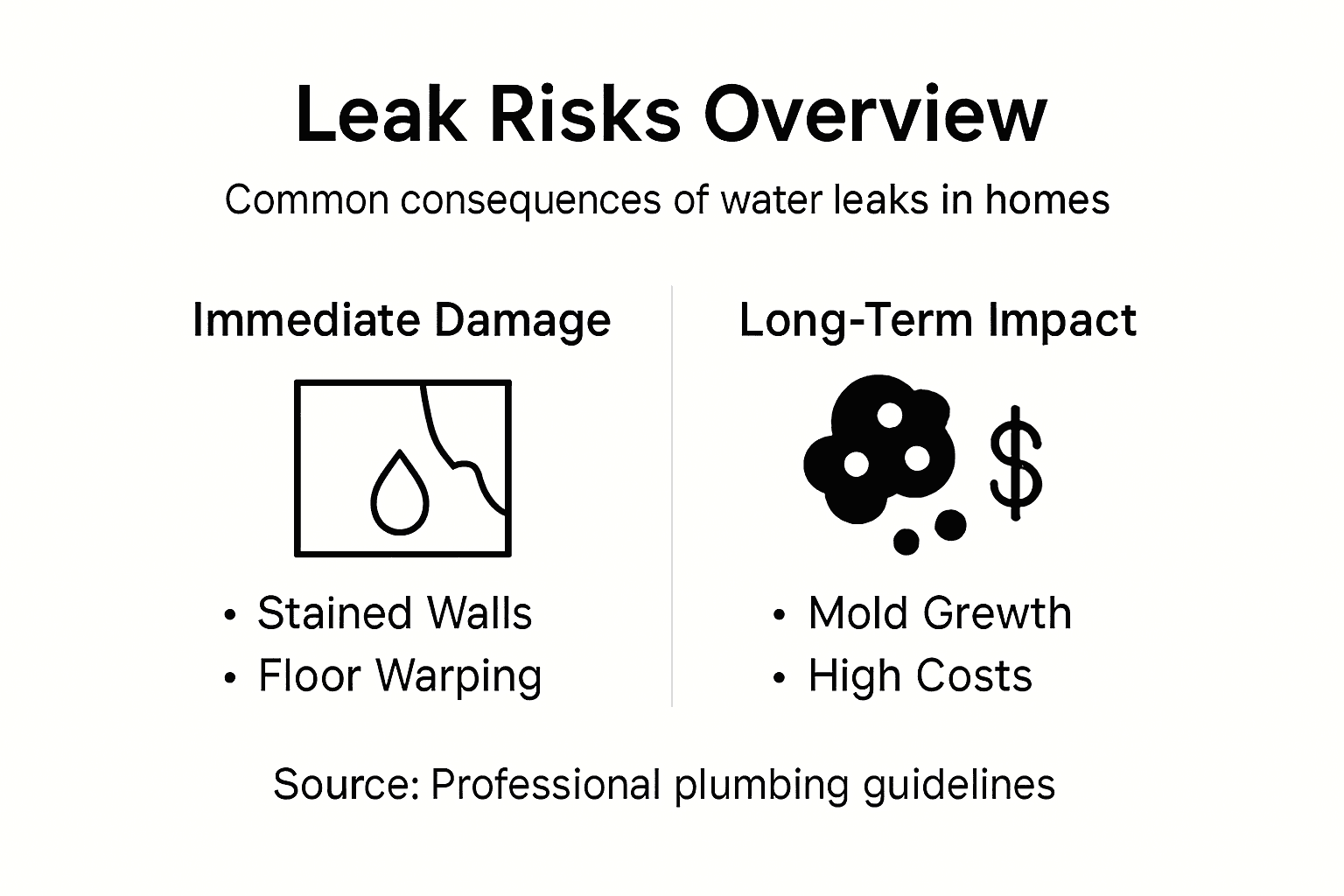
The financial implications of delayed leak detection are particularly devastating. Water damage can rapidly depreciate property values, with repair costs escalating exponentially the longer issues remain unaddressed. Structural components like wooden frames, drywall, and electrical systems can suffer irreparable damage, leading to thousands of dollars in restoration expenses. Additionally, continuous water leakage increases utility bills, wastes precious water resources, and can create long-term environmental sustainability challenges.
Advanced detection technologies highlight the critical nature of proactive leak management. Uncontrolled leaks introduce dangerous contaminants into water supplies, potentially compromising household water quality and creating significant health risks. Beyond immediate water damage, prolonged leaks can trigger ecosystem disruptions, contribute to greenhouse gas emissions, and create conditions that accelerate infrastructure degradation. The cumulative impact of neglected leaks extends well beyond individual properties, affecting broader community resources and environmental health.
Pro tip: Invest in an annual professional leak inspection to catch potential issues early and prevent exponentially more expensive repairs down the line.
Professional Leak Detection vs DIY
Homeowner leak detection strategies represent a critical decision point between attempting self-repairs and seeking professional expertise. While DIY approaches might seem cost-effective initially, they often lack the precision and comprehensive assessment that trained professionals can provide. Homeowners must carefully weigh the potential risks of amateur leak detection against the comprehensive solutions offered by experienced plumbing technicians.
DIY leak detection methods typically involve basic visual inspections, water meter monitoring, and simple diagnostic techniques. These approaches can identify obvious leaks but frequently miss subtle or hidden water system vulnerabilities. Professional plumbers, by contrast, utilize advanced technologies like thermal imaging, acoustic sensors, and sophisticated electronic leak detection equipment that can pinpoint exact leak locations with remarkable accuracy. These specialized tools enable professionals to identify potential issues before they escalate into major structural damage or costly repairs.
Electronic leak detection technologies demonstrate the significant gap between amateur and professional approaches. Professional systems can detect microscopic breaches in pipes, assess membrane integrity, and provide detailed diagnostic reports that go far beyond simple visual inspections. While DIY methods might temporarily address surface-level symptoms, professional interventions offer comprehensive solutions that address root causes, ensure long-term system reliability, and potentially save homeowners substantial money by preventing extensive water damage.
Pro tip: Consider scheduling a professional leak detection assessment annually, treating it as preventative maintenance that could save thousands in potential future repair costs.
Act Fast to Prevent Costly Water Damage with Expert Leak Detection
Leaks hidden behind walls or under floors can cause severe damage and expensive repairs if not caught early. This article highlights how advanced leak detection technology and professional assessments prevent major home emergencies by identifying silent threats like slow faucet drips or hidden pipe breaches. You deserve peace of mind knowing your property is protected against rising water bills, mold risks, and structural harm.
Choose swift action with Legacy Plumbing & Drain Inc, Sacramento’s trusted emergency plumbers ready to respond 24/7. Our skilled technicians use cutting-edge leak detection tools to find and fix leaks fast, reducing water waste and preventing costly damage. Visit Legacy Plumbing & Drain Inc today to schedule your professional inspection. Don’t wait for your minor leak to become a major disaster—protect your home with our expert plumbing and repair services now.
Frequently Asked Questions
What is leak detection?
Leak detection is the process of identifying and locating unintended fluid or gas escapes within mechanical, plumbing, and industrial systems, using advanced technologies to prevent further issues.
What are the common signs of plumbing leaks?
Common signs include rising water bills, unexplained damp spots on walls or floors, musty odors, and visible water pooling around fixtures.
How does leak detection technology work?
Leak detection technology uses a combination of internal sensors, external diagnostic tools, and advanced monitoring systems to identify leaks by assessing parameters like pressure and flow rates.
Why is professional leak detection recommended over DIY methods?
Professional leak detection utilizes advanced tools and techniques, providing comprehensive assessments that can identify subtle leaks that DIY methods may miss, thus preventing costly damage.
Recommended
- Water Leak Detection In Sacramento: Expert Guide For Homeowners | Legacy Plumbing & Drain
- How Plumbers Detect Leaks: Guide For Sacramento Homeowners 2025 – Legacy Plumbing & Drain – Emergency Plumbers Of Sacramento
- How Plumbers Detect Leaks: Guide For Sacramento Homeowners 2025 – Legacy Plumbing & Drain – Emergency Plumbers Of Sacramento
- Importance Of Leak Detection For Sacramento Area Homeowners 2025 – Legacy Plumbing & Drain – Emergency Plumbers Of Sacramento
- Essential Guide to Water Damage Cleaning Carpets Effectively – Yarra Valley Carpet Cleaning
- Gutter Troubleshooting: Prevent Water Damage in Florida