
Hidden water leaks are quietly draining American homes dry. Leaks account for up to 12 percent of indoor water use in the average household, wasting thousands of gallons each year. Most people think a puddle under the sink is the biggest red flag. The real danger comes from leaks you cannot even see, lurking behind walls or under floors until the damage is already done.
Table of Contents
- Step 1: Inspect For Visible Signs Of Water Damage
- Step 2: Check Your Water Meter For Unusual Activity
- Step 3: Assess Common Leak Areas In Your Home
- Step 4: Conduct A Listening Test For Hidden Leaks
- Step 5: Monitor Water Usage For Anomalies
- Step 6: Call A Professional If Needed
Quick Summary
| Key Point | Explanation |
|---|---|
| 1. Inspect for water damage signs | Examine walls, ceilings, and floors for stains, discoloration, or warped surfaces indicating potential leaks or water damage. |
| 2. Check your water meter regularly | Perform a two-hour test by ensuring no water is in use; check the meter before and after to identify possible leaks. |
| 3. Monitor common leak areas | Inspect toilets, sinks, and appliances for moisture; perform dye tests on toilets to confirm flapper valve leaks. |
| 4. Listen for unusual water sounds | Find leaks by listening for persistent dripping or hissing in quiet moments; these sounds may indicate hidden leaks. |
| 5. Call a professional for serious issues | Seek expert help when leaks are complex, persistent, or involve potential structural damage to avoid costly repairs. |
Step 1: Inspect for Visible Signs of Water Damage
Identifying water leaks begins with a careful visual inspection of your home. This critical first step helps homeowners detect potential water damage before it becomes a costly and extensive problem. By understanding what to look for, you can catch hidden issues early and prevent significant structural damage.
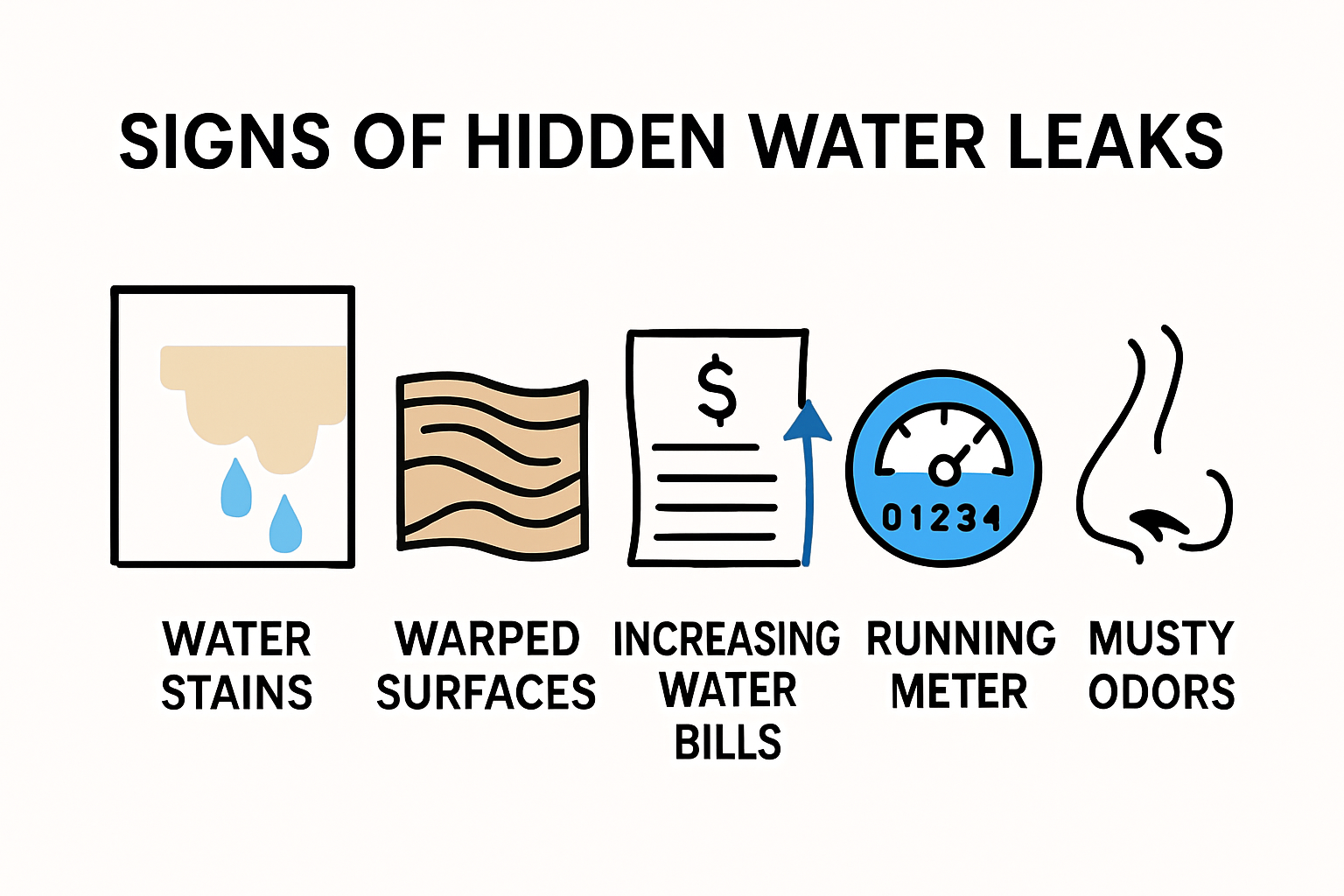
Start your inspection by systematically examining walls, ceilings, and floors for telltale signs of water intrusion. Water stains are your primary visual indicator, typically appearing as discolored patches or rings with brownish or yellowish edges. These marks often indicate ongoing or previous moisture problems that require immediate attention. Pay special attention to areas near plumbing fixtures, around windows, and in corners where moisture tends to accumulate.
Look for additional warning signs beyond simple discoloration. Warped or bubbling drywall, peeling paint, and soft or spongy areas on walls or floors can signal serious water damage. Wood surfaces might show signs of swelling, warping, or unexpected discoloration. According to research from the Massachusetts Department of Public Health, removing wet materials quickly and drying building components within 24 to 48 hours is crucial to prevent mold growth and further structural deterioration.
Don’t limit your inspection to visible surfaces. Check underneath sinks, around toilet bases, and behind appliances like refrigerators and washing machines. These hidden areas often develop leaks that go unnoticed for extended periods. If you notice a musty odor or see unexplained moisture, these could be signs of a more significant water issue. For a comprehensive understanding of potential hidden problems, learn more about detecting hard-to-find plumbing issues.
Remember that some water damage might not be immediately apparent. Use your sense of touch to detect subtle changes. Gently press walls and floors, feeling for soft spots or unusual textures that might indicate moisture trapped beneath the surface. Carefully document any suspicious areas with photographs for future reference or professional assessment.
Step 2: Check Your Water Meter for Unusual Activity
The water meter is an invaluable tool for detecting hidden leaks that might otherwise go unnoticed. This step helps homeowners track unexpected water usage and identify potential plumbing problems before they escalate into costly repairs. Understanding how to read and interpret your water meter can save you significant money and prevent extensive water damage.
Locate your water meter typically near the street in a covered box or sometimes inside your property line. You might need a special tool or screwdriver to remove the protective cover. Most residential water meters have a digital or analog display that tracks water consumption in cubic feet or gallons. Take a moment to familiarize yourself with the meter’s layout and reading mechanism.
According to the U.S. Environmental Protection Agency, the most effective leak detection method involves a simple two-hour test. Begin by ensuring no water is running in your home. This means turning off all faucets, water-using appliances, and checking that no toilets are refilling. Write down the current meter reading, then wait two hours without using any water. Recheck the meter reading carefully. If the numbers have changed, you likely have a leak somewhere in your plumbing system.
Some water meters feature a small spinning dial or triangle that indicates water movement. When all water sources are off, this indicator should remain completely still. Any movement suggests water is flowing somewhere in your system, which could mean a hidden leak. If you’re uncertain about interpreting your meter’s signals, explore our guide to understanding complex plumbing indicators.
For more precise tracking, consider keeping a log of your water meter readings. Take readings at the same time each day or week to establish a baseline of normal water usage. Sudden unexplained increases could indicate leaks in pipes, fixtures, or underground connections. Remember that even small, consistent leaks can waste hundreds of gallons of water and significantly increase your utility bills.
Step 3: Assess Common Leak Areas in Your Home
Navigating the potential leak zones in your home requires a systematic and thorough approach. Not all water leaks are immediately apparent, and some of the most significant water damage can occur in seemingly innocuous locations. This step focuses on identifying and examining the most common areas where water leaks frequently develop.
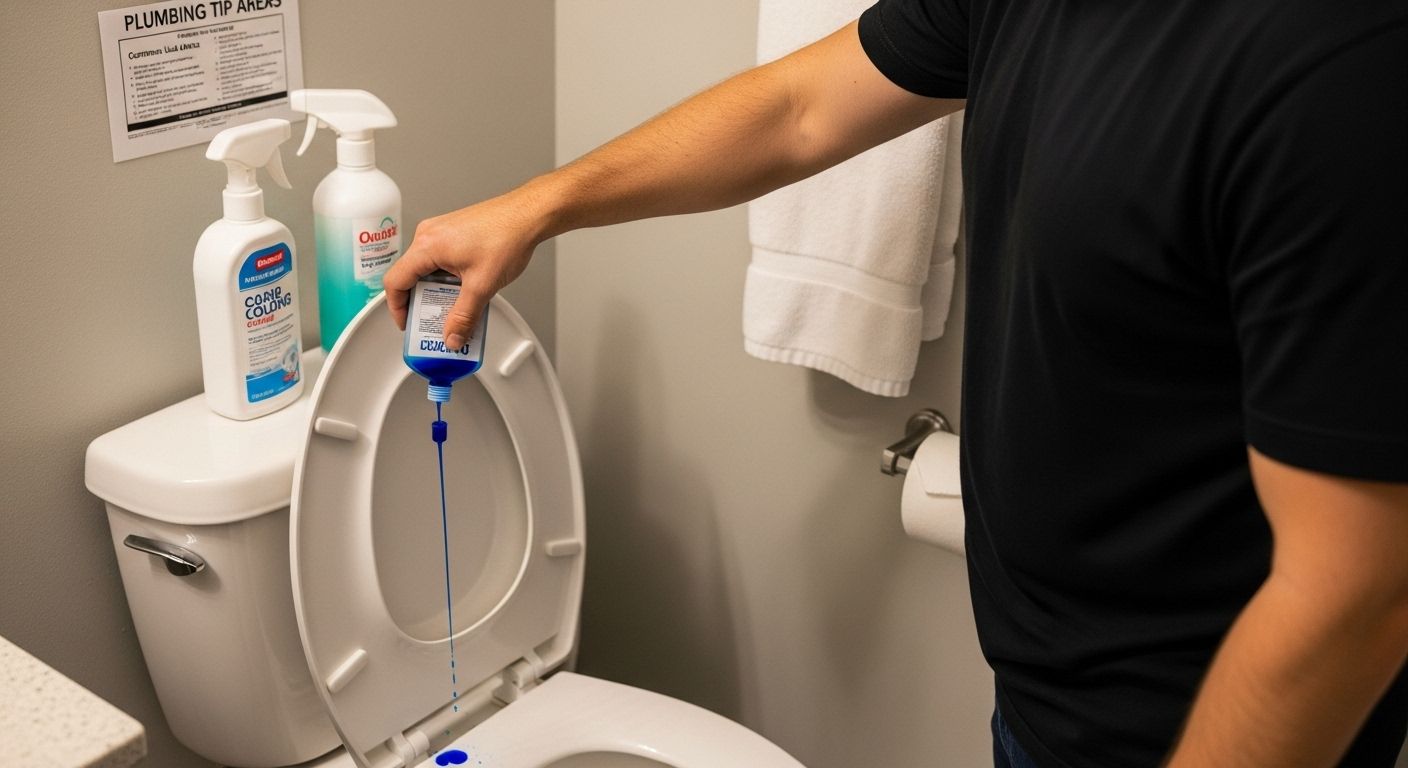
Toilets are notorious for hidden leaks that can waste substantial amounts of water without homeowners realizing it. Check around the base of the toilet for signs of moisture or water stains. Perform a simple dye test by adding a few drops of food coloring to the toilet tank and waiting 15 minutes without flushing. If color appears in the bowl, you have a leaking flapper valve that needs replacement. These small leaks can waste hundreds of gallons of water monthly and increase your utility bills significantly.
According to the Saving Water Partnership, leaks account for 12% of indoor water use in homes. Focus your inspection on key areas like sink and shower fixtures, paying close attention to pipe connections and faucet bases. Run your hand along pipe joints and connections, feeling for any moisture or subtle dampness. Look for mineral deposits or white crusty residue, which often indicate slow, persistent leaks that have been ongoing for some time.
Beyond visible fixtures, examine less obvious locations in your home. Check underneath sinks, behind toilets, and around water-using appliances like washing machines and dishwashers. Look for signs of water damage on surrounding floors and walls. Pipe connections in these areas are particularly susceptible to developing slow leaks that can cause significant structural damage over time. Our comprehensive homeowner plumbing checklist provides additional insights into detecting potential problem areas.
Pay special attention to your home’s exterior connections. Outdoor faucets, irrigation systems, and garden hose connections can develop leaks that go unnoticed. Inspect these areas carefully, looking for soggy ground, unexplained wet patches, or unusual plant growth that might indicate underground water leakage. Remember that early detection can prevent costly water damage and save you significant money in potential repairs.
The table below summarizes the key areas in your home that are prone to leaks, what to check for in each area, and the signs that may indicate a leak. Use this as a checklist while conducting your inspection.
| Area | What to Check | Leak Indicators |
|---|---|---|
| Toilets | Base, inside tank, flapper valve | Moisture, color in bowl, hissing noises |
| Sinks | Underneath basin, pipe connections | Dampness, water stains, mineral deposits |
| Showers/Tubs | Faucet bases, walls, tile grout | Water stains, soft spots, warped surfaces |
| Appliances | Behind/under washing machine, dishwasher | Moisture, swelling, discoloration |
| Outdoor Faucets | Hose connections, irrigation pipes | Soggy ground, unexplained wet patches |
| Water Heaters | Around base, pipe joints | Pooling water, corrosion, dampness |
Step 4: Conduct a Listening Test for Hidden Leaks
Listening for water leaks is a subtle yet powerful diagnostic technique that can reveal hidden plumbing issues before they cause significant damage. This step transforms you into a detective, using your ears to uncover potential problems that visual inspections might miss. By understanding the unique sounds of water movement, you can identify leaks in walls, under floors, and within complex plumbing systems.
Choose a quiet time in your home, preferably late at night or early morning when household activity is minimal. Turn off all water-using appliances and ensure no faucets are running. Remove sources of background noise like air conditioners or refrigerators. Stand quietly in different rooms, focusing intently on any unusual sounds. Persistent hissing, dripping, or running water noises when everything should be silent are clear indicators of potential leaks.
According to Houston Public Works, homeowners should pay special attention to specific areas known for hidden leaks. Remove the toilet tank lid and listen carefully for subtle sounds of water movement. A continuous hissing or trickling noise suggests a faulty flapper valve or silent toilet leak. Check near pipe connections, under sinks, and around water heaters. Some leaks create a soft whooshing or gentle trickling sound that requires careful attention to detect.
For more precise leak detection, consider using a simple tool like a long screwdriver or metal rod as an improvised listening device. Place the metal end against pipes or walls and the handle near your ear. This technique can help amplify subtle sounds and pinpoint the exact location of potential leaks. Our comprehensive guide to advanced leak detection offers additional techniques for homeowners seeking more detailed investigation methods.
Remember that not all leaks make loud, obvious sounds. Some manifest as gentle whispers or intermittent drips that require patience and concentration to identify. Trust your instincts if something sounds unusual. Record the location and characteristics of any sounds you hear, as this information can be invaluable when consulting a professional plumber for further investigation.
Step 5: Monitor Water Usage for Anomalies
Water bill analysis is a critical yet often overlooked method for detecting hidden leaks in your home. This step transforms your monthly utility statement into a powerful diagnostic tool that can reveal subtle water loss patterns before they become expensive emergencies. Understanding your water consumption trends allows you to catch potential issues early and prevent significant water damage.
Track your water bills meticulously, creating a comprehensive record of monthly usage. Compare current bills with previous years’ consumption during the same months to identify unexpected spikes. Sudden unexplained increases in water usage typically signal underground leaks, malfunctioning fixtures, or hidden pipe damage. Pay close attention to seasonal variations and consider factors like landscape irrigation or temporary changes in household occupancy that might naturally impact water consumption.
According to the U.S. Environmental Protection Agency, a standard family of four should not exceed 12,000 gallons of water monthly during winter months. If your usage consistently surpasses this benchmark, it’s a strong indication of potential leaks. Create a simple spreadsheet or use a budgeting app to log monthly water consumption, making it easier to spot unusual patterns. Look for gradual or sudden increases that cannot be explained by normal household activities.
Consider investing in smart water monitoring technology that provides real-time usage data and leak detection. Our comprehensive homeowner plumbing checklist offers additional insights into tracking water consumption effectively. Some modern water meters and home monitoring systems can send instant alerts when unusual water flow is detected, providing an extra layer of protection against potential water damage.
Remember that consistent monitoring is key. Set calendar reminders to review your water bills, and don’t ignore small discrepancies. Even minor unexplained increases can indicate developing plumbing issues that, if left unchecked, could result in significant structural damage and costly repairs. Treating your water bill as a diagnostic tool transforms a routine document into a proactive home maintenance strategy.
Step 6: Call a Professional If Needed
Knowing when to transition from DIY leak detection to professional intervention is crucial for protecting your home’s structural integrity and preventing extensive water damage. This final step empowers homeowners to recognize the limitations of their own diagnostic skills and understand the critical moments when expert plumbing assistance becomes necessary. Recognizing these scenarios can save you significant time, money, and potential long-term property damage.
Complex leaks demand professional expertise, particularly those hidden within walls, under foundations, or deep within underground pipe systems. Warning signs that require immediate professional attention include persistent musty odors, unexplained water stains spreading rapidly, sudden dramatic water pressure changes, or continuous water meter movement despite all fixtures being turned off. These indicators suggest potential structural issues that extend beyond simple home repairs and necessitate specialized diagnostic equipment and technical knowledge.
According to the Better Business Bureau, homeowners should seek professional plumbing assistance in scenarios involving health and safety risks. This includes situations like sewer backups, burst pipes, mold growth, overflowing toilets, and significant water pressure fluctuations. Underground leaks, especially those affecting your home’s foundation or yard, require specialized detection techniques that most homeowners cannot perform independently.
When contacting a professional plumber, prepare documentation of your leak investigation. Compile the evidence you’ve gathered from previous steps, including water meter readings, photographs of damage, and notes about your observations. Learn more about preparing for emergency plumbing services to ensure a smooth consultation. This information helps plumbers diagnose issues more quickly and accurately, potentially reducing diagnostic time and overall repair costs.
Remember that professional intervention is not a sign of failure but a smart, proactive approach to home maintenance. Experienced plumbers possess advanced tools like thermal imaging cameras, acoustic listening devices, and moisture meters that can detect leaks invisible to the naked eye. By knowing when to seek professional help, you protect your home’s long-term value and prevent minor issues from escalating into major, costly repairs.
This table provides an overview of common signs of water leaks, their possible causes, and recommended actions, helping homeowners troubleshoot issues quickly.
| Symptom | Possible Cause | Recommended Action |
|---|---|---|
| Discolored patches on ceiling | Leaking pipe or roof seepage | Inspect area, dry materials, repair |
| Sudden increase in water bill | Hidden or underground leak | Check water meter, inspect fixtures |
| Musty odor indoors | Ongoing concealed leak, mold | Inspect hidden areas, call professional |
| Persistent dripping sounds | Pipe or fixture leak | Listen carefully, trace source |
| Water stains near toilets | Faulty flapper or connection | Perform dye test, replace parts |
| Warped drywall or wood | Continuous or past leak | Dry area, assess structural damage |
Stop Water Leaks Before They Become Major Headaches
You have just learned how hidden leaks can quietly damage your home and cause stress, expensive repairs, or even disrupt your daily life. If you feel overwhelmed by the signs of water damage, unexplainable water bills, or silent plumbing issues described in this guide, know that you do not have to handle it alone. Routine inspections and early detection matter, but some leaks stay hidden until professional expertise steps in.
Protect your property now and save yourself from the worries of escalating damage or costly surprises. Our Emergency Plumbing Services at Legacy Plumbing & Drain Inc are ready for quick detection and reliable repairs 24/7. Choose Sacramento’s trusted specialists for everything from urgent leaks to upgrading your home’s plumbing systems. Visit Legacy Plumbing & Drain Inc for immediate help or explore our latest plumbing guides and homeowner checklists to stay ahead of water problems. Take the next step and let our experts give you the peace of mind you deserve.
Frequently Asked Questions
How can I identify water leaks in my home?
Start by conducting a visual inspection of walls, ceilings, and floors for water stains, warped surfaces, or unusual discoloration. Check areas around plumbing fixtures and hidden spaces like under sinks and behind appliances for signs of moisture.
What should I do if my water meter shows unusual activity?
Perform a two-hour test by ensuring no water is being used in your home. Record the meter reading, wait two hours, and check the meter again. If the reading has changed, it indicates a potential leak in your plumbing system.
What common areas in homes are prone to leaks?
Common leak zones include toilets, sinks, showers, water heaters, and outdoor faucets. Pay special attention to pipe connections, as well as areas where water-using appliances connect to your plumbing system.
When should I call a professional plumber for potential leaks?
You should contact a professional if you notice persistent musty odors, rapid spread of water stains, significant changes in water pressure, or continuous movement of the water meter when all fixtures are off. These signs often indicate complex plumbing issues that require expert diagnosis.
Recommended
- How To Detect Slab Leaks: Guide For Sacramento Homeowners 2025 – Legacy Plumbing & Drain – Emergency Plumbers Of Sacramento
- Importance Of Leak Detection For Sacramento Area Homeowners 2025 – Legacy Plumbing & Drain – Emergency Plumbers Of Sacramento
- Homeowner Plumbing Checklist 2025: Essential Guide For Sacramento & Beyond – Legacy Plumbing & Drain – Emergency Plumbers Of Sacramento
- Homeowner Plumbing Checklist 2025: Essential Guide For Sacramento & Beyond – Legacy Plumbing & Drain – Emergency Plumbers Of Sacramento