
Most homeowners never think twice about what happens after water swirls down the drain, yet these underground systems quietly protect your house every single day. The typical Sacramento home’s drainage pipes are sloped at as little as 1/4 inch per foot—a tiny tilt that keeps thousands of gallons of wastewater flowing safely out every year. Surprised? That gentle angle is all it takes, but when just one section clogs or tilts the wrong way, you could be dealing with flooding, foul odors, or costly repairs before you even realize something’s wrong.
Table of Contents
- Understanding How Home Drains Work
- Common Drain Problems In Sacramento Homes
- How To Spot Drain Issues Early
- When To Call Emergency Plumbing Services
Quick Summary
| Takeaway | Explanation |
|---|---|
| Understand Drain Mechanics | Home drainage systems rely on gravity and proper pipe configuration, with a typical slope of 1/4 to 1/2 inch per foot to ensure efficient wastewater removal. |
| Identify Common Blockages | Sacramento homeowners face frequent blockages from grease in kitchen drains and hair in bathrooms, often exacerbated by tree roots and hard water conditions. |
| Watch for Warning Signs | Early signs of drain issues include slow drainage, gurgling sounds, and unusual odors, which should prompt immediate inspection to avoid bigger problems. |
| Know When to Call Professionals | Significant leaks, flooding, sewage backups, and complete loss of water pressure are emergencies that require urgent professional intervention to prevent damage. |
| Regular Maintenance is Key | Routine inspections and maintenance can help catch potential issues early, reducing the likelihood of costly repairs and ensuring drainage system reliability. |
Understanding How Home Drains Work
Home drains represent a complex yet essential infrastructure within residential plumbing systems. Understanding how these vital networks function helps homeowners prevent potential issues and maintain optimal drainage performance. At its core, a home drain system relies on fundamental principles of gravity, water pressure, and carefully designed pipe configurations to efficiently remove wastewater from your property.
The Basic Mechanics of Home Drainage
Every drain in your home operates on a simple but ingenious principle. When water enters a drain, it flows downward through a series of connected pipes, utilizing gravity as its primary mechanism of movement. According to National Association of Home Builders, residential drain pipes are typically constructed with a slight downward slope, usually between 1/4 to 1/2 inch per foot, ensuring consistent water flow away from your home.
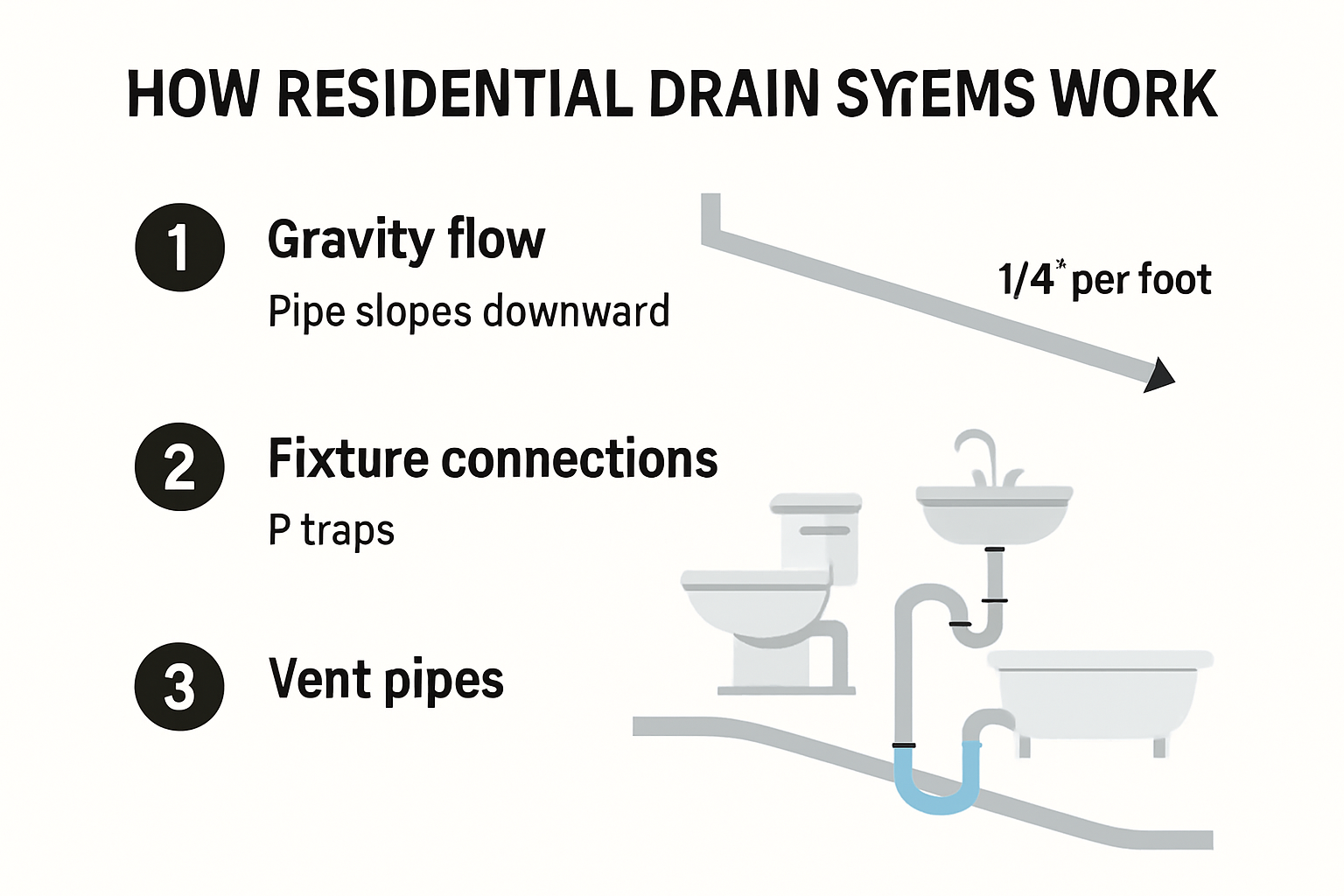
The drainage network starts with individual fixture drains like sinks, showers, and toilets, which connect to larger vertical pipes called drain stacks. These stacks then merge into horizontal underground pipes that ultimately connect to the municipal sewer system or a septic tank. Each connection point includes specialized components like P traps and vent pipes that prevent sewer gases from entering your living spaces and maintain proper atmospheric pressure within the plumbing system.
Critical Components of Home Drain Systems
Several key components work together to ensure smooth drainage. P traps, those curved pipe sections typically found underneath sinks, play a crucial role by holding a small amount of water that creates a seal preventing sewer gases from backing up into your home. Environmental Protection Agency recommends regular maintenance of these traps to prevent potential blockages and maintain their effectiveness.
Vent pipes represent another critical element in home drainage systems. These vertical pipes extend through your roof, allowing air to enter the plumbing network. This airflow helps water move smoothly through pipes by preventing vacuum effects that could impede drainage. Without proper venting, you might experience slow drains, gurgling sounds, or even complete drainage blockages.
Understanding these intricate systems empowers homeowners to identify potential issues early and take proactive maintenance steps. While the drain system might seem complex, its fundamental design remains remarkably consistent across most residential properties. Regular inspection, mindful usage, and occasional professional maintenance can help ensure your home’s drainage system continues functioning efficiently for years to come. Learn more about drain maintenance with our expert guide on preventing common drainage problems.
To help clarify the main components and their functions in a Sacramento area home’s drainage system, see the table below.
| Component | Location | Function |
|---|---|---|
| Fixture Drains | Under sinks, showers, toilets | Initial wastewater collection and entry to drain system |
| Drain Stacks | Vertical runs inside walls | Directs wastewater down from multiple fixtures |
| P Traps | Under sinks and fixtures | Traps water to seal out sewer gases and prevent backflow |
| Vent Pipes | Extend through roof | Allow air in for proper flow; prevent vacuums and slow drains |
| Horizontal Pipes | Underground, connecting to sewer | Carry wastewater from home to city sewer or septic system |
Common Drain Problems in Sacramento Homes
Sacramento homeowners frequently encounter unique drainage challenges that can compromise their home’s plumbing system. These issues range from minor inconveniences to potentially significant structural problems that require immediate professional intervention. Understanding the most common drain problems helps residents proactively manage their home’s plumbing infrastructure and prevent costly repairs.
Typical Residential Drain Blockage Scenarios
Drain blockages represent the most prevalent issue facing Sacramento area homes. According to California Water Resources Control Board, residential drain blockages often result from a combination of environmental factors and household practices. Kitchen drains frequently become obstructed by grease accumulation, food particles, and soap residue. Bathroom drains typically experience blockages from hair, soap scum, and mineral buildup, particularly in areas with hard water.
Some specific blockage triggers unique to Sacramento include tree root intrusion due to the region’s diverse vegetation and soil composition. Older homes with mature landscaping are especially susceptible to underground pipe damage from expansive root systems. United States Geological Survey notes that regional soil conditions can accelerate pipe degradation, making drainage systems more vulnerable to root penetration and structural compromise.
Hidden Drainage System Complications
Beyond visible blockages, Sacramento homes often struggle with less obvious drainage challenges. Sewer line issues can develop gradually, creating potential health hazards and significant repair expenses. Common problems include pipe misalignment, corrosion, and underground settlement. These complications frequently manifest through subtle warning signs such as recurring drain backups, unusual odors, or unexplained wet patches in yard areas.
The region’s variable temperature ranges and soil movement contribute to drainage system stress. Clay soils prevalent in Sacramento can expand and contract dramatically, putting additional pressure on underground pipes. This movement increases the likelihood of pipe fractures, misalignments, and potential sewage leaks. Regular plumbing maintenance becomes crucial in identifying and mitigating these potential issues before they escalate into major repair projects.
Homeowners should remain vigilant about drainage system performance, watching for warning signs like slow-draining fixtures, gurgling sounds, or unexpected water pooling. Professional inspection can help diagnose potential problems early, preventing extensive damage and costly repairs. Understanding these common drain challenges empowers Sacramento residents to take proactive steps in maintaining their home’s critical plumbing infrastructure.
To distinguish between typical drain blockages and less obvious system complications in Sacramento homes, the table below provides a quick comparison.
| Problem Type | Typical Causes | Common Signs | Notes |
|---|---|---|---|
| Kitchen Blockage | Grease, food, soap residue | Slow sink, foul odor, backup | Exacerbated by hard water |
| Bathroom Blockage | Hair, soap scum, mineral buildup | Slow tub/drain, gurgling sounds | More frequent in hard water areas |
| Tree Root Intrusion | Roots from mature landscaping; old pipes | Slow drainage, backups, wet lawn patches | Older homes most at risk |
| Pipe Misalignment | Soil movement, settlement | Recurring backups, slow drains | Often invisible from surface |
| Corrosion | Aging pipes, hard water | Drainage issues, leaks | Can lead to pipe replacement |
| Sewer Line Damage | Soil shift, roots, pipe age | Odors, wet spots, multiple fixtures affected | Needs professional inspection |
How to Spot Drain Issues Early
Early detection of drain problems can save Sacramento homeowners significant time, money, and potential property damage. Recognizing the subtle warning signs of drainage issues allows residents to address potential complications before they escalate into major plumbing emergencies. Proactive monitoring and understanding key indicators are crucial in maintaining a healthy home drainage system.
Visual and Auditory Warning Signs
Drain issues often announce themselves through distinct physical indicators that homeowners can readily observe. According to American Society of Home Inspectors, slow drainage represents the most immediate red flag. When sinks, showers, or tubs take longer to empty, it typically signals developing blockages or potential pipe obstructions. Gurgling sounds emerging from drains or toilets indicate potential venting problems or underlying pipe complications.
Unusual water backup or pooling around drain areas should never be ignored. Wet spots in yards, unexplained musty odors, and visible water stains near plumbing fixtures can signify more serious underground drainage issues. Environmental Protection Agency recommends homeowners conduct regular visual inspections, paying close attention to areas around sinks, toilets, and exterior drainage points.
Advanced Detection Techniques
Modern homeowners have multiple strategies for identifying potential drain problems before they become critical. Infrared thermal imaging and professional camera inspections provide sophisticated methods of detecting hidden pipe damage. These technologies can reveal structural issues invisible to the naked eye, such as hairline fractures, root intrusions, or pipe misalignments.
Chemical testing of drainage water can also provide insights into potential systemic issues. pH level variations, unusual sediment content, and mineral buildup can indicate underlying drainage system problems. Water leak detection techniques have become increasingly advanced, allowing homeowners to monitor their plumbing infrastructure with unprecedented precision.
Consistent monitoring and prompt professional assessment remain the most effective strategies for maintaining drainage system health. Sacramento homeowners should establish a routine inspection schedule, ideally consulting professional plumbers annually or immediately when warning signs emerge. By combining personal vigilance with expert evaluation, residents can protect their property from potentially devastating drainage complications and ensure long-term plumbing system reliability.
When to Call Emergency Plumbing Services
Plumbing emergencies can strike unexpectedly, transforming a routine day into a potential disaster for Sacramento homeowners. Understanding the critical moments that require immediate professional intervention can mean the difference between minor repairs and extensive property damage. Not all plumbing issues demand urgent attention, but certain scenarios necessitate immediate action to protect your home and family.
Urgent Plumbing Situations Requiring Immediate Response
Some plumbing emergencies pose immediate risks to your property and personal safety. According to North Carolina State University’s infrastructure research, several scenarios demand immediate professional intervention. Significant water leaks that cannot be controlled by standard shut-off valves represent a critical emergency. These situations can rapidly cause structural damage, compromise electrical systems, and create potential safety hazards.
Flooding inside your home requires immediate professional attention. Water accumulation can cause extensive damage to floors, walls, and foundational structures within hours. Sewage backups represent another severe emergency, presenting significant health risks due to potential contamination. Yelp’s home maintenance guidelines emphasize the importance of understanding your home’s primary water shut-off valve location to minimize potential damage while waiting for professional assistance.
Critical Warning Signs Demanding Immediate Plumbing Services
Certain indicators signal the urgent need for professional plumbing intervention. Complete loss of water pressure throughout your home suggests significant underlying infrastructure problems. Gas line leaks represent another critical emergency requiring immediate professional attention. Unusual sounds like persistent gurgling, banging pipes, or unexplained water flow can indicate severe systemic issues within your drainage network.
Frozen pipes during Sacramento’s occasional cold snaps pose substantial risks of potential burst and extensive water damage. Emergency plumbing services become crucial during these moments to prevent catastrophic pipe failures. Homeowners should also be alert to sudden, unexplained increases in water bills, which might indicate hidden leaks or significant infrastructure problems.
While not every plumbing issue constitutes an emergency, recognizing potential critical scenarios can save homeowners significant time, money, and stress. Sacramento residents should maintain a proactive approach, keeping contact information for reliable emergency plumbing services readily available. Prompt professional intervention can mitigate potential damage, protect your property’s structural integrity, and ensure the safety of your home’s critical water and drainage systems. Always prioritize professional assessment when uncertainty exists about the severity of a plumbing issue.
Frequently Asked Questions
How do home drainage systems work?
Home drainage systems rely on gravity and pipe configuration to remove wastewater. Pipes are typically sloped at 1/4 to 1/2 inch per foot, allowing water to flow from fixtures to underground pipes that connect to the municipal sewer or septic system.
What are common causes of drain blockages in Sacramento homes?
Common causes of drain blockages in Sacramento include grease buildup in kitchen drains, hair and soap scum in bathroom drains, and tree root intrusions in older homes. Hard water can exacerbate mineral buildup, leading to further obstructions.
How can I spot early signs of drain issues in my home?
Early signs of drain issues include slow drainage, gurgling sounds from drains, and unusual odors. Homeowners should also watch for unexpected water pooling or stains near plumbing fixtures, which can indicate underlying problems.
When should I call emergency plumbing services?
You should call emergency plumbing services for significant leaks, flooding, sewage backups, complete loss of water pressure, or gas line leaks. Prompt intervention can help prevent major damage to your home and ensure safety.
Ready to End Drain Problems in Your Sacramento Home?
Sacramento homeowners face real stress when slow drains, standing water, or worrying odors threaten daily comfort and safety. As explained in this guide, even a minor issue in your drainage system—from hidden pipe misalignments to tree root blockages—puts your home at risk for much bigger problems. When you spot the early warning signs like gurgling sounds or recurring backups, you do not have to wait until it becomes a costly emergency.
Let the experts at Legacy Plumbing & Drain Inc stop problems before they grow. Our team provides emergency support, advanced drain inspections, and ongoing maintenance across Sacramento. Protect your family, property, and peace of mind by getting professional help today. Visit our plumbing solutions page to schedule service or learn how our trained technicians handle every plumbing challenge quickly and reliably.