
Every year, the average American household wastes nearly 10,000 gallons of water due to hidden leaks, often raising utility bills and risking serious property damage for Sacramento homeowners. These silent threats lurk inside walls, under floors, and behind fixtures, turning minor plumbing issues into costly disasters if ignored. Knowing how water leaks sneak into Sacramento homes gives you a clear advantage in protecting your investment, health, and peace of mind.
Table of Contents
- What Are Water Leaks And Why They Matter
- Types Of Water Leaks In Sacramento Homes
- How Water Leaks Escalate And Cause Damage
- Financial Impact Of Delayed Leak Repairs
- Health Risks, Mold, And Legal Consequences
- Urgent Solutions And Preventive Measures
Key Takeaways
| Point | Details |
|---|---|
| Water Leaks Are Costly | Sacramento homes lose an average of 10,000 gallons of water annually due to undetected leaks, leading to increased utility bills and potential structural damage. |
| Early Detection Is Critical | Homeowners should regularly inspect for signs of leaks, such as moisture spots and unusual water meter readings, to prevent extensive damage and costly repairs. |
| Mold Health Risks | Prolonged exposure to moisture from leaks can lead to mold growth, posing health risks like respiratory issues, which can have legal implications for homeowners. |
| Proactive Maintenance Is Essential | Implementing preventive measures like regular inspections and smart leak detection technologies can safeguard against serious water damage and resource waste. |
What Are Water Leaks and Why They Matter
Water leaks represent unintended water flows from household plumbing systems that can cause significant damage and waste in Sacramento homes. Indoor water leaks contribute substantial resource losses that homeowners often overlook until serious problems emerge. These hidden hazards can range from minor drips to substantial pipe ruptures, impacting both residential infrastructure and utility expenses.
Typically, water leaks occur in multiple household locations including faucets, toilets, irrigation systems, and concealed pipe networks. The average Sacramento home wastes approximately 10,000 gallons of water annually through undetected leakage, creating substantial environmental and financial consequences. Residential water studies reveal significant daily water losses averaging around 17 gallons, which accumulate rapidly and silently within household systems.
Recognizing water leaks early requires understanding their potential sources and monitoring key indicators. Common warning signs include unexplained moisture spots, unusual water meter readings, persistent musty odors, and visible pipe corrosion. Homeowners should pay special attention to areas like bathroom fixtures, kitchen connections, and underground piping where leaks frequently develop unnoticed. Proactive leak detection can prevent extensive property damage, reduce water waste, and maintain the structural integrity of residential plumbing systems.
Pro tip: Conduct a monthly visual inspection of exposed pipes and monitor your water meter for unexpected fluctuations that might indicate hidden leakage.
Types of Water Leaks in Sacramento Homes
Sacramento homeowners encounter several distinct types of water leaks that can compromise residential infrastructure and trigger substantial property damage. Water supply line leaks pose significant challenges in residential settings, often developing underground and remaining undetected for extended periods. These hidden leaks can originate from various sources including aging pipe networks, soil movement, and material deterioration specific to the Sacramento region’s unique geological conditions.
Residential water leaks typically manifest in multiple critical areas throughout the home. Common leak locations include bathroom fixtures like showers and toilets, kitchen connections, water heaters, and external irrigation systems. Toilet leaks frequently result from faulty flappers or worn valve mechanisms, while faucet leaks often stem from deteriorated washers or loose fitting connections. Underground water supply lines present particularly challenging leak scenarios, requiring sophisticated detection methods and professional assessment.
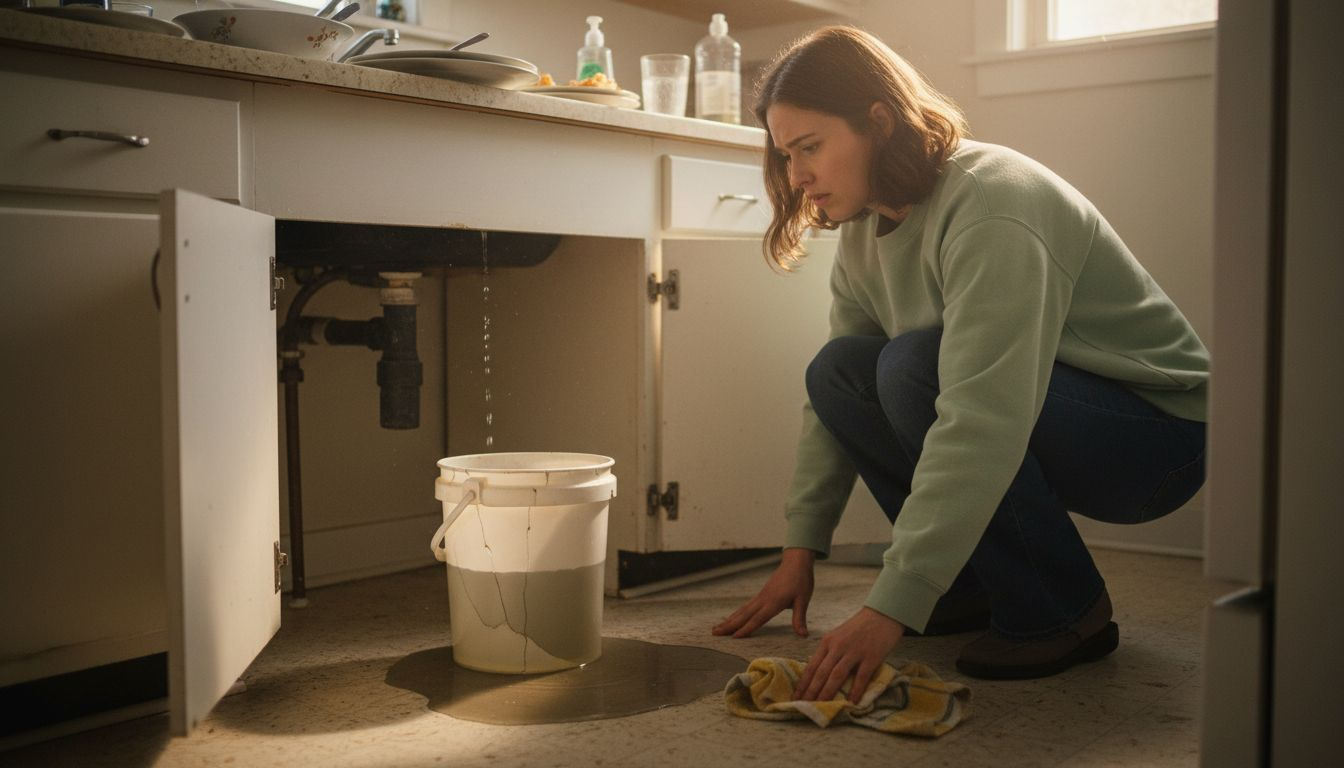
Sacramento’s local infrastructure also plays a crucial role in understanding potential water leak sources. The county’s extensive drainage infrastructure includes thousands of miles of pipes, channels, and pump stations that can indirectly influence residential water systems. Homeowners should remain particularly vigilant about potential leak interactions with municipal drainage networks, especially during seasonal weather changes that might stress existing plumbing infrastructure.
Pro tip: Invest in an annual professional plumbing inspection to identify potential leak sources before they escalate into major, costly repairs.
Here’s a comparison of common water leak locations and their potential impact:
| Location | Typical Cause | Detection Challenge | Potential Impact |
|---|---|---|---|
| Bathroom fixtures | Worn valves or flappers | Moderate | Mold and structural damage |
| Kitchen connections | Loose fittings or washers | Low | Cabinet and floor damage |
| Water heater | Corrosion or seal failure | High | Major water loss, flooding |
| Irrigation system | Cracked pipes, broken heads | High | Soil erosion, landscape damage |
| Underground supply line | Aging pipes, soil movement | Very High | Foundation risk, high cost |
How Water Leaks Escalate and Cause Damage
Water leaks in Sacramento homes represent far more than simple plumbing inconveniences, transforming rapidly into complex structural and health hazards. Water damage rapidly deteriorates building materials, creating a cascading sequence of potentially catastrophic consequences for homeowners. Within remarkably short timeframes, moisture penetration can trigger extensive damage to wooden structures, electrical systems, and foundational elements, compromising the entire residential infrastructure.
The escalation of water leak damage follows a predictable yet devastating progression. Mold growth emerges within 24 to 48 hours of initial moisture exposure, introducing significant health risks to household occupants. Wood begins to rot, metal components start rusting, and composite materials swell and degrade, weakening structural integrity. Electrical systems face particularly dangerous risks, with water infiltration potentially causing short circuits that might lead to fire hazards or complete system failures.
Water-related disasters increasingly threaten urban infrastructure, especially in regions experiencing climate change impacts. Sacramento homeowners must recognize that seemingly minor leaks can quickly transform into major restoration projects costing thousands of dollars. Prolonged moisture exposure creates ideal conditions for comprehensive structural deterioration, undermining a home’s value and safety. Unaddressed leaks can compromise foundations, trigger extensive mold proliferation, and create environment conducive to wood decay and electrical system failures.
Pro tip: Conduct weekly visual inspections of exposed pipes, checking for discoloration, moisture accumulation, or subtle texture changes that might indicate emerging leak problems.
Financial Impact of Delayed Leak Repairs
Sacramento homeowners face substantial financial consequences when water leaks are left unaddressed, with repair costs escalating exponentially over time. Sacramento water regulations mandate timely leak repairs to prevent significant economic losses and resource waste. What might begin as a minor drip can quickly transform into a catastrophic expense, potentially costing homeowners thousands of dollars in extensive structural repairs, water damage restoration, and utility bill overcharges.
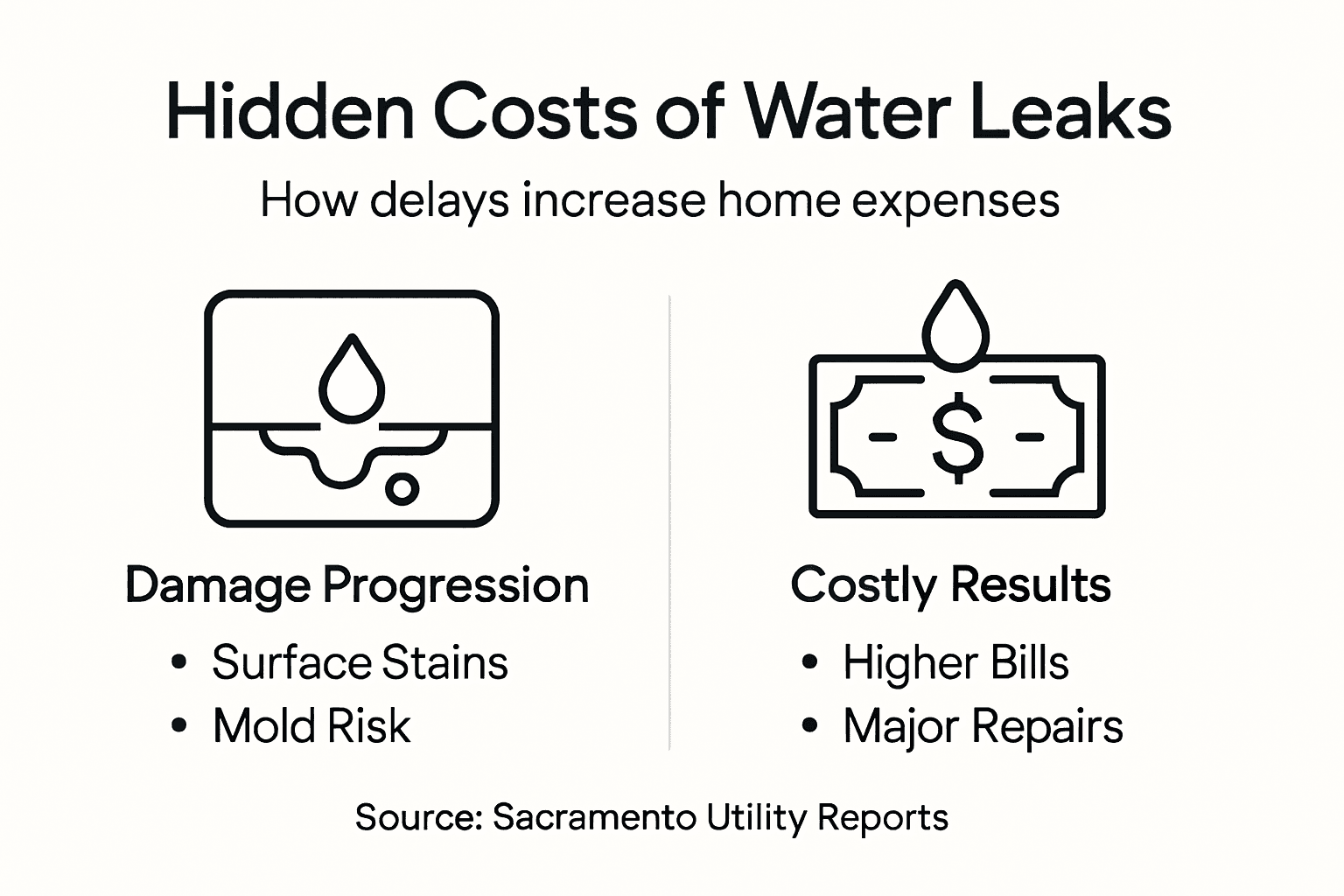
The cumulative financial impact of delayed leak repairs extends far beyond immediate repair costs. Water waste alone represents a significant economic burden, with unrepaired leaks potentially causing hundreds of gallons of water loss each month. Homeowners can expect increased utility bills, potential property value depreciation, and compounding damage to critical home infrastructure. Electrical systems, wooden structures, and foundational elements become progressively more expensive to repair as moisture continues to penetrate and degrade building materials.
Long-term infrastructure maintenance costs demonstrate substantial financial risks associated with deferred leak repairs. Municipal and household budgets suffer when proactive maintenance is neglected, with repair costs potentially increasing by 300 to 500 percent when minor issues are allowed to develop into major structural problems. Insurance complications further amplify financial strain, as many policies have specific limitations on water damage claims resulting from prolonged, unaddressed leaks.
Pro tip: Create an emergency repair fund specifically designated for potential plumbing issues, aiming to save at least $1,000 annually to cover unexpected leak-related expenses.
Review this summary of potential consequences of delayed leak repairs and benefits of early intervention:
| Consequence of Delay | Financial Cost | Benefit of Timely Action |
|---|---|---|
| Extensive water damage | $1,000s in repairs | Saves infrastructure expenses |
| Mold remediation needed | $500–$5,000+ | Prevents health issues |
| Utility bill increase | $100s/year | Keeps water bills lower |
| Insurance claim complications | Out-of-pocket costs | Improves claim eligibility |
| Structural deterioration | Major depreciation | Preserves property value |
Health Risks, Mold, and Legal Consequences
Water leaks in Sacramento homes create significant health hazards that extend far beyond simple property damage. Mold growth poses serious respiratory risks for homeowners and occupants, potentially triggering chronic respiratory conditions, allergic reactions, and long-term health complications. Individuals with preexisting conditions like asthma face heightened vulnerability, with prolonged mold exposure potentially exacerbating existing respiratory challenges and compromising overall immune system functionality.
The legal landscape surrounding water damage and mold remediation in California presents complex challenges for homeowners. California law mandates strict mold remediation requirements that place significant responsibilities on property owners to address contamination promptly. Failure to manage water leaks and subsequent mold growth can result in substantial legal penalties, including potential fines, liability for health-related damages, and complications with property insurance claims. Homeowners may find themselves legally responsible for health impacts experienced by residents or visitors exposed to untreated mold environments.
Mold proliferation represents a multifaceted threat that combines immediate health risks with long-term structural and legal consequences. Respiratory symptoms like persistent coughing, wheezing, and nasal congestion can develop rapidly in moisture-rich environments. Beyond physical health, prolonged mold exposure has been linked to neurological challenges, including mood disorders and cognitive impairment. The invisible nature of mold growth makes early detection and swift intervention critical for maintaining a safe, healthy living environment and protecting both personal well-being and property value.
Pro tip: Purchase a professional-grade moisture meter to regularly check high-risk areas like bathrooms, basements, and kitchen spaces for potential hidden moisture that could lead to mold development.
Urgent Solutions and Preventive Measures
Sacramento homeowners can implement several strategic approaches to address and prevent water leaks effectively. Sacramento County water conservation programs offer valuable resources for proactive leak management, including professional assessments and targeted interventions. Immediate solutions range from DIY leak detection techniques to professional plumbing inspections, ensuring comprehensive protection against potential water damage and resource waste.
Preventive maintenance involves multiple critical strategies. Homeowners should conduct regular visual inspections of exposed pipes, checking for signs of corrosion, moisture, or unexpected discoloration. Home leak detection methods include simple testing techniques like food coloring tests in toilet tanks and monitoring water meter readings for unexpected fluctuations. Installing water-efficient fixtures and implementing smart home water monitoring systems can provide additional layers of protection against potential leaks.
Technological innovations now offer sophisticated solutions for leak prevention and early detection. Smart water sensors can be strategically placed in high-risk areas like bathrooms, kitchens, and basements to provide real-time alerts about potential moisture accumulation. Advanced whole-home water monitoring systems can automatically shut off water supply when unexpected leaks are detected, preventing extensive damage. Professional plumbers can also conduct comprehensive system assessments, identifying potential weak points and recommending targeted upgrades to minimize leak risks.
Pro tip: Create a home maintenance calendar with quarterly plumbing system checks and set digital reminders to inspect potential leak-prone areas systematically.
Act Fast to Fix Water Leaks and Protect Your Sacramento Home
Water leaks can silently escalate into costly disasters involving mold, structural damage, and soaring water bills. The sooner you address these hidden threats from worn valves, underground pipe issues, or faulty fixtures, the better you safeguard your home’s safety and value. Legacy Plumbing & Drain Inc understands the urgency behind these problems. Our expert team is ready to provide fast, reliable leak detection and repair services to prevent minor drips from becoming major emergencies.

Do not wait until water damage puts your home and family at risk. Visit Legacy Plumbing & Drain Inc today to schedule a professional inspection or emergency repair. Discover why so many Sacramento homeowners trust us for quality plumbing, prompt service, and peace of mind. Take action now to stop leaks early with trusted experts who care about your home’s health and your budget.
Frequently Asked Questions
What are the main causes of water leaks in homes?
Water leaks in homes can be caused by various factors, including aging pipe networks, soil movement, faulty fixtures, and material deterioration. Common locations for leaks include bathroom fixtures, kitchen connections, water heaters, and underground supply lines.
How can I detect water leaks early in my home?
You can detect water leaks early by regularly inspecting exposed pipes for signs of corrosion, moisture, or discoloration. Monitoring your water meter for unexpected fluctuations and conducting DIY tests, such as using food coloring in toilet tanks, can also help identify leaks.
What are the potential financial impacts of delayed leak repairs?
Delaying leak repairs can lead to substantial financial consequences, including increased utility bills, repair costs that can escalate by 300 to 500 percent, and potential property value depreciation due to structural damage.
What health risks are associated with water leaks and mold growth?
Water leaks can lead to mold proliferation, which poses serious health risks, including respiratory conditions and allergic reactions. Prolonged exposure to mold can also exacerbate existing health issues, making prompt leak management essential.
Recommended
- Water Leak Detection In Sacramento: Expert Guide For Homeowners | Legacy Plumbing & Drain
- Sacramento Water Heater Leaks: Causes & Quick Fixes | Legacy Plumbing & Drain
- 7 Essential Drought Tips For Homeowners To Save Water – Legacy Plumbing & Drain – Emergency Plumbers Of Sacramento
- How Plumbers Detect Leaks: Guide For Sacramento Homeowners 2025 – Legacy Plumbing & Drain – Emergency Plumbers Of Sacramento
- 7 Ways to Storm-Proof Your Home: Small Fixes for Water Damage | Chicago Home Inspect LLC